

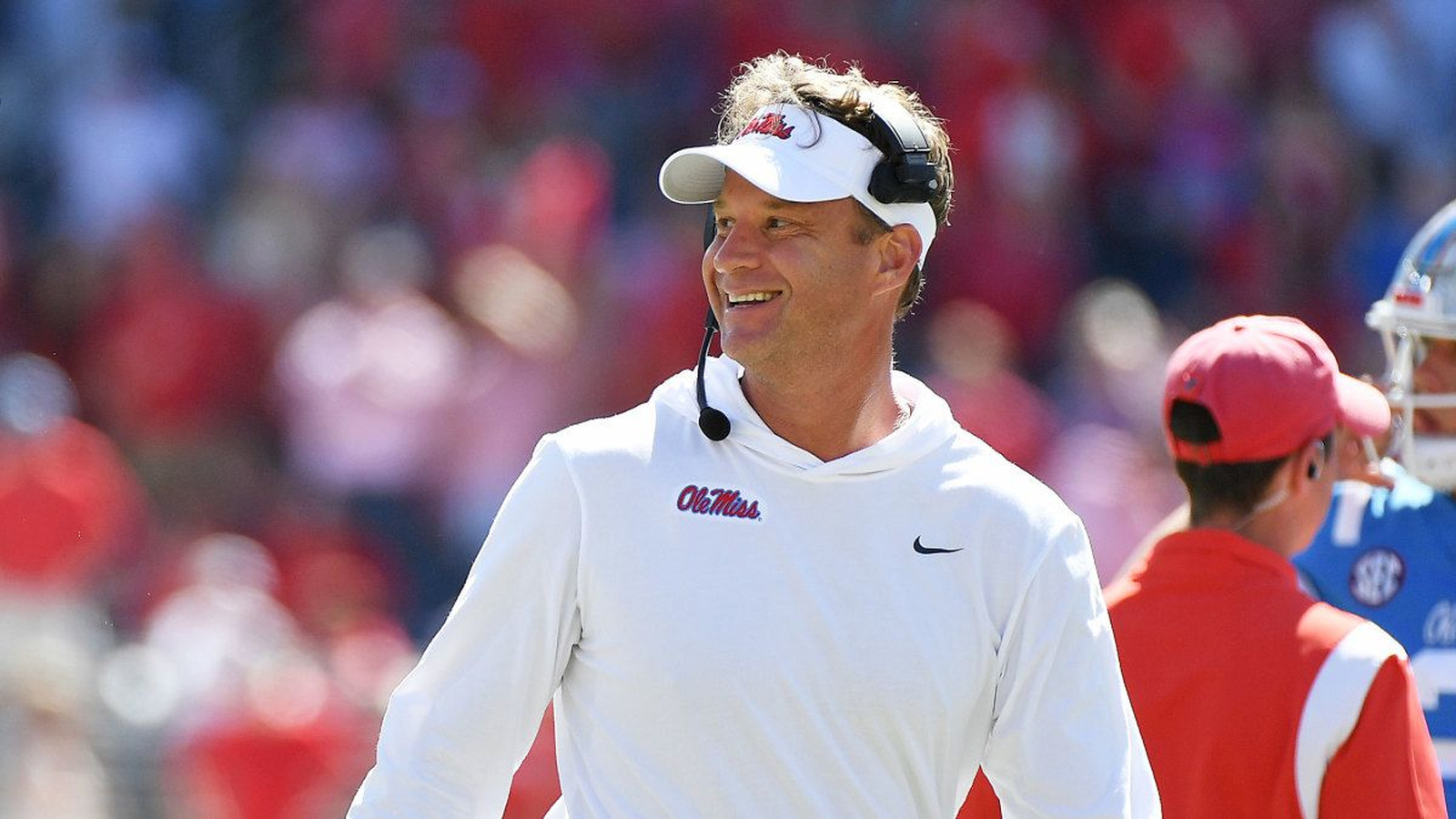
College football is filled with fascinating what-ifs. What if a quarterback never transferred? What if a missed field goal had gone through the uprights? What if a program had held on to the one coach who seemed capable of taking it somewhere it had never been before?
For Ole Miss, that last question might haunt Oxford for years.
What if Lane Kiffin had never left?
When Kiffin departed for LSU in November 2025, he left behind something considerably more valuable than an impressive record. He left behind a program that had finally established itself as a legitimate national championship contender.
The Rebels were coming off an 11-1 regular season, had secured a College Football Playoff berth, and possessed an offensive identity that few programs in America could replicate.
Under new head coach Pete Golding, Ole Miss carried that momentum all the way to the national semifinals before falling to Miami. The Rebels had reached the doorstep of a national championship game, but the architect of their transformation was already wearing LSU colors.
One year later, the contrast is difficult to ignore.
Through November 15, Ole Miss sits at 6-4 after consecutive losses to Georgia and Oklahoma. Meanwhile, Kiffin’s first LSU team is also 6-4, with its playoff aspirations essentially extinguished.
Neither program is enjoying the season it envisioned.
But imagine an alternate reality in which Kiffin turned down LSU, reaffirmed his commitment to Oxford, and entered 2026 determined to finish what he started.
In that scenario, Ole Miss might not just be better. The Rebels could be sitting at 9-1 right now, with a 10-2 finish and another College Football Playoff appearance firmly within reach.
An Offense That Could Have Been Among the Nation’s Best
The strongest argument for a dramatically different Ole Miss season begins with the offense.
Kiffin transformed Oxford into one of the country’s most productive offensive destinations. His system combined tempo, explosive passing concepts, creative formations, and an ability to exploit defensive mismatches.
More importantly, Ole Miss already had the personnel to continue that success.
Quarterback Trinidad Chambliss returned after throwing for 3,937 yards, 22 touchdowns, and just three interceptions during the 2025 season. Running back Kewan Lacy also returned after earning All-American recognition, giving the Rebels an exceptional foundation in the backfield.
With Kiffin still calling the shots, Chambliss could have entered 2026 as one of the country’s most dangerous quarterbacks.
There would have been no coaching transition to navigate, no uncertainty surrounding the offensive philosophy, and potentially fewer disruptions to the infrastructure that helped transform Ole Miss into a contender.
Kiffin understood how to build an offense around his quarterback’s strengths. Chambliss had already demonstrated the ability to extend plays, attack defenses vertically, and create opportunities when protection broke down.
Another offseason together might have elevated that partnership even further.
A healthy Lacy would have provided the perfect complement, forcing defenses to respect the running game while creating favorable matchups downfield.
Of course, injuries and roster changes would still have mattered. Kiffin remaining in Oxford would not have guaranteed better health or an unstoppable offense.
Nevertheless, it is reasonable to believe Ole Miss could have been substantially more consistent offensively.
And consistency has been one of the Rebels’ biggest problems in 2026.
The Games That Could Have Changed Everything
Perhaps the most compelling part of this hypothetical is how Ole Miss’s actual schedule unfolded.
The Rebels began 2026 with victories over Louisville, Charlotte, and LSU. They followed a disappointing 52-28 loss at Florida with dominant wins over Vanderbilt and Missouri.
At 5-1, Ole Miss still appeared capable of making another playoff run.
Then came the setbacks.
A seven-point loss at Texas. A humiliating 42-7 defeat against Georgia. A 24-17 loss at Oklahoma.
Suddenly, a team that entered November with genuine postseason ambitions found itself fighting simply to salvage a respectable season.
But what if Kiffin had been on the sideline for those games?
The Texas matchup immediately stands out.
Ole Miss lost 34-27 in Austin, a game decided by just one possession. With Kiffin orchestrating the offense, it isn’t difficult to envision the Rebels finding one additional touchdown.
His ability to create mismatches and adjust offensive schemes could have made the difference in a game that was ultimately decided by a handful of plays.
In this alternate reality, Ole Miss leaves Austin with a victory.
The Oklahoma game presents an equally interesting possibility.
The Rebels managed just 17 points in Norman, a total that would have been difficult to imagine from one of Kiffin’s better offenses.
With Chambliss operating in a system specifically designed around his strengths, Ole Miss could have generated enough offense to flip another one-possession result.
Instead of losing 24-17, perhaps the Rebels escape Norman with a 31-24 victory.
Georgia, however, is another story.
The Bulldogs’ 42-7 victory exposed problems that went far beyond offensive play-calling. Even with Kiffin in charge, beating one of the nation’s most talented teams would have been an enormous challenge.
Florida also remains a difficult matchup in this hypothetical. Road games in Gainesville are rarely easy, and the Gators’ offensive explosion would have presented serious problems regardless of who was coaching Ole Miss.
But flip Texas and Oklahoma, and the entire complexion of the Rebels’ season changes.
Instead of sitting at 6-4, Ole Miss would be 8-2 with two games remaining.
And with Kiffin’s offense firing on all cylinders, there would be every reason to believe the Rebels could finish the regular season 10-2.
Recruiting and the Transfer Portal Might Have Looked Different
The implications of Kiffin staying would have extended well beyond Saturdays.
One of his greatest strengths at Ole Miss was his ability to recruit and construct rosters through the transfer portal.
The Rebels became a destination for talented players seeking immediate opportunities, national exposure, and a system capable of maximizing their production.
That foundation did not disappear after his departure. In fact, Ole Miss entered 2026 with a transfer class ranked No. 2 nationally by 247Sports, demonstrating that Golding and his staff were still capable of attracting elite talent.
But Kiffin’s continued presence could have created additional stability.
Players who might have considered transferring could have remained. Recruits uncertain about the program’s direction would have had fewer questions. And the Rebels could have spent the offseason building upon their established system rather than navigating a leadership change.
The effects are impossible to measure precisely.
Yet in today’s college football landscape, coaching continuity can be almost as valuable as talent itself.
For a program attempting to compete with Georgia, Alabama, Texas, and LSU, every advantage matters.
Our Prediction: Ole Miss Finishes 10-2 With Lane Kiffin
If Kiffin had remained in Oxford, our projection is that the Rebels would have finished the 2026 regular season with a 10-2 record.
Not undefeated. Not necessarily SEC champions. But firmly established as one of the nation’s top teams and positioned for another College Football Playoff appearance.
Here is how we believe the season could have unfolded:
Projected 2026 Ole Miss Results Under Lane Kiffin
- Louisville — Win
- Charlotte — Win
- LSU — Win
- at Florida — Loss
- at Vanderbilt — Win
- Missouri — Win
- at Texas — Win
- Auburn — Win
- Georgia — Loss
- at Oklahoma — Win
- Wofford — Win
- Mississippi State — Win
Projected Final Regular-Season Record: 10-2
The biggest difference would come against Texas and Oklahoma.
Those two games were decided by a combined 14 points. With Kiffin’s offensive system and play-calling, it is entirely reasonable to believe Ole Miss could have won both.
A 10-2 record in the SEC would almost certainly put the Rebels firmly in the College Football Playoff conversation, especially with victories over Texas, LSU, Oklahoma, and Missouri.
Depending on the final conference standings and the results elsewhere around the country, the Rebels could potentially find themselves hosting a first-round playoff game.
And after reaching the national semifinals the previous season, Ole Miss would have entered the postseason believing it could compete with anyone.
The difference between 6-4 and 10-2 might seem enormous, but in college football, entire seasons can turn on a few critical possessions.
For Ole Miss, two different outcomes could have changed everything.
The Irony of Kiffin’s Decision
There is another dimension to this story that makes it particularly fascinating.
Kiffin left Ole Miss for a program widely considered to have a higher championship ceiling.
LSU possesses an extraordinary recruiting footprint, a massive financial commitment to football, and three national championships since the 2003 season.
On paper, the move made sense.
But after 10 games, Kiffin’s Tigers have the same 6-4 record as the program he left behind.
His new team has struggled to deliver victories against elite competition, and the national championship expectations accompanying his arrival have quickly turned into disappointment.
It raises a question that Kiffin might eventually have to confront.
Did he leave a program that was closer to winning a national championship than the one he joined?
There is no definitive answer.
LSU’s long-term potential remains enormous, and one disappointing season does not determine the success or failure of a coaching tenure.
But at Ole Miss, Kiffin had already built the foundation.
He had the offensive identity, the administrative support, the recruiting momentum, and a fan base that had come to expect national relevance.
Most importantly, he had a team that had just demonstrated its ability to compete with the best programs in America.
There was no guarantee that another championship opportunity would come along.
But there was also no compelling reason to believe Ole Miss had already reached its ceiling.
Kiffin spent years trying to convince the college football world that Ole Miss could compete with the sport’s traditional powers.
Just when it appeared he had finally accomplished that goal, he left.
Would Ole Miss Have Been a National Championship Contender?
At 10-2, Ole Miss would have been more than simply another ranked SEC team.
The Rebels would have entered December with a legitimate opportunity to make noise in the College Football Playoff.
Chambliss would have possessed another full season of experience in Kiffin’s system. The offense could have been among the country’s most explosive units, and the program would have carried the confidence of a team that had reached the national semifinals just one season earlier.
Would Ole Miss have been favored to win the national championship?
Probably not.
Georgia, Indiana, Ohio State, and several other contenders would still present significant challenges.
But the Rebels would have had something every program desperately wants entering the postseason: a quarterback capable of winning games, a coach known for offensive creativity, and a roster that had already experienced the pressure of competing on college football’s biggest stage.
That combination would have made Ole Miss a dangerous opponent for anyone.
A return to the national semifinals would have been an ambitious expectation, but not an impossible one.
At minimum, the Rebels could have had a legitimate opportunity to win another playoff game and continue building upon their remarkable 2025 season.
The Verdict: Kiffin Could Have Had Ole Miss at 10-2
It would be easy to suggest that Ole Miss would be undefeated with Lane Kiffin still on the sideline.
It would also be unrealistic.
The SEC remains brutally competitive, and even the nation’s most successful coaches experience disappointing performances, injuries, and unexpected losses.
Kiffin himself has encountered those problems at LSU.
But Ole Miss’s recent history provides a compelling foundation for believing that 2026 could have unfolded differently.
The Rebels had a proven quarterback, an established offensive philosophy, a strong recruiting operation, and the momentum of a historic playoff run.
Their most significant challenge was maintaining that success through a coaching transition.
Without that transition, it is entirely plausible that Ole Miss could have flipped its close losses against Texas and Oklahoma, remained in the playoff discussion throughout November, and finished the regular season with 10 victories.
Our prediction: Ole Miss finishes 10-2 under Lane Kiffin, earns another College Football Playoff berth, and enters the postseason as a legitimate threat to make a deep run.
Would Kiffin have won a national championship in Oxford this season? That’s impossible to know.
But another playoff appearance would have further cemented his legacy as the coach who turned Ole Miss from an occasional SEC threat into a perennial national contender.
Instead, the Rebels and their former coach find themselves navigating disappointing seasons, wondering where things went wrong.
Perhaps the most fascinating possibility is that both sides would have been better off had they simply stayed together.
Kiffin left Oxford believing the grass was greener in Baton Rouge.
One year later, it’s fair to wonder whether the best opportunity of his coaching career was the one he walked away from.