


The Rebels have a former SEC head coach trying to rebuild his national reputation. They have a former five-star quarterback searching for one final breakthrough. They have a roster loaded with players who have competed at Power 4 programs. And behind the scenes, UNLV is operating with a level of financial ambition that would have been almost unimaginable for the program a decade ago.
Put it all together, and one of the most fascinating College Football Playoff contenders in America might be hiding in plain sight in Las Vegas.
UNLV does not have the roster of Ohio State, Georgia or Texas.
It does not need one.
The Rebels' path is different.
With a College Football Playoff spot available to the highest-ranked Group of 6 conference champion, UNLV enters 2026 with a legitimate opportunity to turn an already impressive resurgence into something historic.
And whether that happens could come down to one question:
Can Jackson Arnold finally play like the five-star quarterback everyone once thought he would become?
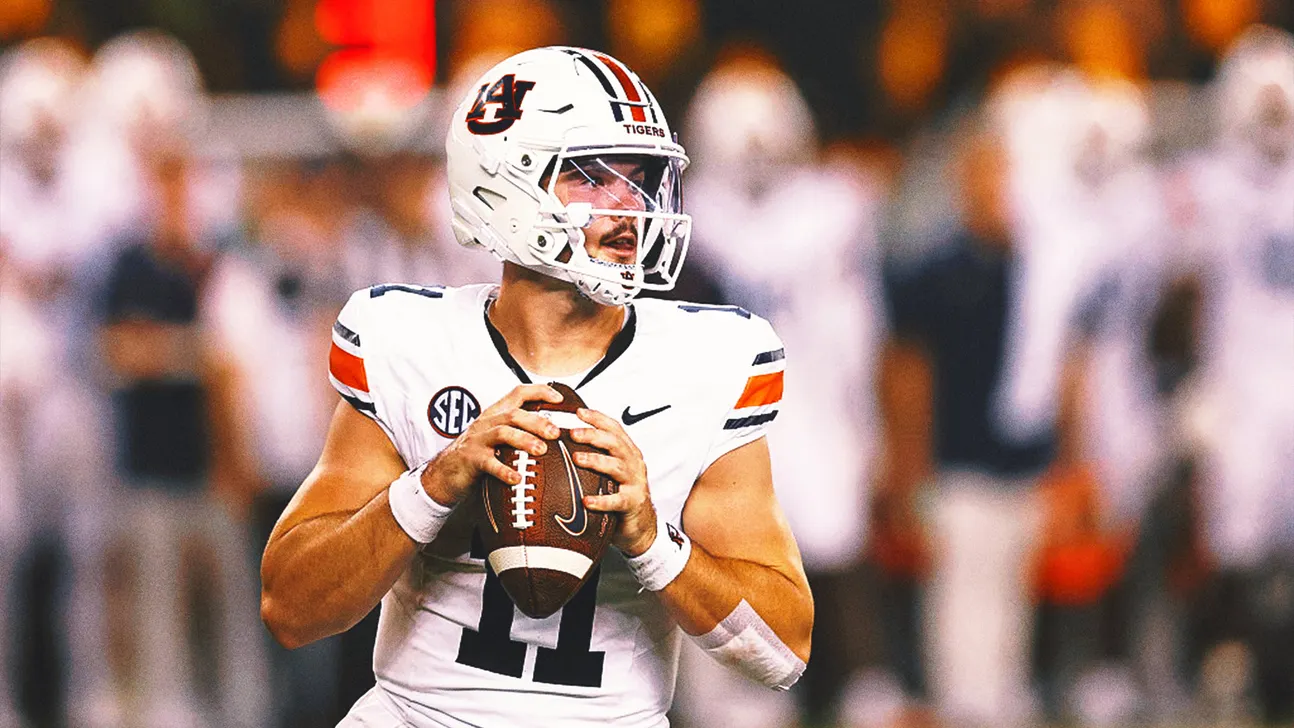
Jackson Arnold Is the Ultimate Wild Card
There was a time when Arnold was considered one of the safest bets in his recruiting class.
Coming out of Guyer High School in Denton, Texas, Arnold was a consensus five-star prospect, a Gatorade National Player of the Year and one of the highest-rated quarterbacks in the country. ESPN ranked him as the No. 3 overall player in his class and the nation's No. 1 quarterback. He threw for more than 7,000 yards and 67 touchdowns during his final two high school seasons while adding another 1,580 yards and 36 scores on the ground.
That version of Jackson Arnold looked like a future college football superstar.
College has been considerably more complicated.
Arnold spent two seasons at Oklahoma before transferring to Auburn, where he started eight games in 2025. He passed for 1,309 yards and six touchdowns while adding 311 rushing yards and a team-high eight rushing touchdowns. There were flashes of the player recruiting analysts once projected, including a 137-yard, two-touchdown rushing performance against Baylor.
There just weren't enough of them.
Now he arrives at UNLV for what feels like the perfect combination of a fresh start and a final opportunity.
Sometimes a quarterback does not need more talent around him.
He needs the right coach.
That is where Dan Mullen becomes so important.
Mullen has built much of his career around extracting production from quarterbacks whose athletic ability can stress defenses vertically and horizontally. ESPN identified Arnold's dual-threat skill set and Mullen's history developing quarterbacks as reasons UNLV could be one of the teams whose offseason roster moves significantly improved its playoff chances.
If Mullen can unlock Arnold, the ceiling changes dramatically.
UNLV does not need Arnold to become a Heisman Trophy winner.
But if he begins playing anything close to the five-star prospect who once looked capable of becoming one, the Rebels could have something few Group of 6 teams possess:
A quarterback capable of taking over a game against almost anyone on the schedule.
That can be the difference between winning nine games and playing in the College Football Playoff.
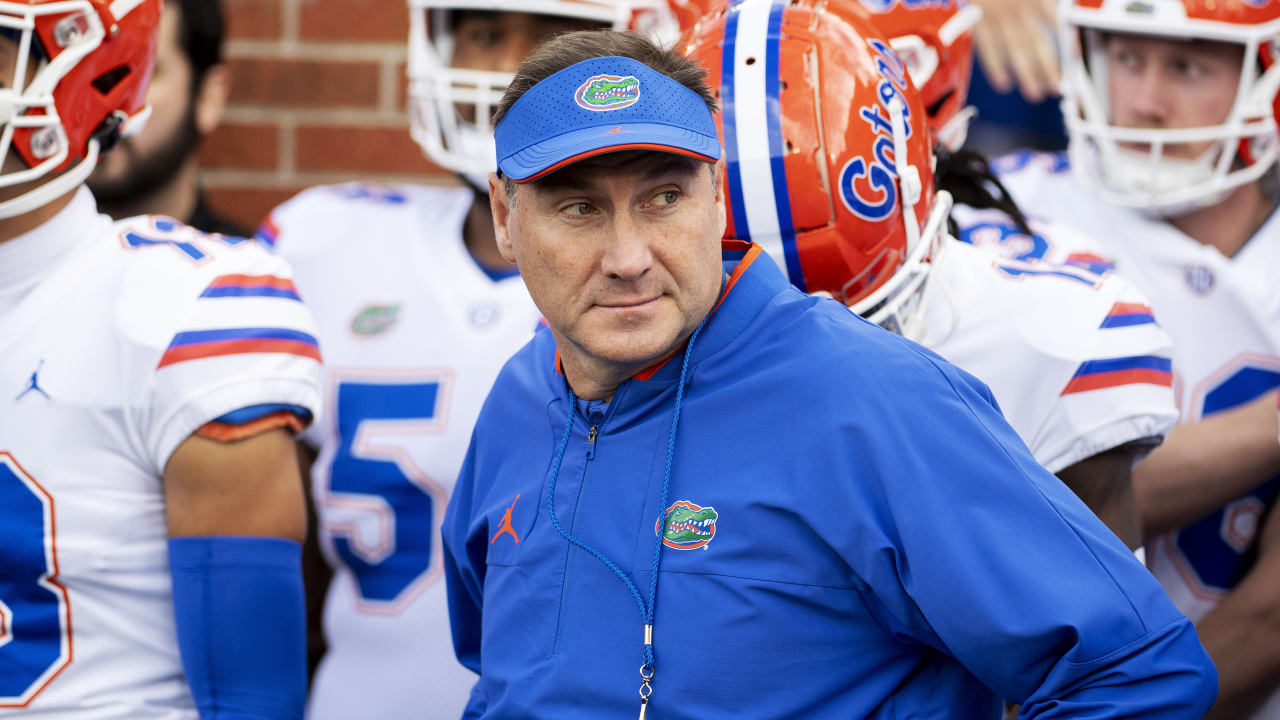
Dan Mullen Has Something to Prove, Too
Arnold is not the only person in Las Vegas chasing redemption.
Dan Mullen is doing the same thing.
It is easy to forget how successful Mullen was before the end of his tenure at Florida became the defining chapter of his coaching career.
He went 34-15 in four seasons with the Gators, winning 10 games in 2018 and 11 in 2019. Before that, he accomplished something even more difficult at Mississippi State, taking the Bulldogs to No. 1 in the country during the 2014 season and repeatedly making them competitive in the SEC West.
Then everything unraveled.
Florida went 5-6 in 2021, and Mullen was fired before the season ended.
For a coach who had once been viewed as one of the brightest offensive minds in college football, the fall was sudden.
UNLV gave him a way back.
And Mullen's first season offered an immediate reminder that he still knows how to build a football team.
The Rebels went 10-4 in 2025, finished first in the Mountain West regular-season standings and reached the conference championship game. UNLV opened the year 6-0, completed an undefeated nonconference schedule and scored at least 29 points in every regular-season game.
That was not a rebuilding season.
It was a warning.
Now comes Year 2.
Mullen has greater familiarity with the roster, his system is established, and UNLV has supplemented an already talented group with another wave of transfers.
The goal has clearly changed.
Winning seasons are no longer enough.
Neither are bowl appearances.
A playoff appearance is realistic.
And for Mullen personally, taking UNLV into the College Football Playoff would rewrite the narrative surrounding his career.
He would no longer simply be remembered as the coach Florida that was fired.
He would be the coach who took UNLV somewhere the program had never been.
UNLV Is Spending Like a Program With Bigger Aspirations
The transformation is not limited to the field.
College football has entered an era in which ambition requires financial infrastructure, and UNLV has increasingly demonstrated that it intends to operate differently from the traditional perception of a mid-major program.
The university agreed to a groundbreaking five-year, $11 million sponsorship deal with Acesso Biologics, bringing commercial branding to uniforms and other athletic inventory. The deal spans multiple sports and represents roughly $2.2 million annually.
That money should not be confused with an $11 million football NIL payroll.
But the larger point is significant.
UNLV is finding new revenue.
It is operating in Las Vegas, one of the most commercially valuable sports markets in America.
It plays its home games at Allegiant Stadium.
It is aggressively assembling a roster through the transfer portal.
And the gap between UNLV and the traditional financial powers of the Group of 6 is becoming much smaller than the program's historical reputation would suggest.
That matters in the portal era.
Look at the roster.
Arnold previously played at Oklahoma and Auburn.
Safety Jake Pope has spent time at Alabama and Georgia.
Wide receiver Troy Stellato comes through Clemson and Kentucky.
Taeshaun Lyons has been at Washington and Utah.
Keyan Burnett came from Arizona.
Jackson Brown arrived from Pitt.
The Rebels are not simply taking developmental prospects and hoping to hit.
They are taking players who have already been recruited by, practiced at or played for major-conference programs.
Saturday Blitz recently listed UNLV among five unranked teams capable of reaching the playoff, citing one of the best rosters outside the Power 4 and the amount of former Power 4 talent Mullen has assembled.
That is the model.
UNLV may not recruit five-star players out of high school like Georgia.
It can acquire former five-stars and high-level Power 4 players looking for opportunity.
In today's college football, that can work.
This Is More Than the Jackson Arnold Show
The quarterback will attract most of the attention, but UNLV's playoff argument extends well beyond Arnold.
Running back Jai'Den Thomas gives the Rebels an established centerpiece in the backfield. He was named a first-team preseason All-Mountain West selection by Athlon Sports, while Arnold, receiver Taeshaun Lyons, tight end Keyan Burnett and safety Jake Pope were among UNLV's second-team selections.
In all, UNLV placed 19 players on Athlon's preseason All-Mountain West teams.
That is what makes this team different from some Group of 6 Cinderella candidates.
The Rebels do not need everything to go perfectly.
They have depth.
They have veterans.
They have Power 4 experience.
And they have already shown they can win consistently.
UNLV went 11-3 in 2024 before Mullen arrived, then won another 10 games in his first season. The Rebels have reached the Mountain West championship game three consecutive seasons entering 2026.
This is no longer a one-year surge.
UNLV has become a program.
The Defense Is the Concern
There is, however, a reason UNLV remains a dark horse instead of an obvious playoff favorite.
The defense has to improve.
The Rebels allowed 28 points per game in 2025, ranking well outside the nation's elite defensive units, and surrendered more than 400 yards per game.
That might be survivable when Arnold and the offense are scoring 35 or 40.
It becomes dangerous in championship games.
UNLV learned that lesson against Boise State last season.
The Rebels finished the regular season 10-2, reached the Mountain West title game and then lost 38-21.
Those are the games UNLV must begin winning.
Because the margin for error for a Group of 6 playoff contender is almost nonexistent.
Georgia can lose an SEC road game and remain in the national championship conversation.
UNLV does not have that luxury.
Every shaky Saturday becomes a referendum on its résumé.
Every loss gives the selection committee another reason to look elsewhere.
The Playoff Path Is Sitting There
That is also what makes this season so intriguing.
UNLV does not have to survive an SEC or Big Ten schedule.
It needs to win its conference and establish itself as the best team among the Group of 6 contenders.
That race begins immediately.
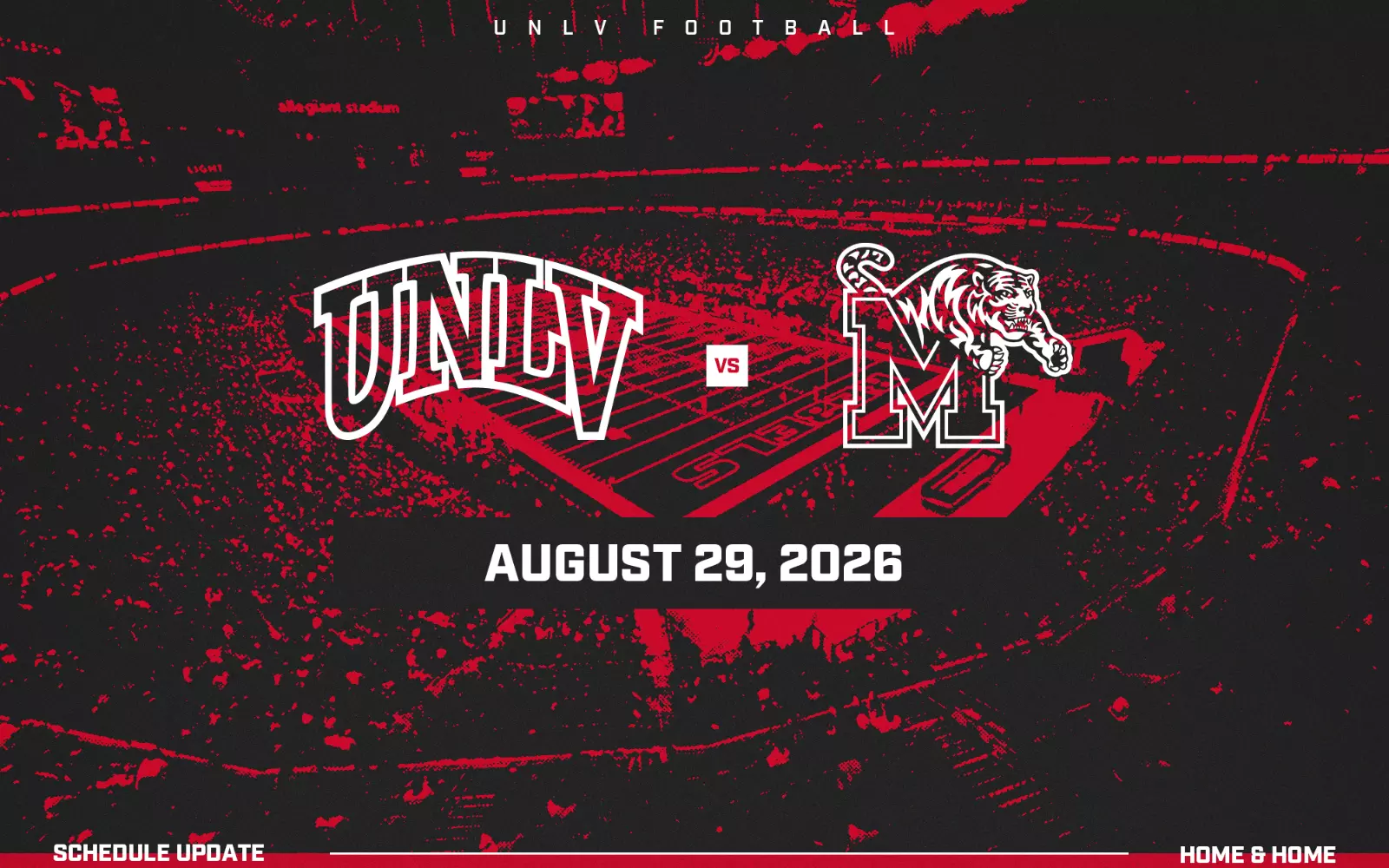
The Rebels open the season against Memphis in a Week 0 matchup that carries far more significance than the average August football game. Both programs entered the season on the short list of teams capable of competing for the Group of 6 playoff position.
Win that game, and UNLV has an early résumé piece against a direct playoff competitor.
Keep winning, and the conversation gets louder.
The Rebels have already reached the stage where national outlets are identifying them as a legitimate CFP threat. ESPN included UNLV among the programs whose roster moves strengthened their playoff chances. Saturday Blitz named the Rebels among its unranked playoff dark horses.
The secret is out.
what if jackson arnold finally becomes jackson arnold?
Jackson Arnold Finally Becomes Jackson Arnold?
That ultimately brings everything back to the quarterback.
College football seasons are often decided by players who outperform expectations.
UNLV's most fascinating possibility is different.
What if Arnold simply reaches the expectations everyone already had for him?
What if the player who was once the No. 1 quarterback in his recruiting class finally looks like it?
What if Mullen's offense gives him simpler reads, creates opportunities with his legs and allows him to play aggressively without carrying the entire program on every possession?
What if a quarterback who has spent his career trying to justify five stars suddenly stops thinking about those stars altogether?
Then UNLV becomes dangerous.
Really dangerous.
Because everything else is already beginning to fall into place.
The roster is deeper.
The money surrounding the program is growing.
The coach has won at the highest levels of college football.
The running game is proven.
The conference is winnable.
And the pathway into the playoff has never been clearer.
For most of its history, UNLV football has lived outside the center of the college football universe.
That is changing.
Las Vegas has transformed itself into one of America's most important sports cities. UNLV is trying to transform alongside it.
There may still be a sizable gap between the Rebels and the sport's true national championship heavyweights.
But UNLV does not have to prove it can beat every powerhouse in August.
It only has to earn an invitation.
Get into the playoff, and then find out.
Dan Mullen already has one career resurrection underway in Las Vegas.
Jackson Arnold is searching for his own.
If both stories reach their best possible ending at the same time, college football might discover that the most dangerous long shot in the country was sitting under the lights of the Strip all along.
UNLV isn't a College Football Playoff favorite.
But entering 2026, nobody should be laughing at the possibility anymore.