

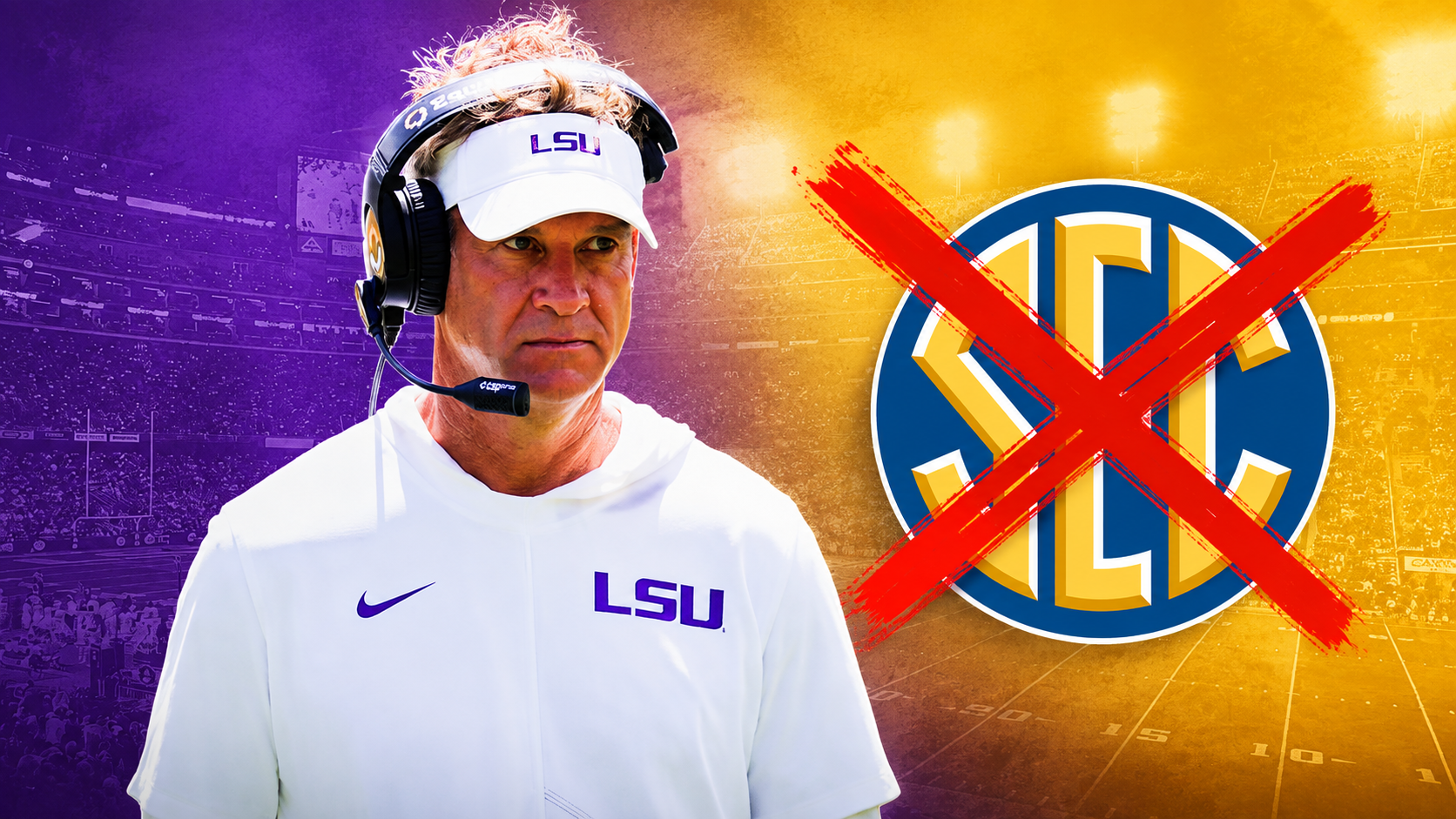
Players can transfer more freely. They can be paid. Conferences stretch across multiple time zones. Coaches move with fewer restrictions. Rosters are increasingly built through the portal instead of the traditional recruiting cycle.
But LSU may have found the line the rest of the SEC is not willing to cross.
The Tigers’ pursuit of former professional athletes has escalated from a clever exploitation of an eligibility loophole into one of the most serious institutional disputes in modern conference history. According to Yahoo Sports, SEC university leaders are discussing responses ranging from probation and a competition boycott to a federal lawsuit and, in the most extreme scenario, potentially removing LSU from the conference altogether. Those conversations are still in their early stages, and no such action has been taken. (Yahoo Sports)
That distinction matters.
LSU has not been kicked out of the SEC.
SEC schools have not yet collectively refused to play the Tigers.
But the fact those possibilities are reportedly being discussed at all shows how quickly this dispute has moved beyond football strategy.
This has become a fight over what college athletics is supposed to be.
And LSU is standing directly in the middle of it.
LSU Found the Loophole. Now Everyone Else Wants It Closed.
At the center of the controversy are athletes who signed professional contracts but have now been granted a pathway back into college sports through court action.
LSU has been particularly aggressive.
Former Ole Miss players Dae’Quan Wright and Zxavian Harris, both of whom signed NFL contracts this summer, have committed to LSU. Their cases sit at the center of the growing dispute between the university, the SEC and the legal system. (Yahoo Sports)
The issue exploded after a Louisiana court ruling granted additional eligibility protections to a group of athletes and temporarily prevented the NCAA from enforcing some of its restrictions. The order was later amended to prevent the SEC and commissioner Greg Sankey from enforcing similar restrictions while the litigation proceeds. (Reuters)
That effectively created an extraordinary possibility:
Players could leave college, sign professional contracts, spend time with NFL organizations and then return to the college game.
For LSU, the calculation is easy to understand.
If a player is legally eligible, why wouldn’t you recruit him?
That is the type of question coaches across college football have been asking throughout the NIL and transfer-portal era.
If the rule permits something, programs will push it as far as they possibly can.
LSU just pushed farther than everyone else.
The SEC Has Made Its Position Clear
The conference’s response has been unusually forceful.
The SEC adopted rules preventing athletes who have signed with certain professional leagues from returning to compete in the conference. The policy came amid broader concerns that college roster spots could increasingly go to players who have already had professional opportunities rather than traditional college athletes. (AP News)
The league then approved severe potential penalties for schools that violate those rules, including head-coach suspensions covering half a season, financial penalties equal to 50% of a sport’s annual operating budget and the possible loss of conference voting rights. LSU abstained from the vote on those penalties. (Reuters)
That alone would make this story significant.
It did not stop there.
Yahoo Sports reported Monday that high-level administrators at other SEC institutions are exploring even more drastic possibilities in response to LSU’s approach, including refusing to compete against the Tigers, placing LSU on probation, pursuing federal litigation and potentially considering expulsion. (Yahoo Sports)
The conference bylaws cited in that report apparently do not explicitly outline an expulsion process, but they do give presidents and chancellors broad authority to impose penalties they consider appropriate. (Yahoo Sports)
That creates the possibility of a showdown unlike anything the SEC has dealt with in the modern era.
Could SEC Teams Actually Boycott LSU?
It sounds extreme because it is.
Imagine Alabama refusing to play LSU.
Imagine Georgia declining a scheduled matchup.
Imagine SEC schools taking the position that competing against a roster containing players with prior professional experience would compromise competitive fairness.
College football would have entered entirely new territory.
There is no indication yet that a boycott has been approved or formally organized. The discussions reported by Yahoo remain exploratory. (Yahoo Sports)
But even the threat carries enormous significance.
A conference works because its members agree to a common set of rules.
The SEC can tolerate philosophical disagreements. It can survive disputes over scheduling, revenue distribution and postseason access.
It becomes much harder to function if one institution believes the courts permit something that the rest of the league believes violates the competitive structure of college sports.
That is the deeper issue.
This is not really about two football players.
It is about whether conference rules mean anything when they conflict with court orders.
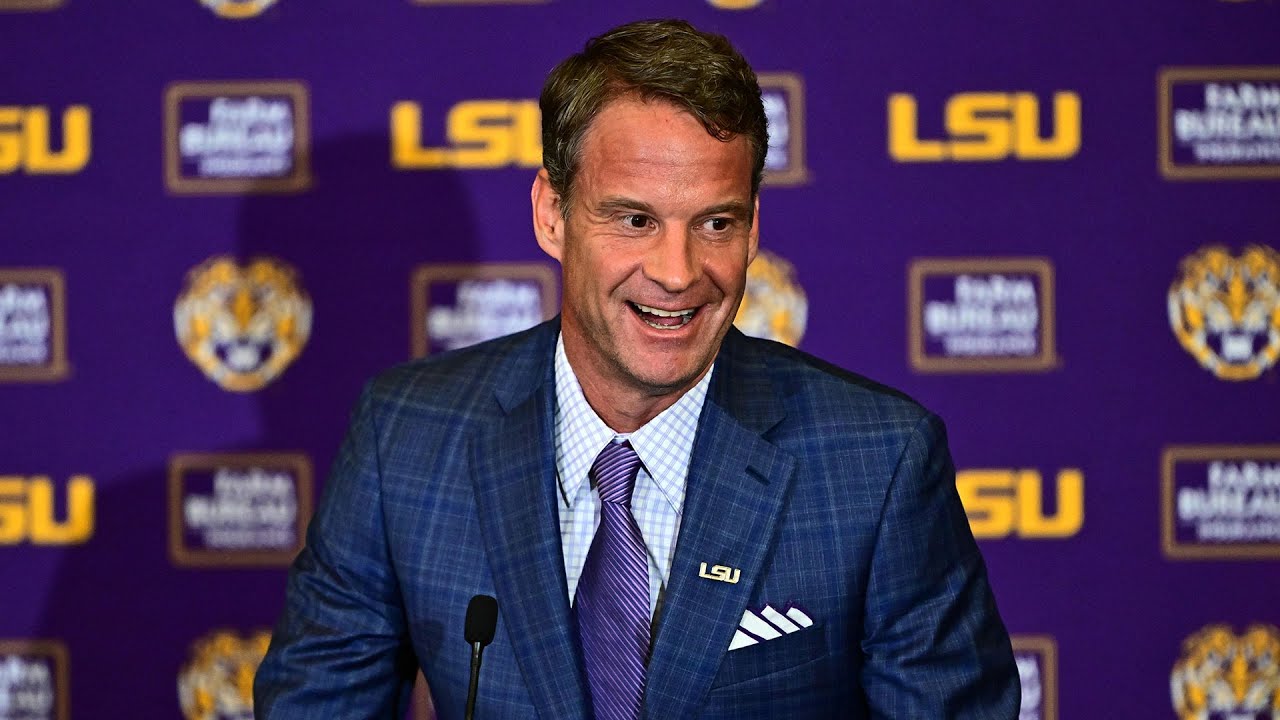
Lane Kiffin Is Doing What Lane Kiffin Has Always Done
Of course Lane Kiffin is involved.
Few coaches in college football have been more comfortable operating at the edge of conventional thinking.
Kiffin has built much of his career around understanding where the sport is going before everyone else gets there.
At Ole Miss, he embraced the transfer portal earlier and more aggressively than many of his peers. At LSU, he inherited one of college football’s strongest brands and immediately began pushing roster construction in a direction that could redefine the boundaries between college and professional football.
The irony is that Kiffin says LSU intends to comply with SEC rules.
Asked Monday about the controversy, Kiffin said his program would follow the league’s orders while the courts determine what those rules can actually be. (Yahoo Sports)
That nuance is important.
LSU is not simply declaring independence from the SEC.
It is operating inside an extraordinary legal gray area where one authority is saying the players may be eligible while another is trying to prohibit them from competing.
The courts may ultimately decide which side has the stronger position.
Until then, Kiffin has built a roster with players who could change the competitive landscape if they are permitted to play.
The Competitive Advantage Is Obvious
Strip away the politics, the lawsuits and the language about amateurism, and the football argument becomes simple.
Former professionals are attractive because they are older, stronger and more experienced.
A player who has gone through an NFL offseason has experienced professional coaching, professional strength programs and professional competition.
Put that player back onto a college roster, and coaches around the SEC are naturally going to wonder whether the playing field is still level.
That fear becomes even greater if this develops into a repeatable roster-building strategy.
Today it might be two players.
What happens next year if an SEC program brings back five?
What happens when an NFL practice-squad player discovers he still has college eligibility?
What happens when players treat the NFL not as the end of their college careers but as another temporary stop?
Those questions are why the SEC’s response has been so aggressive.
The conference is not merely policing LSU.
It is trying to stop a precedent.
LSU Could Change College Football Even If It Loses This Fight
The strange thing about this controversy is that LSU may already have accomplished something significant regardless of the final ruling.
It exposed the gap.
College athletics is operating under a patchwork of NCAA rules, conference rules, state laws, court injunctions and evolving federal proposals.
Programs are expected to operate inside that system while also doing everything possible to win.
That is an invitation for conflict.
The NCAA’s eligibility framework has already faced repeated legal challenges. Major conferences have responded by creating their own restrictions. Courts have then been asked to determine whether those restrictions can legally be enforced.
LSU simply became the program willing to test the system most aggressively.
The result may be ugly.
But it was probably inevitable.
Expelling LSU Would Be Almost Unthinkable
There is another reason the expulsion discussion is so remarkable.
LSU is not a fringe SEC member.
It is one of the conference’s most valuable brands.
The Tigers have won national championships in football, baseball and women’s basketball. Tiger Stadium is one of the sport’s iconic venues. LSU routinely generates national television audiences and is deeply woven into the identity of the SEC.
Removing LSU would not resemble disciplining an insignificant member.
It would alter the conference itself.
That is why expulsion should still be viewed as the most extreme outcome rather than the expected one.
Yahoo’s reporting makes clear these possibilities are being explored, not finalized. (Yahoo Sports)
More realistic near-term options would likely involve legal challenges, financial penalties, restrictions on competition or additional conference sanctions.
Still, college sports has moved so quickly in recent years that almost nothing can be dismissed entirely.
Five years ago, the idea of college athletes being directly paid seemed radical.
Three years ago, conference realignment had already destroyed traditional geographic logic.
Now former NFL players are attempting to return to college football.
The impossible has a short shelf life in this sport.
The SEC Is Fighting for Control
Ultimately, this is a battle over authority.
The SEC believes its members should be able to establish rules governing who can participate in conference athletics.
Players and their attorneys believe eligibility restrictions can cross legal boundaries.
LSU believes it should be able to construct its roster using athletes who are legally permitted to compete.
All three positions collide in Baton Rouge.
The SEC is preparing to defend its rules in court as the dispute moves toward another hearing, with the temporary restraining order currently preventing the league from imposing certain penalties. (Reuters)
The outcome could determine much more than whether Wright or Harris plays football for LSU.
It could determine whether conferences still control eligibility standards.
It could determine whether professional experience permanently ends a college career.
And it could determine how aggressively programs can use the courts to challenge conference rules they believe restrict their ability to compete.
LSU Has Forced College Football to Answer the Question
For decades, the line separating college football from the NFL seemed obvious.
Then NIL blurred it.
Revenue sharing blurred it further.
Unlimited transfers weakened it again.
Now LSU may erase another piece of it entirely.
If former NFL players can legally return to college teams, every aggressive coach in America will eventually explore the same strategy.
That is what has the SEC alarmed.
And that is why this is no longer just an LSU story.
A few former professional athletes have created a fight that could determine what a college athlete even is.
LSU may face fines.
It may face conference sanctions.
Other schools could theoretically refuse to compete against the Tigers.
And in the most extraordinary scenario being discussed, one of the SEC’s signature programs could face questions about whether it can remain in the league. (Yahoo Sports)
None of those outcomes is guaranteed.
But the fact they are even being discussed tells you everything about the moment college football has reached.
LSU did not create the chaos surrounding modern college athletics.
The Tigers may simply be the first program willing to see exactly how far that chaos can go.