

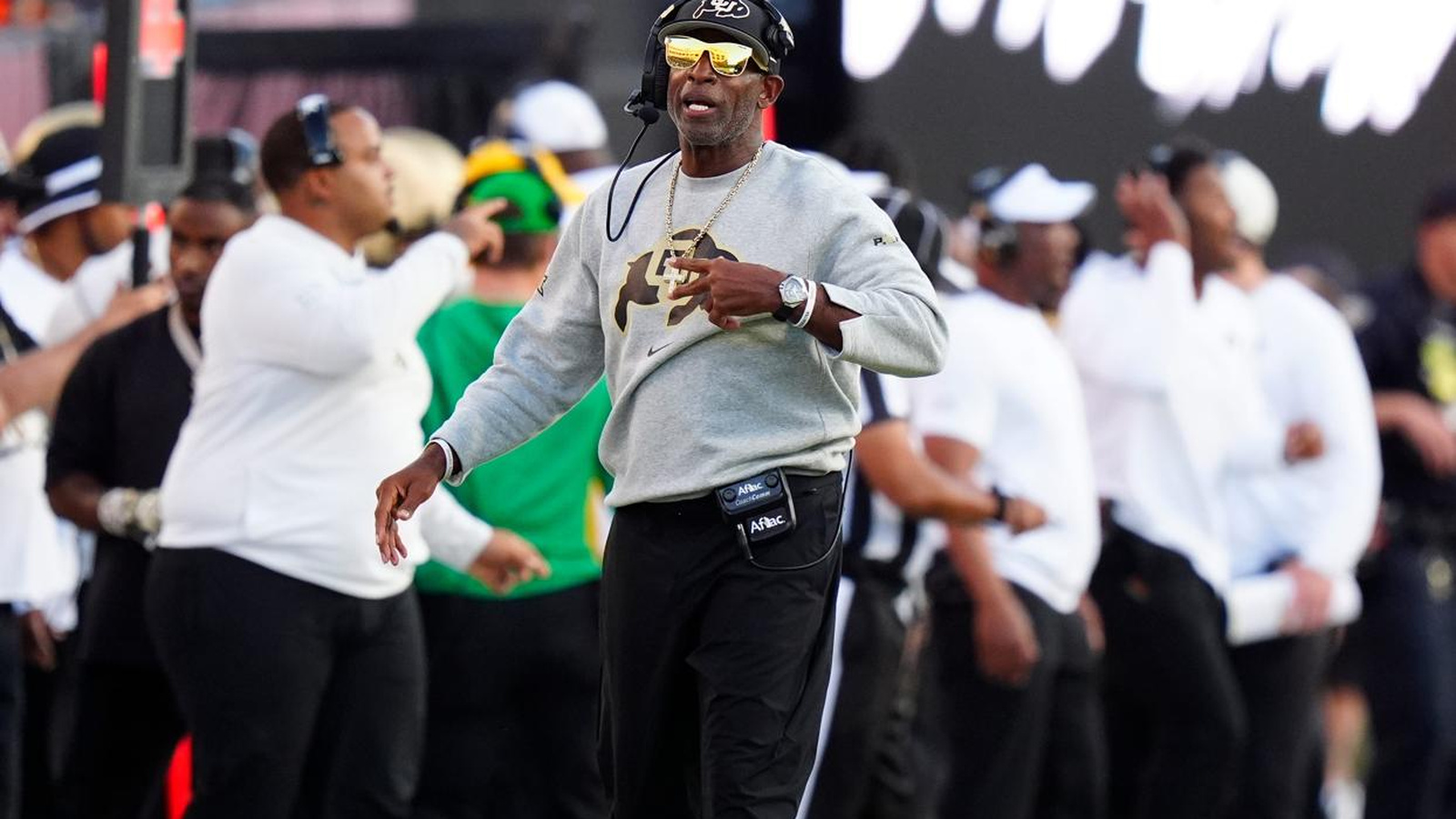
Deion Sanders arrived at Colorado promising to change the program. He brought national attention, unprecedented expectations and a level of excitement the Buffaloes hadn't experienced in years.
Now, nearly four seasons into the Coach Prime era, Colorado finds itself confronting a far different reality.
The Buffaloes are 2-3, have lost three consecutive games and are coming off a 29-7 home defeat to Texas Tech. Their offense has struggled to establish an identity, their quarterback situation remains unsettled, and questions about discipline and accountability have surfaced inside the program.
To complicate matters further, reports that Colorado's offensive game plan was left at the team hotel before its loss to Texas Tech have added another layer of scrutiny to an already turbulent season.
For a program that once appeared to be changing the landscape of college football, the conversation has shifted dramatically.
The question is no longer whether Sanders can attract attention to Colorado. He has already proven that.
The question is whether he can turn that attention into sustained success.
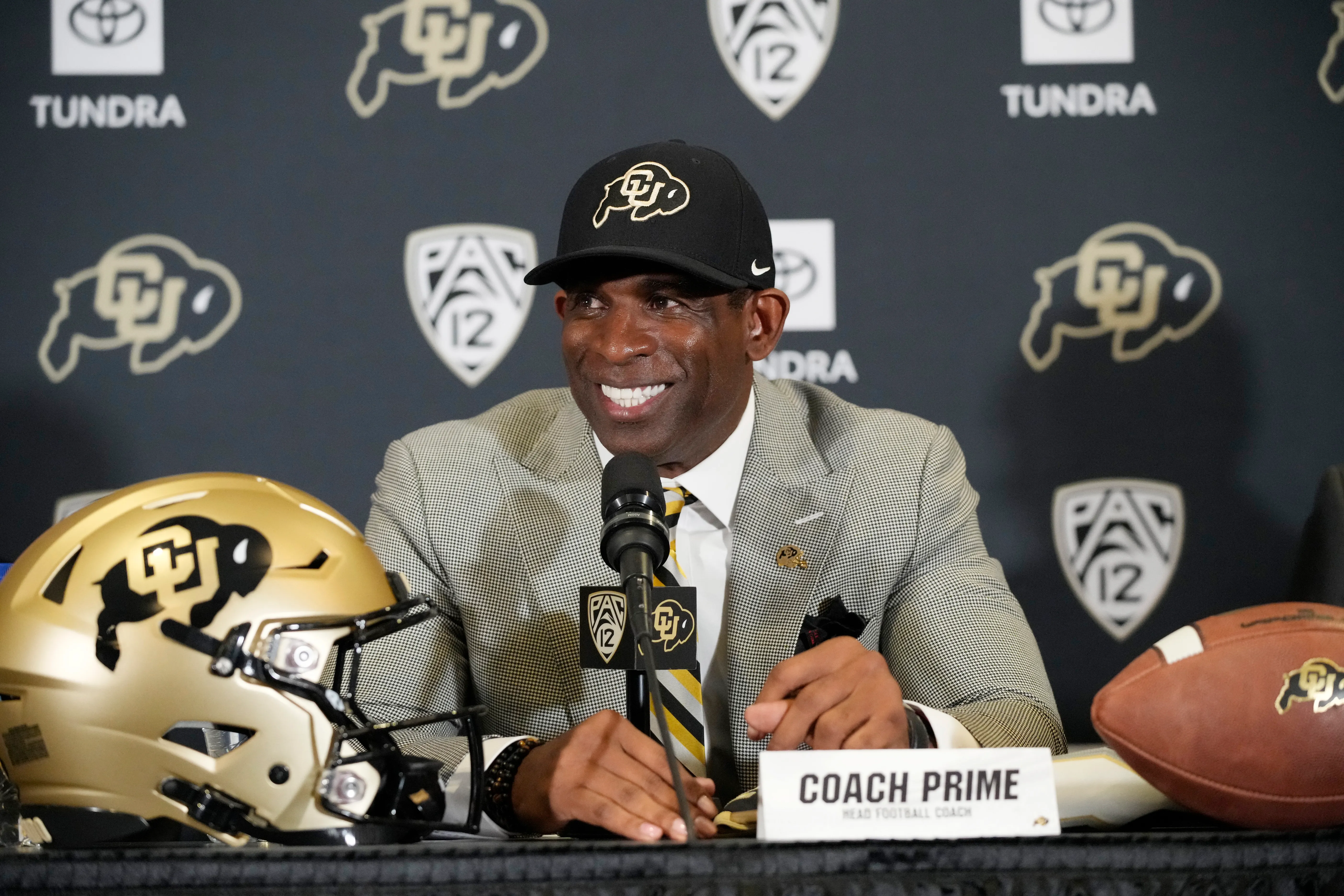
From college football's biggest attraction to a program searching for answers
When Sanders took over Colorado ahead of the 2023 season, the Buffaloes were coming off a 1-11 campaign. The program had become an afterthought nationally, struggling to compete in a crowded college football landscape.
Sanders changed that almost immediately.
His arrival brought an influx of transfers, increased national television exposure and turned Boulder into one of the sport's most discussed destinations.
Although Colorado finished 4-8 in his debut season, the foundation for a turnaround appeared to be forming.
The breakthrough came in 2024.
Led by quarterback Shedeur Sanders and Heisman Trophy winner Travis Hunter, Colorado finished 9-4, establishing itself as a legitimate Big 12 contender. The season helped validate Sanders' unconventional approach to roster construction and demonstrated that Colorado could compete on a national stage.
The university rewarded him in March 2025 with a five-year contract extension worth $54.5 million.
At the time, Colorado appeared to be investing in the future of a coach who had transformed the program's visibility and competitive trajectory.
But the momentum proved difficult to maintain.
Without Shedeur Sanders and Hunter, Colorado stumbled to a 3-9 record in 2025. Now, five games into the 2026 season, the Buffaloes are once again facing the possibility of a disappointing finish.
Since that nine-win campaign, Colorado is just 5-12.
The excitement that once surrounded every Colorado game has increasingly been replaced by questions about the direction of the program.
The Texas Tech loss exposed bigger problems
Colorado's latest setback against Texas Tech was particularly troubling because the Buffaloes had opportunities to make the game competitive.
Defensively, Colorado showed signs of improvement.
The Buffaloes limited Texas Tech to 315 total yards, well below the Red Raiders' previous average of 429.5 yards per game. Texas Tech quarterback Will Hammond finished with just 134 passing yards, and the Red Raiders converted only three of their 12 third-down attempts.
But Colorado's offense failed to capitalize.
Quarterback Isaac Wilson completed 26 of 55 passes and threw three interceptions. Drives stalled, scoring opportunities disappeared, and the Buffaloes managed just seven points in front of their home crowd.
The defeat highlighted a troubling pattern.
During Colorado's three-game losing streak, the Buffaloes have been outscored 93-27.
Through five games, Colorado's defense has recorded 43 tackles for loss, ranking among the nation's best. Yet the offensive struggles have prevented those defensive improvements from translating into victories.
For Sanders, whose Colorado teams previously built their identity around explosive offensive playmakers, the inability to consistently move the football has become one of the biggest concerns surrounding the program.
And with the Buffaloes entering their bye week, the pressure to find answers is only increasing.
A leaked game plan adds to the controversy
As if the loss itself wasn't embarrassing enough, Colorado became the center of one of the strangest stories of the college football season.
Before Saturday's game against Texas Tech, a fan posting on an On3 message board claimed that a group of Red Raiders supporters had discovered what appeared to be Colorado's offensive game plan at the Buffaloes' team hotel.
The document reportedly contained approximately 25 pages, including scripted opening plays, red-zone strategies and information about Texas Tech's defensive tendencies.
Following the game, social media users compared portions of the alleged game plan with Colorado's actual offensive play calls. Several of the plays appeared to match what the Buffaloes ran during the game.
The comparisons raised serious concerns about how sensitive football information may have ended up in the hands of opposing fans.
There is no verified evidence that Texas Tech's coaching staff received or used the document before the game, and it would be irresponsible to suggest that the alleged exposure of the game plan caused Colorado's defeat.
Still, the incident raises questions about the organization and operational discipline of Sanders' program.
At the Power Four level, protecting a team's game plan is among the most basic responsibilities of a football operation.
Whether the apparent mistake affected Saturday's outcome is unknown. The fact that it happened at all, if the reports are accurate, is a significant concern for Colorado's leadership.
Locker room concerns and player dismissals raise questions
Beyond the struggles on the field, Colorado has also dealt with concerns surrounding discipline and the program's internal culture.
Following a blowout loss to Northwestern earlier this season, Sanders revealed that multiple players were no longer with the team.
He acknowledged that the decisions were tied to conduct he believed was detrimental to the program.
"It's never one," Sanders said when explaining what led to the dismissals. "Those guys could tell you, I'm the most loving and giving and forgiving man you could ever meet."
Sanders also admitted that he had not been strict enough in addressing certain issues during the previous season, suggesting that problems he previously allowed to linger eventually became more significant.
The remarks were notable coming from a coach who has consistently emphasized accountability, discipline and personal responsibility throughout his career.
Player departures are hardly unusual in modern college football, particularly in the transfer portal era. But dismissals during the season, combined with mounting losses and questions about team culture, place added pressure on the coaching staff.
Sanders has made it clear that he intends to take a firmer approach.
Whether those changes can stabilize the program remains to be seen.
Colorado still hasn't solved its quarterback problem
Perhaps the biggest football-related issue facing Sanders is the absence of a dependable starting quarterback.
The Buffaloes entered 2026 hoping highly touted Julian Lewis could establish himself as the next face of the program.
Instead, Colorado has spent much of the season searching for consistency at the position.
Lewis opened the year as the starter but was benched at halftime against Baylor. Isaac Wilson, the younger brother of former BYU quarterback and NFL first-round pick Zach Wilson, subsequently received an opportunity to lead the offense.
But his performance against Texas Tech only intensified the uncertainty.
Sanders has been openly critical of the quarterback room, describing the instability as a significant obstacle to the team's success.
The situation has become especially frustrating considering the expectations surrounding offensive coordinator Brennan Marion, who arrived with a reputation for his innovative, up-tempo offensive system.
For a coach whose most successful Colorado season featured Shedeur Sanders operating the offense, finding a replacement capable of commanding the position has proven far more difficult than expected.
And until that problem is solved, Colorado's ceiling will remain limited.
Was Colorado too quick to give Sanders $54.5 million?
The Buffaloes' recent struggles have also brought renewed attention to the university's decision to award Sanders a lucrative contract extension following the 2024 season.
Former Colorado quarterback and Fox Sports analyst Joel Klatt recently questioned the timing of the agreement.
Speaking on Denver Sports 104.3, Klatt suggested that athletic departments frequently commit significant guaranteed money to coaches before their success has been established over a meaningful period.
"I do think that contracts and extensions and raises are given far too early," Klatt said.
His criticism was not necessarily directed at Sanders personally, but rather the broader tendency for universities to make major financial commitments after relatively short periods of success.
Colorado's decision now looks considerably more complicated.
Sanders received his extension after leading the Buffaloes to nine victories in 2024. Since then, the program has experienced one losing season and is in danger of another.
According to USA Today's Brent Schrotenboer, Colorado could owe Sanders approximately $26 million if it elected to dismiss him following the season.
That financial commitment makes any potential coaching change a difficult proposition.
It also places additional importance on Sanders proving that the 2024 campaign represented the beginning of sustained progress, rather than an isolated high point built around exceptional individual talent.
The next chapter of the Coach Prime experiment
It would be premature to declare Sanders' tenure at Colorado a failure.
The program he inherited was one of the least competitive in major college football. Within two years, he helped turn it into a nine-win team featuring a Heisman Trophy winner.
He has also endured serious health challenges, including treatment for bladder cancer, while continuing to lead the program.
Those accomplishments deserve recognition.
And despite the current struggles, there are signs that Colorado has pieces capable of contributing to a turnaround. The defense has improved under coordinator Chris Marve, and the Buffaloes still have an opportunity to regroup during their bye week before facing Utah on October 17.
But Sanders is now entering a different stage of his coaching career.
The excitement surrounding his arrival is no longer enough. Neither are recruiting headlines, viral moments or national television appearances.
Colorado needs consistency.
It needs stability at quarterback, continued defensive development and a roster that can compete in the Big 12 without relying on a handful of extraordinary players to carry the program.
Most importantly, it needs victories.
The challenge facing Sanders isn't generating belief in Colorado football. He accomplished that almost immediately.
It's ensuring that belief is justified by the product on the field.
Has Deion Sanders lost his momentum?
There is a difference between transforming a program's image and building a sustainable winner.
Sanders has unquestionably accomplished the first.
His influence brought attention, financial opportunity and national relevance to a football program that desperately needed all three.
But nearly four seasons into his tenure, there are legitimate questions about whether Colorado has established the foundation necessary to consistently compete at the highest level.
The 2024 season showed what Sanders' program could accomplish with exceptional talent.
The past two seasons have exposed how difficult it has been to maintain that standard.
At 2-3, Colorado still has time to salvage its season. A strong finish could quiet the growing criticism and provide evidence that Sanders has the program moving in the right direction.
Another disappointing campaign, however, would make the questions surrounding his leadership considerably harder to dismiss.
Deion Sanders hasn't lost his ability to command the national spotlight. But the momentum that once made Colorado one of college football's most exciting stories has undeniably faded.
And for the first time since his arrival in Boulder, Coach Prime faces a challenge that publicity alone cannot solve.
He has to prove that Colorado's transformation can last.
Reporting references: The Athletic (October 3–4, 2026), Sports Illustrated, EssentiallySports (October 8, 2026), and publicly reported game results and statements. The two Athletic articles and the supplied X post could not be directly opened, so no exclusive details from those links have been treated as independently verified.