


Sound the alarms. The Golden Domers are back to playing 4 quarters of physical football.
One major flaw that stuck out for Coach Marcus Freeman's army was their inability to run the ball efficiently. Before Saturday's matchup in Chapel Hill, the Irish averaged 141.8 yards per game, which ranks 113th nationally.
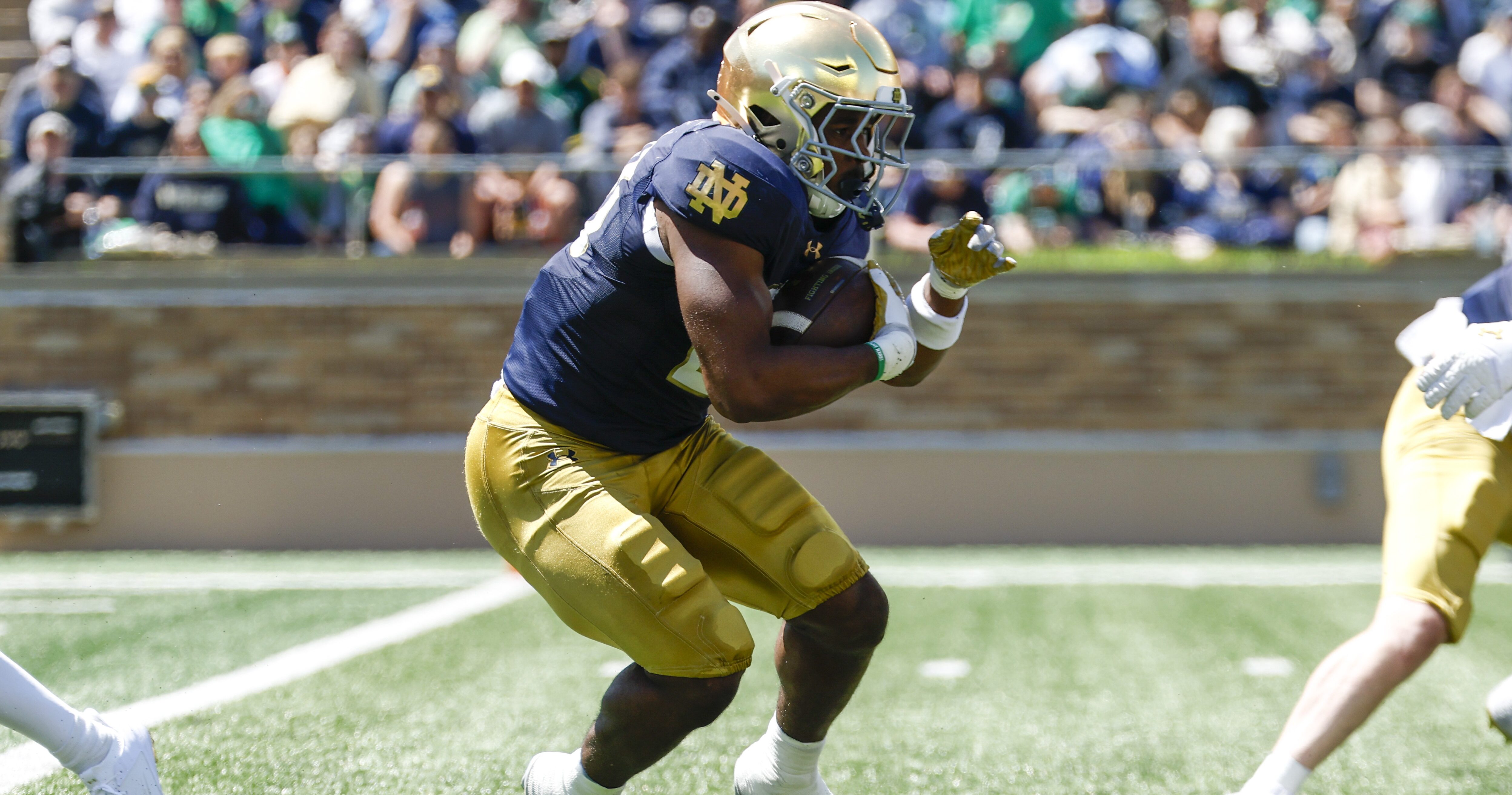
Against the Tar Heels, the Irish FINALLY figured it out. Notre Dame's rushing attack came alive, piling up 241 yards on the ground while averaging 5.6 yards per carry.
The Irish finished the afternoon with 475 yards of total offense, marking the first time all season that the nation's No. 3-ranked team surpassed the 200-yard rushing mark.
It was a much-needed breath of fresh air following a nightmare start to Notre Dame's highly anticipated "Leave No Doubt" 2026 campaign.
It appeared that head coach Marcus Freeman liked what he saw against the Boilermakers, as he decided to turn Saturday's matchup into the Jonaz Walton coming-out party.
Walton made the most of his opportunity, rushing for 120 yards on 23 carries while averaging 5.2 yards per attempt.
While those numbers might not necessarily jump off the page, the biggest difference was the improvement in Notre Dame's interior blocking.
After struggling to consistently establish the run in previous weeks, the Irish offensive line finally began creating the running lanes that had been missing throughout the early portion of the season.
Despite the muddy field and rainy conditions, Notre Dame's ground game delivered when it mattered most. Rather than allowing the weather to dictate their offensive struggles, the Irish leaned into their rushing attack, with Walton providing the spark they had desperately been searching for.
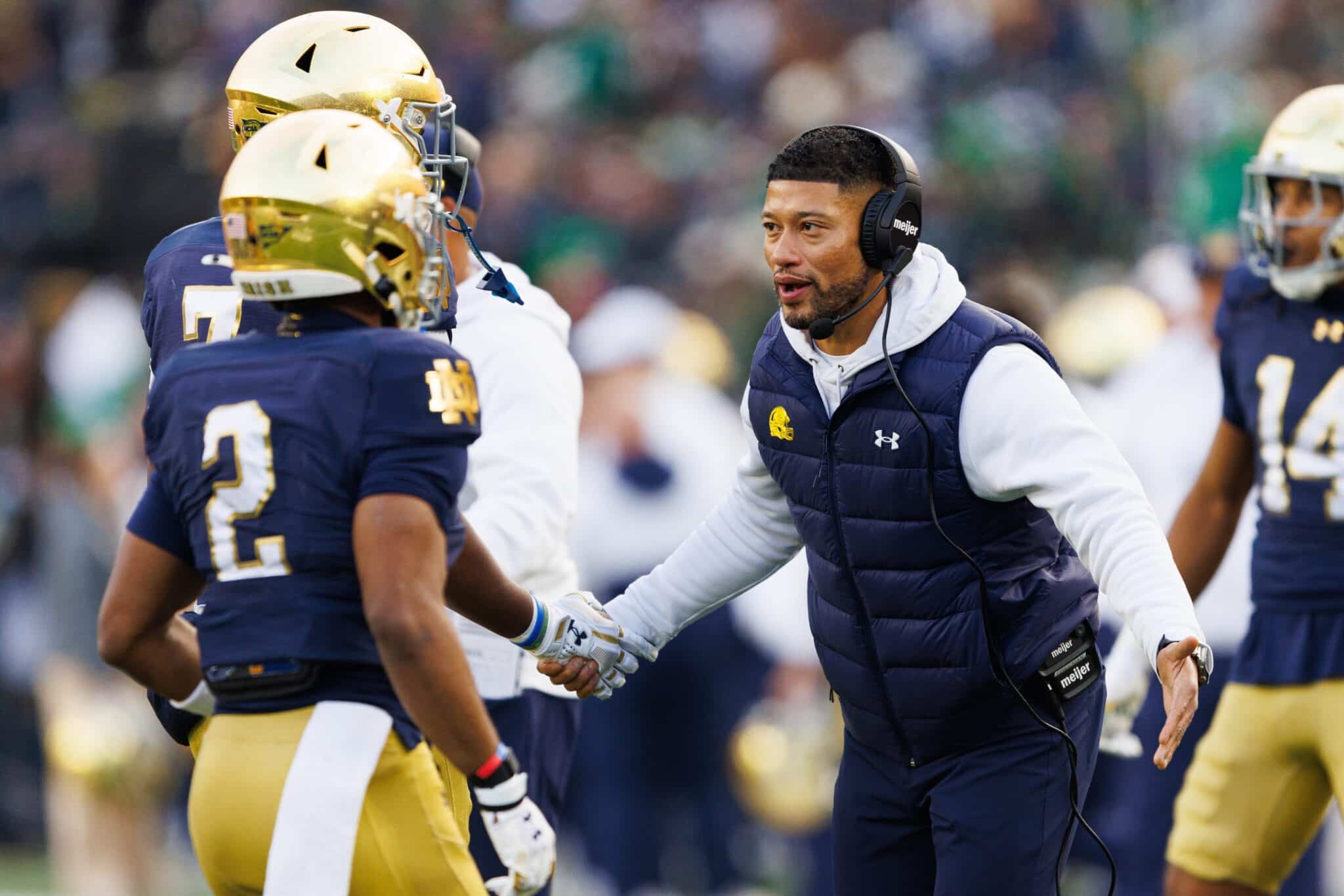
"It was so wet, we knew we weren’t going to be able to throw the ball,” Freeman said. “We had a plan going in that we were going to use him early… [Walton] has a different type of running style that gave us a spark, and he played really well today.”
The Reincarnation of a Familiar Face?
For Notre Dame fans, Walton's emergence might bring back memories of another bruising Irish running back: Audric Estime.
Much like Estime, Walton brings a physical, downhill running style that relies on patience, power and the ability to fight through contact.
During his time in South Bend, Estimé became a cornerstone of the Irish offense, rushing for 1,341 yards and 18 touchdowns during his final season in 2023.
While it would be premature to put Walton in the same category as one of Notre Dame's most productive recent running backs, the similarities in their approaches are difficult to ignore.
Neither back needs to rely solely on explosive plays to make an impact. Instead, both have the ability to wear down opposing defenses, turn short gains into meaningful yardage and provide the physical presence that Notre Dame's rushing attack has been missing.
Can the ground game bring back the momentum from 2025?
Looking ahead, the Irish return to South Bend this Saturday for a 3:30 p.m. showdown against Stanford, presenting another opportunity for Freeman and company to establish their presence on the ground.
Notre Dame enters the contest undefeated at 5-0, but despite the perfect record, there are still questions surrounding the consistency of its rushing attack.
The Cardinal represent an opportunity for the Irish to build on their performance against North Carolina and prove that their offensive resurgence was more than just a one-week occurrence.
For Walton, Saturday presents another chance to solidify himself as a legitimate contributor in Notre Dame's backfield.
His 120-yard performance against the Tar Heels was certainly a step in the right direction, but one impressive afternoon does not automatically solve the issues that have plagued the Irish rushing attack throughout the opening weeks of the season.
“There is no success without struggle. Every game is going to present its certain example of struggle, and we overcame it, Freeman said. It was great to achieve that victory.”
If Freeman truly believes Walton can provide the physical presence that this offense has been missing, the Stanford matchup could be an opportunity to give him another significant workload.
However, the success of Notre Dame's ground game cannot fall entirely on Walton's shoulders.
The offensive line must continue to improve, particularly along the interior, where establishing consistent running lanes will be essential.
Against North Carolina, the Irish showed flashes of the physicality that has defined their rushing attack in previous seasons. The challenge now is turning those flashes into four quarters of consistent production.
One of the biggest advantages of establishing a reliable rushing attack is the pressure it takes off quarterback CJ Carr.
While Carr has demonstrated his ability to lead Notre Dame's passing offense, relying too heavily on his arm could become problematic against stronger competition.
A productive ground game forces opposing defenses to respect both dimensions of the offense, creating opportunities for play-action passes and preventing defenders from focusing exclusively on stopping Carr.
The Irish do not necessarily need Walton to rush for 120 yards every Saturday. What they need is consistency.
Whether it is picking up four yards on first down, converting a crucial third-and-short or controlling the clock with a late-game drive, the rushing attack must become something Freeman can depend on regardless of the opponent.
While Stanford provides the immediate opportunity to continue building momentum, Notre Dame's schedule is about to become significantly more challenging.
On Oct. 17, the Irish travel to Provo for a highly anticipated matchup against BYU, currently ranked No. 8 in the nation.
With both programs undefeated entering Week 6, the possibility of a top 10 showdown makes the matchup one of the most intriguing games remaining on Notre Dame's schedule.
Unlike the previous few weeks, the Irish may not have the luxury of overcoming offensive inconsistencies against an opponent with legitimate College Football Playoff aspirations.
That is where the importance of the rushing attack becomes even greater.
In a potentially hostile road environment, establishing the run early could help Notre Dame control the tempo, sustain possessions and keep its offense ahead of the chains.
Rather than asking Carr to repeatedly convert difficult third-down situations, the Irish must put themselves in positions where the entire playbook remains available.
Following BYU and a scheduled bye week, Notre Dame will face Navy on Oct. 31 at Gillette Stadium in Foxborough, Massachusetts.
Although the Midshipmen present a different challenge because of their offensive approach, the importance of controlling possession will remain the same.
Sustaining long drives and avoiding unnecessary three-and-outs could be especially valuable in a game where every possession matters.
Then comes arguably the most anticipated matchup remaining on Notre Dame's schedule.
On Nov. 7, the Irish welcome No. 4 Miami to Notre Dame Stadium for a primetime showdown between two programs with national championship aspirations. The matchup has the potential to carry significant College Football Playoff implications, and by that point, Notre Dame's rushing attack must be considerably more dependable than it was during the opening month of the season.
Against an opponent of Miami's caliber, the Irish cannot afford to become one-dimensional. If the ground game struggles to generate positive yardage, the responsibility will shift almost entirely onto Carr and the passing offense.
That is a dangerous position for any team attempting to compete against one of the nation's premier programs.
However, if Walton and the offensive line can establish themselves early, Notre Dame could put itself in a much stronger position.
A successful running game would allow Freeman to dictate the pace of the contest rather than constantly reacting to the opposing defense.
The Irish will then close out their home schedule with matchups against Boston College and SMU before traveling to Syracuse for the regular-season finale.
While each opponent presents its own challenges, the formula for Notre Dame's offensive success should remain relatively simple: establish the run, control the line of scrimmage and allow Carr to capitalize on the opportunities created by a balanced attack.
Perhaps the most important takeaway from the North Carolina game was not necessarily the 241 rushing yards, but the reminder of what Notre Dame's offense can look like when its ground game is functioning properly.
For years, the Irish have built their reputation around physical football, strong offensive line play and running backs capable of wearing down opposing defenses.
From Josh Adams to Kyren Williams, Audric Estime, or the legendary Jeremiyah Love, the ability to dominate on the ground has been a defining characteristic of Notre Dame football.
That is why the early-season struggles were so concerning.
Even with the Irish continuing to win football games, something felt missing from an offense that was expected to be among the nation's best.
Against North Carolina, that missing piece finally began to reappear.
Walton's emergence provided a much-needed spark, but the true test of Notre Dame's rushing attack will not be determined by one performance in Chapel Hill.
It will be determined by whether the Irish can consistently move the football against increasingly difficult competition, especially when the stakes are at their highest.
With a perfect record, a No. 3 national ranking and legitimate College Football Playoff aspirations,
Notre Dame has plenty to play for over the next two months.
However, if Freeman hopes to turn another promising regular season into a national championship run, the Irish must rediscover the physical identity that has carried the program through some of its most successful seasons.
Saturday's performance against North Carolina was a promising start, but the work is far from finished.
Notre Dame is no longer running on empty. Now, the Irish must prove they have enough left in the tank to make a championship run.