


That had to have been the longest two weeks ever. After a game that shall not be mentioned, the Irish are back in South Bend for their longstanding annual tradition versus the Navy Midshipmen. For this edition, the Irish will be traveling to Gilette Stadium for the 99th meeting in their history. Notre Dame holds an 84-13-1 record against their Naval Brothers from Annapolis.
But what makes this rivalry so important? Well, it's pretty
complicated. Allow me to explain.
The Lifetime Debt
Now the Irish annually facing a service academy only adds
fuel to the "Notre Dame plays no one" crowd of locusts, but to truly
understand why this is an annual matchup takes a lot. It's such a rich history
you may even learn something and realize why this isn't just a "cupcake
game."
Notre Dame and Navy first played in 1927, starting a tradition which has lasted almost a century. The tradition has lasted through World Wars, seen 18 American presidencies, and has been played every year (except 2020) for a total of 97 matchups in this rivalry’s storied history. Notre Dame, a private institution, has never received state funding. With so many students serving in the military during WWII, Notre Dame was at the end of its financial lifeline.
In a remarkable act of solidarity, Navy came to Notre
Dame’s aid, designating Notre Dame as a training center, providing crucial
financial support and ensuring Notre Dame’s survival as an institution.
This incredibly generous act is the reason Notre Dame exists
today. Navy provided Notre Dame just under $500,000, to go towards
infrastructure and administrative expenses. It also led to the creation of
Notre Dame’s Naval ROTC via the V-7 Indoctrination Program, where 900 students
enlisted for a month as apprentice seamen.
This ROTC program lives on today. Many institutions around the country have ended their (Naval) ROTC programs since WWII, but Notre Dame has forever stood by Navy, allowing the university to serve as a base for college naval recruits.
Due to Navy’s aid during WWII, Notre Dame considers itself
forever in debt to the United States Naval Academy. Notre Dame has reciprocated
their generosity by offering an open invitation to play a football game every
year, an offer Navy has taken up every year (excluding 2020).
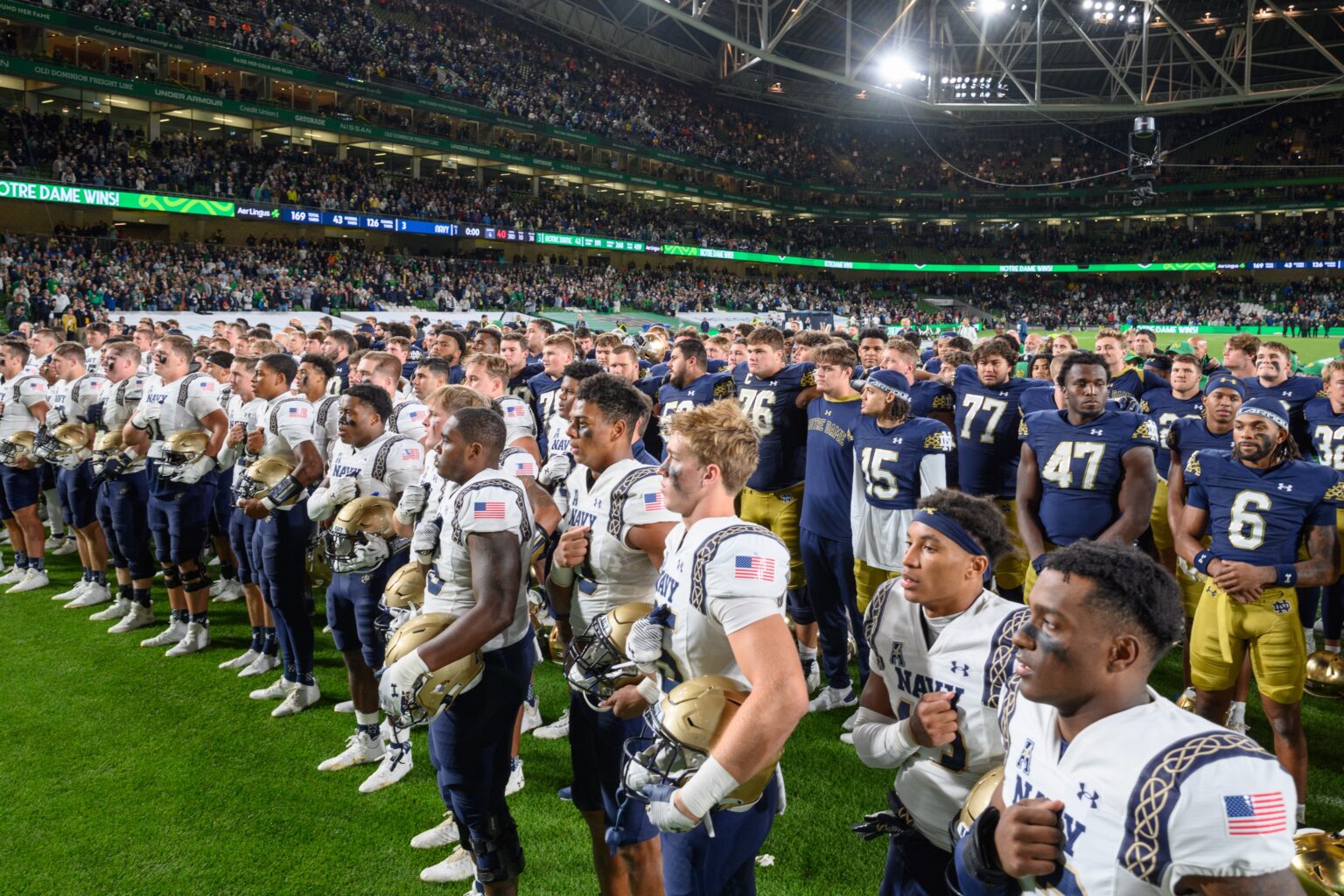
With our long history, some traditions have formed, one
being the side-by-side postgame singing of both teams’ Alma Mater. We don’t
boo Navy, and we stand respectfully for them. They are our brothers, our most
important rival, and a military institution for this country.
Under head coach Brian Newberry, Navy has continued to rely on its option-based offensive identity, averaging more than 300 rushing yards per game. The Midshipmen's ground attack will present a unique challenge for a Notre Dame defense that has emerged as one of the nation's most dominant units.
With the College Football Playoff race beginning to
intensify, the Fighting Irish cannot afford another setback, especially with
top-ranked Miami awaiting them next weekend.
Can the offense find its footing?
Throughout the first seven games of the season, Notre Dame's
offense has established itself as one of the most efficient and explosive units
in college football.
Under offensive coordinator Mike Denbrock, the Fighting
Irish are averaging 445.1 yards of total offense and 41.1 points per game, with
the latter ranking sixth nationally.
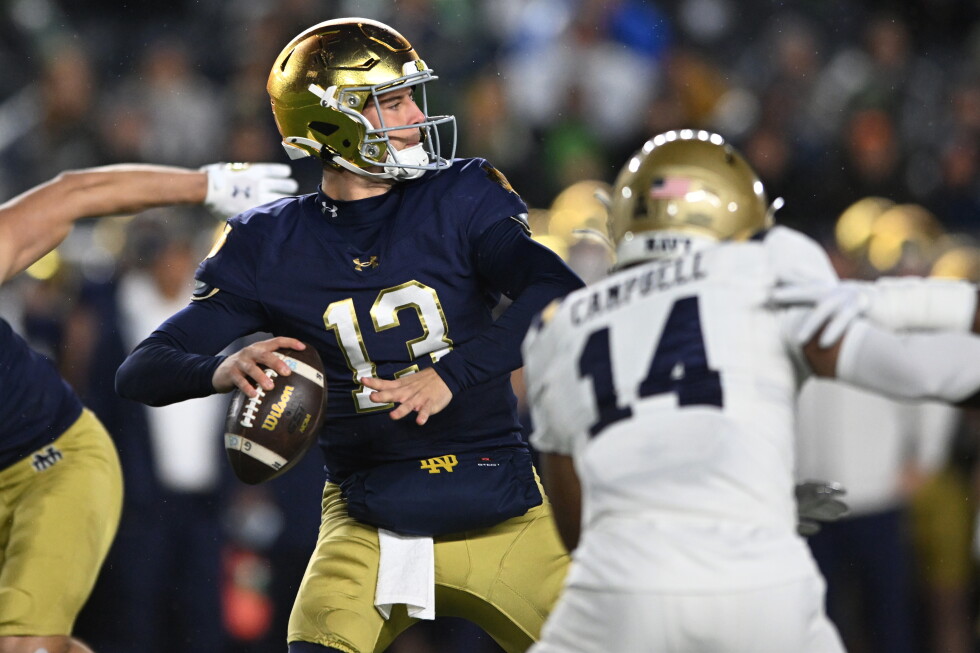
Junior quarterback CJ Carr has been the centerpiece of that
production, completing 129 of 193 passes for 1,639 yards, 16 touchdowns and
just one interception.
Carr's ability to consistently push the football downfield
while minimizing mistakes has been instrumental in Notre Dame's offensive
success. However, his performance against BYU demonstrated that even one of the
nation's most productive quarterbacks can struggle when forced out of rhythm.
Against the Cougars, Carr completed 27 of 49 passes for 261
yards without a touchdown. Although he avoided throwing an interception, Notre
Dame struggled to consistently finish drives, ultimately falling four points
short.
Saturday presents an opportunity for Carr to regain his
early-season form against a Navy secondary that has struggled considerably in
pass coverage.
The Midshipmen are allowing 255.9 passing yards per game,
ranking 123rd nationally. Their defensive vulnerabilities could create
opportunities for Notre Dame's receiving corps, particularly Jordan Faison and
Micah Gilbert.
Faison leads the Irish with 34 receptions for 451 yards and
four touchdowns, while Gilbert has accumulated 429 yards and two touchdowns on
22 receptions.
The two receivers provide Notre Dame with different ways to
attack opposing defenses, whether through shorter, high-percentage completions
or explosive plays downfield.
However, the Fighting Irish cannot afford to become overly
dependent on Carr's arm. Establishing a consistent rushing attack will be
equally important against a Navy defense that has performed considerably better
against the run than the pass.
USE JONAZ WALTON
One of the more encouraging developments for Notre Dame this
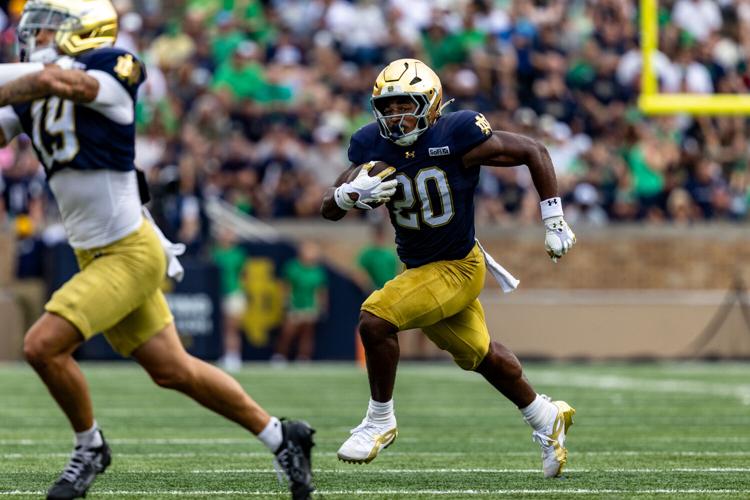
season has been the emergence of freshman running back Jonaz Walton.
Through seven games, Walton has accumulated 426 rushing
yards and three touchdowns on just 57 carries, averaging an impressive 7.5
yards per attempt.
His explosiveness has provided the Fighting Irish with a
legitimate big-play threat out of the backfield, while sophomore Nolan James
Jr. has offered a complementary rushing presence.
James has recorded 412 yards and six touchdowns on 81
carries, giving Notre Dame a balanced combination of speed, physicality and
short-yardage production.
Collectively, the Irish are averaging 183.4 rushing yards per game, ranking 43rd nationally
Although those numbers may not place Notre Dame among the
country's most prolific rushing offenses, the unit's ability to protect Carr
and create favorable situations has been particularly impressive.
The Fighting Irish lead the nation in fewest sacks allowed
per game, surrendering just 0.3, while ranking second in tackles for loss
allowed at 2.3 per contest.
That offensive line production could prove decisive against
a Navy defense allowing only 109.3 rushing yards per game.
If Walton and James can consistently generate positive
yardage on early downs, Notre Dame should be able to establish offensive
balance and prevent Navy from focusing exclusively on disrupting Carr.
The Good Ol' Triple Option
Despite entering Saturday with a disappointing 2-5 record,
Navy's offensive production tells a significantly different story.
The Midshipmen are averaging 426.6 yards of total offense
per game, including 307.1 rushing yards, which ranks third nationally.
Under Newberry, Navy's offense has continued to embrace an
option-oriented rushing system designed to create defensive confusion through
misdirection, disciplined blocking and multiple potential ball carriers.
Unlike traditional offenses that rely heavily on passing,
Navy attempts to control the line of scrimmage and force opponents into
difficult decisions on nearly every rushing play.
At the center of the Midshipmen's attack is junior
quarterback Jackson Gutierrez, whose emergence has made him one of the most
productive rushing quarterbacks in college football.
Gutierrez has rushed for 868 yards and 12 touchdowns on 150 carries, averaging 5.8 yards per attempt. His 124.6 rushing yards per game rank fourth nationally and first among quarterbacks.
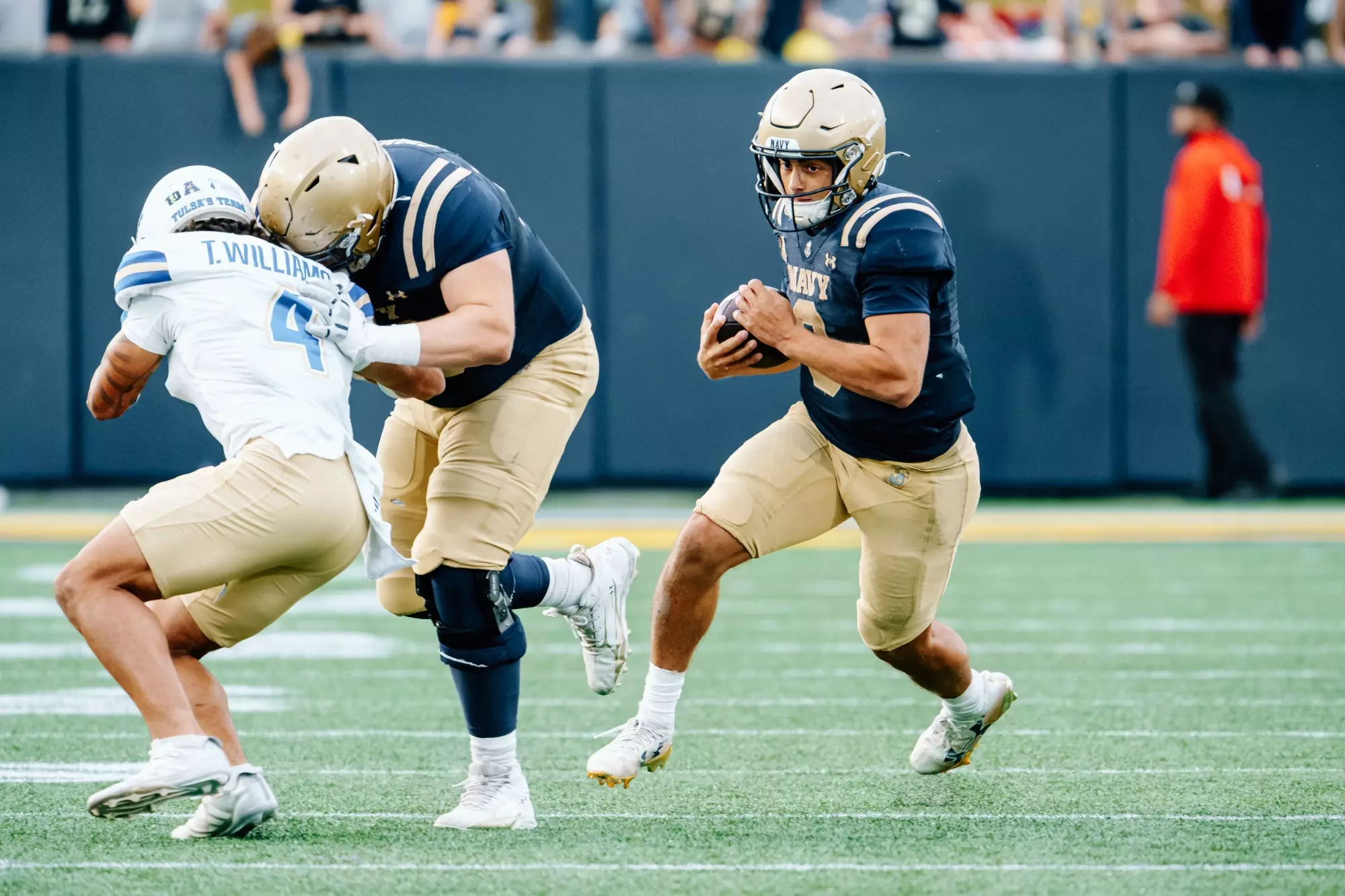
His ability to identify defensive openings and accelerate
through the second level has been essential to Navy's offensive success.
Against Tulsa earlier this month, Gutierrez delivered one of
the most impressive individual performances of the season, rushing for 232
yards and three touchdowns on 41 carries.
He followed that performance with another outstanding effort
against North Texas, accumulating 228 rushing yards and three touchdowns on 27
attempts.
Those performances demonstrate why Notre Dame cannot
approach Navy as an ordinary two-win opponent.
Gutierrez is not simply a quarterback capable of scrambling
when passing plays break down. He is the primary engine of an offense built
around his ability to make decisions and exploit defensive mistakes.
The Midshipmen also possess additional rushing options,
including Michael Barrow, who contributed 92 rushing yards and a touchdown
against North Texas.
While Navy rarely relies on the passing game, the threat of
an occasional explosive completion prevents opposing defenses from completely
abandoning their secondary responsibilities.
Gutierrez has thrown for 692 yards, seven touchdowns and one
interception this season. Navy leads the country in passing yards per
completion, averaging 20.5.
One example came against UTSA, when Gutierrez connected with
tight end Jordan Collins for a 92-yard touchdown, the longest passing play in
program history.
The team's most recent defeat, a 49-39 loss to North Texas,
demonstrated both sides of that equation.
Navy generated significant offensive production behind
Gutierrez but struggled to contain an opposing offense capable of consistently
moving the football.
That pattern has defined much of the Midshipmen's season.
For Navy to pull off an upset, it must combine its offensive
production with a significantly improved defensive performance.
For Notre Dame, Saturday represents an opportunity to
demonstrate that its defeat against BYU was an isolated setback rather than the
beginning of a larger decline.
For Notre Dame, containing Navy requires more than simply
stacking defenders near the line of scrimmage. The Irish must remain
disciplined in their assignments while recognizing that one moment of
hesitation can result in a significant gain.
Run Stoppers
While Notre Dame's offense has generated plenty of attention
this season, its defense has arguably been the program's most impressive unit.
The Fighting Irish enter Saturday ranked first nationally in
total defense, allowing just 234.9 yards per game.
Notre Dame also ranks third in rushing defense at 67.3 yards
allowed per contest and fourth in scoring defense at 13.4 points surrendered
per game.
Those numbers illustrate just how difficult it has been for
opposing offenses to consistently move the football against the Irish.
However, Navy presents a completely different challenge from
the offenses Notre Dame has faced throughout the season.
The Midshipmen average nearly 54 rushing attempts per game,
consistently testing defensive fronts through repeated option concepts and
physical blocking.
For Notre Dame, the responsibility begins with its defensive
line, which must prevent Navy from generating consistent yardage between the
tackles.
Linebackers Drayk Bowen and Jaylen Sneed will also play
critical roles in containing Gutierrez and limiting the effectiveness of Navy's
perimeter rushing attack.
Bowen leads the Irish with 38 tackles, while Sneed has
contributed 28.
Both players will need to demonstrate exceptional awareness,
particularly when distinguishing between designed quarterback keepers, interior
handoffs and pitches to the outside.
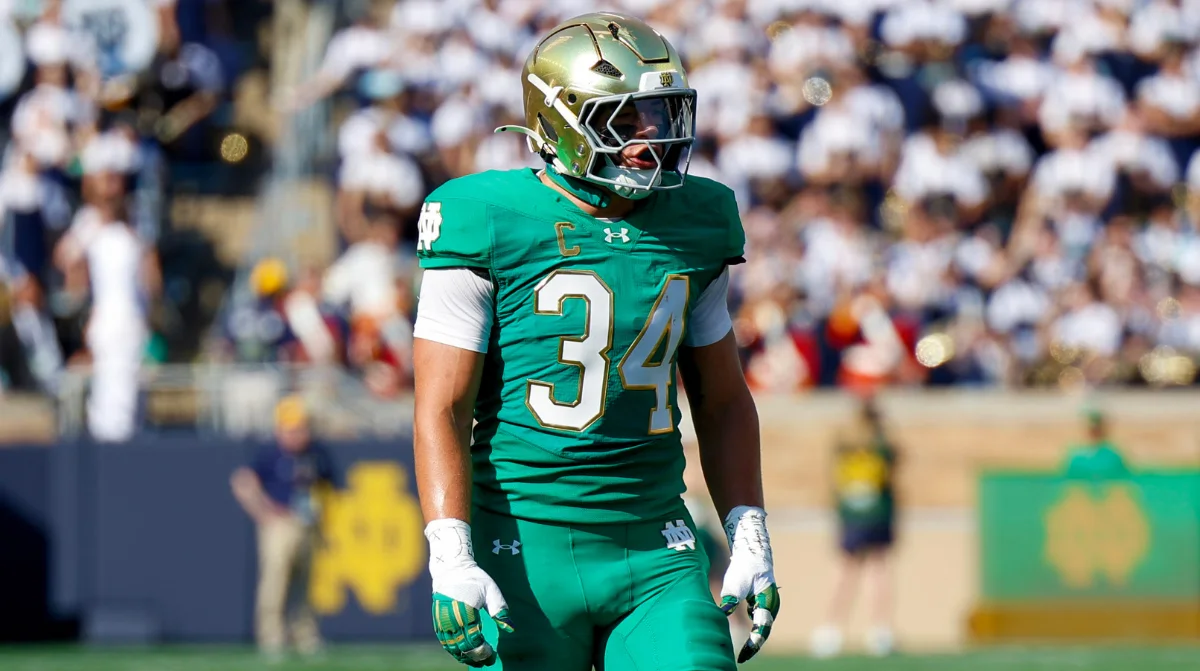
The Irish must also avoid becoming overly aggressive in pursuit of the football. Against an option-based offense, defenders who abandon their assignments can create openings that opposing ball carriers are specifically trained to exploit.
Another important factor will be Notre Dame's ability to force Navy into passing situations.
Although the Midshipmen have demonstrated the ability to generate explosive passing plays, their offense is far less comfortable operating behind schedule.
If Notre Dame can consistently limit first-down rushing gains and create third-and-long opportunities, it could significantly reduce Navy's offensive effectiveness.
Can Navy's Defense Answer the Call?
While Navy's offense has remained productive, its defensive struggles have contributed significantly to the team's disappointing record.
The Midshipmen are surrendering 365.1 yards and 29.1 points per game, ranking 75th and 108th nationally, respectively.
Their most significant weakness has been defending the pass, with opponents averaging nearly 256 passing yards per game.
That presents a concerning matchup against a Notre Dame offense capable of generating explosive plays through Carr and its talented receiving corps.
Navy has also struggled to consistently get opposing offenses off the field.
The Midshipmen rank 123rd nationally in defensive third-down percentage, allowing opponents to convert 44.4% of their opportunities.
Notre Dame, meanwhile, has converted 44% of its third-down attempts this season.
That statistical matchup could become especially important if the Irish establish an early offensive rhythm.
However, Navy's defense has demonstrated an ability to limit rushing production, allowing only 109.3 yards per contest.
The Midshipmen's defensive front could force Notre Dame to rely more heavily on its passing attack, particularly if Walton and James struggle to establish consistent yardage.
For Navy to remain competitive, generating pressure on Carr and forcing turnovers will be essential.
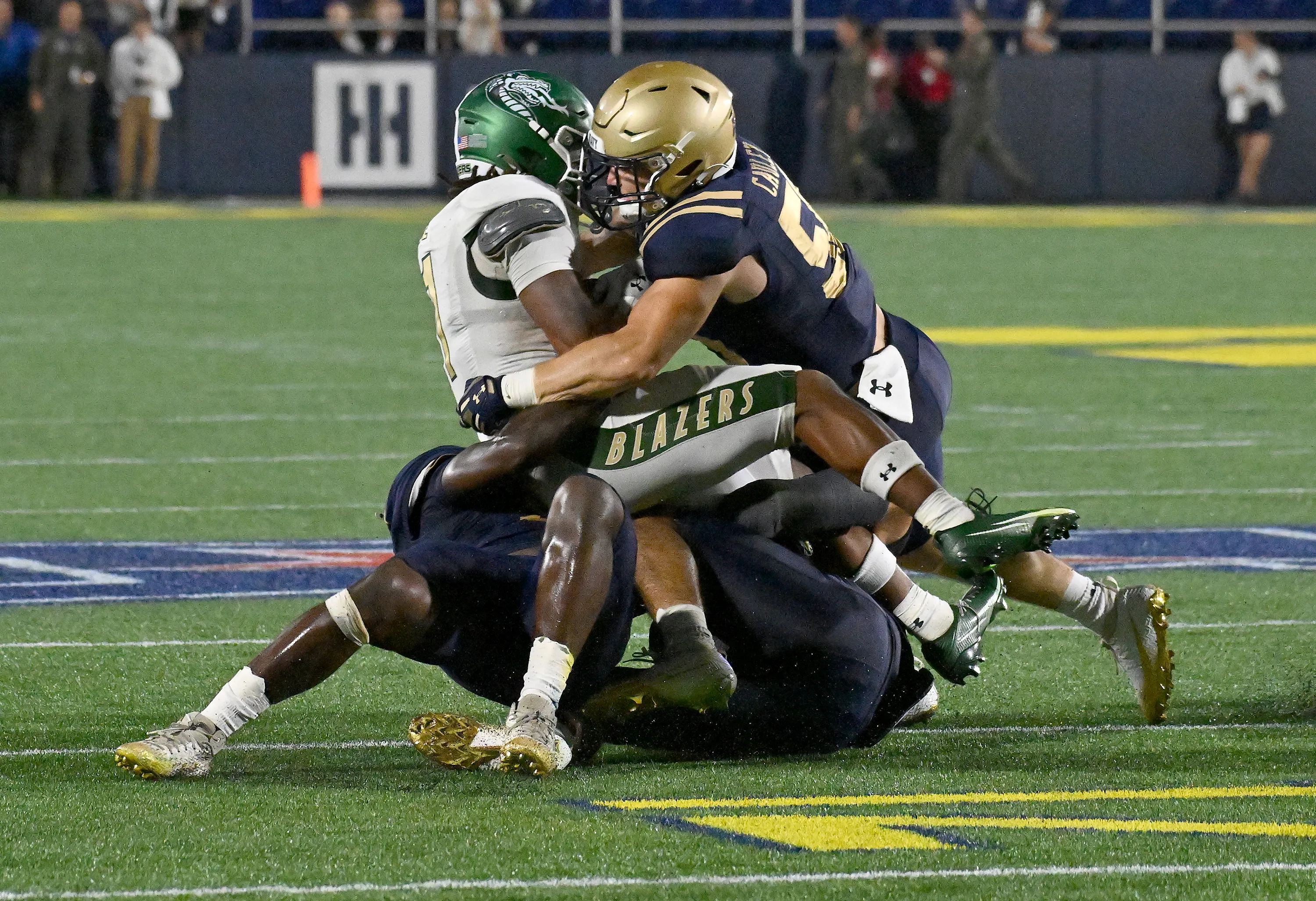
That will be easier said than done.
Notre Dame has committed just two turnovers all season, the
fewest in the country, while Navy enters Saturday with a minus-six turnover
margin.
If the Midshipmen cannot create additional possessions or
prevent Notre Dame from generating explosive plays, they could find themselves
facing an increasingly difficult deficit.
Tale of Two Seasons
Although Notre Dame and Navy enter Saturday with
dramatically different records, both programs have important reasons to
approach this matchup with urgency.
For Notre Dame, the objective is to rebound from its first
defeat while maintaining its position in the College Football Playoff
conversation.
With Miami, Boston College, SMU and Syracuse remaining on
the schedule, the Irish have ZERO margin for error.
Navy, meanwhile, is attempting to salvage a season that has
been defined by narrow defeats and missed opportunities.
Despite its 2-5 record, the Midshipmen have actually
outscored their opponents 208-204 through seven games.
Five of Navy's seven contests have been decided by one
possession, highlighting just how competitive the Midshipmen have been despite
their struggles to finish games.
The team's most recent defeat, a 49-39 loss to North Texas,
demonstrated both sides of that equation.
Navy generated significant offensive production behind
Gutierrez but struggled to contain an opposing offense capable of consistently
moving the football.
That pattern has defined much of the Midshipmen's season.
For Navy to pull off an upset, it must combine its offensive
production with a significantly improved defensive performance.
For Notre Dame, Saturday represents an opportunity to
demonstrate that its defeat against BYU was an isolated setback rather than the
beginning of a larger decline.
Just Take Care of Business.
The Midshipmen possess one of the nation's most productive
rushing quarterbacks in Jackson Gutierrez and an offensive system capable of
shortening games through sustained possessions.
Notre Dame, meanwhile, counters with the country's
top-ranked total defense and a rushing unit allowing fewer than 70 yards per
game.
Ultimately, the outcome could depend on which team controls
the line of scrimmage and dictates the game's tempo.
If Navy establishes its ground game and keeps Carr and the
Notre Dame offense on the sidelines, the Midshipmen could make Saturday's
contest uncomfortable for the Fighting Irish.
However, if Notre Dame's defensive front consistently wins
its individual matchups and forces Navy into predictable passing situations,
the Irish should have opportunities to build an early advantage.
With a critical showdown against Miami looming, Notre Dame's
challenge is not simply to defeat Navy, but to deliver the kind of complete
performance that reestablishes its standing among the nation's elite program