

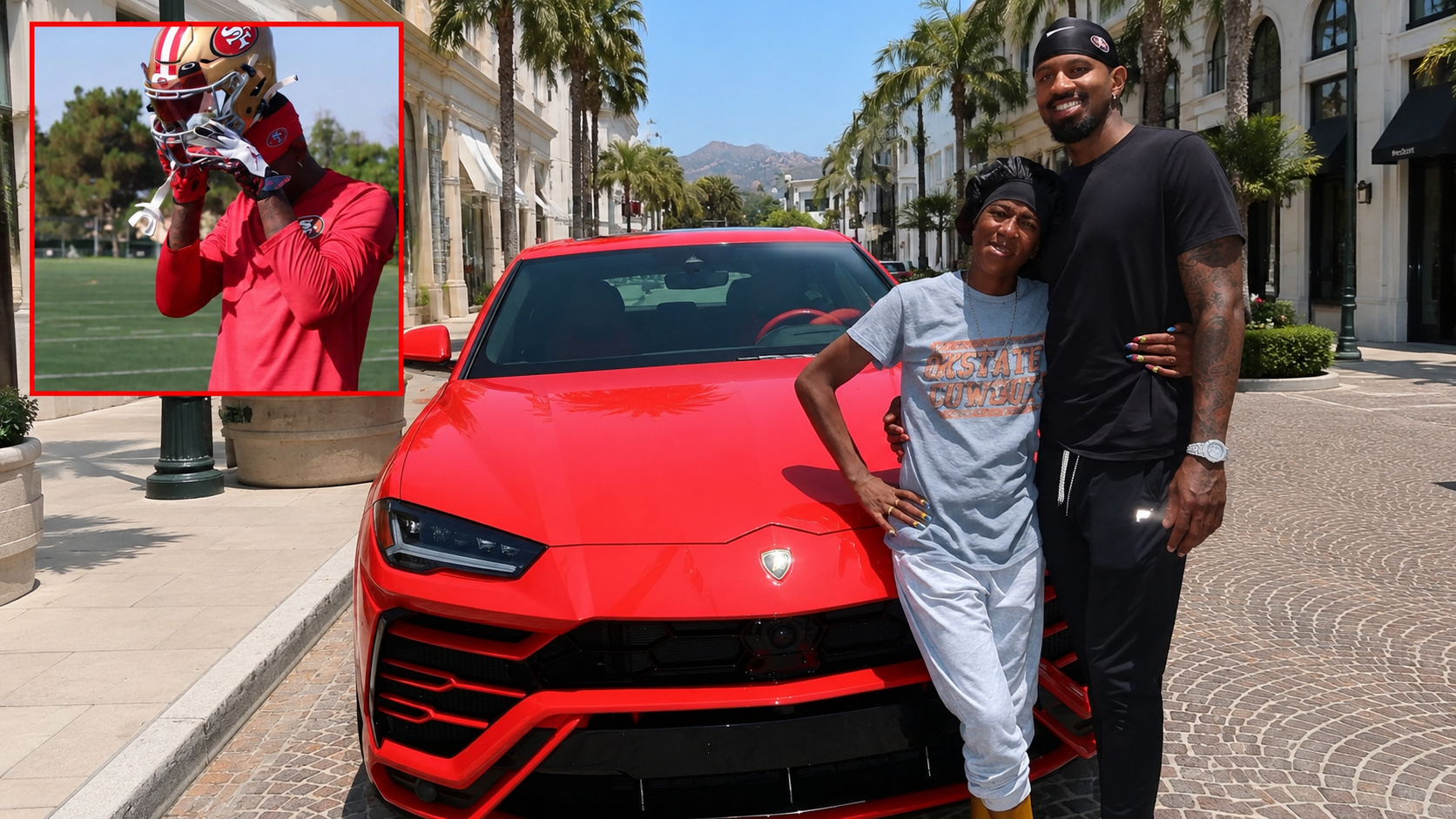
He was wealthy. He was successful. He drove exotic cars. He had access to NFL circles. And, perhaps most impressively, he claimed to be a wide receiver for the San Francisco 49ers.
There was just one problem.
Federal prosecutors say none of it was real.
Love, 35, is accused of posing as a 49ers player while helping operate a sprawling romance-and-investment scheme that allegedly defrauded at least 26 women out of approximately $1.3 million. He and 18-year-old Taylor Jamie Chan have been charged with conspiracy to commit wire fraud and wire fraud in federal court in Oregon.
It is a case that sounds less like a sports story than a Netflix script.
But the NFL was allegedly central to the illusion.
building the image of an nfl player
Building the Image of an NFL Player
According to the U.S. Attorney’s Office for the District of Oregon, Love created false personas and presented himself online and in person as an extraordinarily wealthy man.
At times, prosecutors say, he portrayed himself as a successful real estate investor.
At others, he allegedly claimed to play for one of the NFL’s most recognizable franchises.
The San Francisco 49ers.
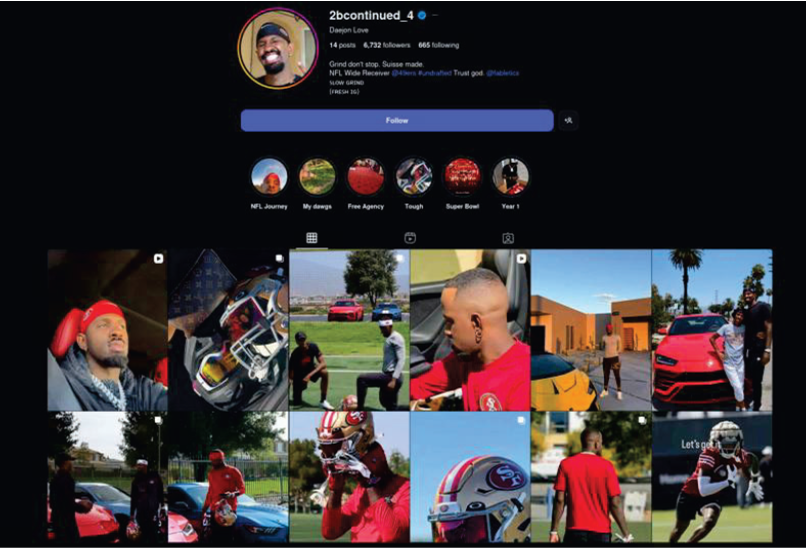
Love reportedly used social media posts, NFL gear and a carefully constructed luxury lifestyle to make the story believable. Images released by prosecutors showed a social media presence built around football and expensive cars, while Love allegedly presented himself as someone with both professional-athlete credentials and tens of millions of dollars in wealth.
The football story went even deeper.
Love reportedly portrayed himself as an undrafted wide receiver who had eventually worked his way onto San Francisco’s roster. In one social media video, he discussed what he called his “NFL Journey” and explained that he had chosen San Francisco because he was already living in the Bay Area.
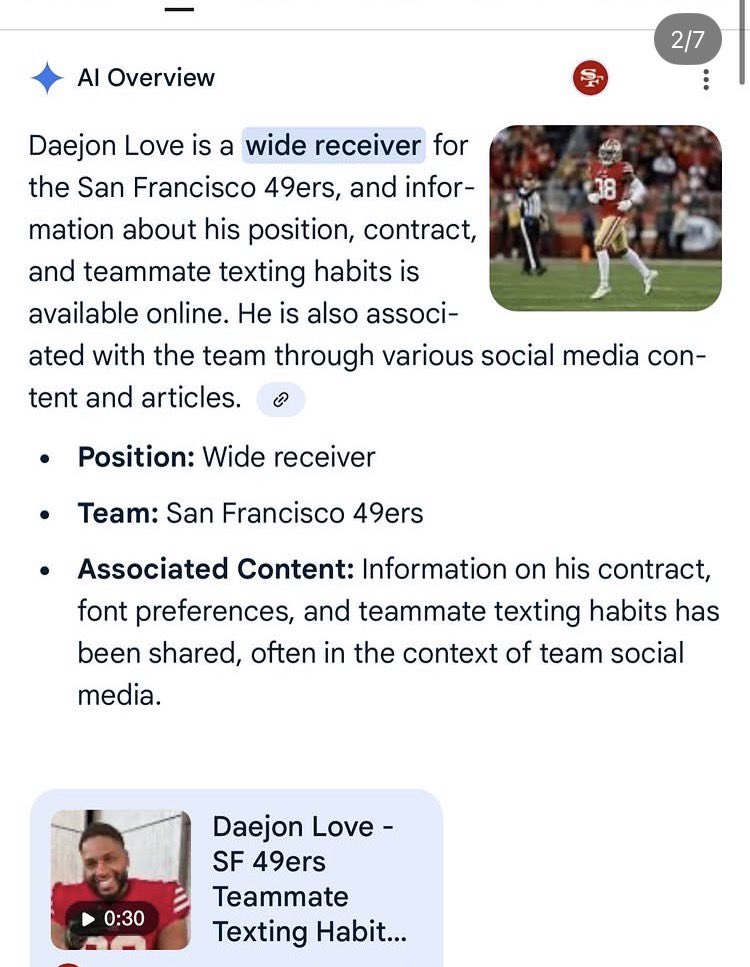
At one point, Love reportedly displayed a Google-generated result that described him as a 49ers wide receiver.
His response?
“That’s Google, not me, that’s Google.”
It was a remarkable layer to the alleged deception: using the appearance of online validation to reinforce an identity investigators say was fabricated.
Love reportedly also offered an explanation for why people had not seen him on the field, pointing to a finger injury as the reason he was not playing.
The story was elaborate enough to look believable from a distance.
And according to prosecutors, that credibility became a financial weapon.
Romance First, Investment Pitch Second
Authorities say Love met many of the alleged victims through dating apps.
The relationships were not portrayed as quick financial transactions. Prosecutors say Love convinced women that they were involved in legitimate romantic relationships with him and talked about building wealth and a future together.
That emotional connection allegedly became the bridge to the next part of the scheme.
Investments.
Love allegedly told women he was a sophisticated investor and introduced Chan as the financial adviser who had helped him amass a fortune worth tens of millions of dollars.
Chan, according to prosecutors, then played the part.
Authorities allege Chan sent Love investment-related messages that made it appear he was advising him on lucrative opportunities. Love would then show screenshots of those conversations to victims as further proof that the investments were legitimate.
The pair allegedly went even further by arranging three-way FaceTime calls in which Chan continued acting as Love’s adviser while showing victims fabricated investment gains.
That kind of detail matters.
A fake NFL identity alone may have opened doors, but investigators allege the scheme worked because each piece of the story supported another.
The athlete persona suggested money.
The exotic cars suggested success.
The financial adviser suggested legitimacy.
The romantic relationship created trust.
And the fake investment balances created urgency.

Fake Fortunes on a Phone Screen
Prosecutors say Love also used phone applications to display fictitious bank and investment accounts.
Those accounts appeared to show enormous balances.
One screenshot cited in reporting on the case appeared to show more than $5 million in cash and $15 million in investments, reinforcing the image of Love as someone who had already mastered the financial world.
Victims were then allegedly encouraged to send money into investment opportunities that did not exist.
Some women loaned Love substantial amounts directly.
Others, prosecutors say, did not have enough cash available.
Love allegedly had another solution.
Take out a personal loan.
Authorities say some victims were instructed to borrow money, with Love promising they would quickly be repaid after the investments generated returns.
Those returns, investigators say, never came.
Of the identified victims interviewed by authorities, none reported receiving investment proceeds, returns on their principal or legitimate account information after sending Love and Chan money.
Federal investigators say financial records show approximately $1.3 million flowed from victims to the two men.
When the Money Stopped, So Did the Relationship
The alleged pattern became particularly cold once victims began running out of money.
According to prosecutors, if a woman could no longer invest or began asking too many questions, Love simply cut off communication.
The money stayed gone.
The relationship disappeared.
And the supposed investment fortune vanished with it.
That is what makes the case far more serious than someone merely pretending to be an athlete online.
The fake 49ers identity was allegedly part of a larger mechanism designed to create trust, status and financial credibility.
The NFL was not the end of the deception.
It was the sales pitch.
A Multistate Operation
Federal investigators say the scheme began in February 2022 and continued until Love and Chan were arrested in August 2026.
Victims have been identified in Oregon, Washington, Idaho and California, while investigators say Love traveled extensively during the weeks immediately before his arrest.
Authorities say the trip to Idaho was particularly significant.
Chan flew from California to Boise to meet Love, and federal investigators arrested both men at the airport.
According to the FBI, Love was allegedly in Idaho to meet additional potential victims.
That suggests the operation may have been continuing right up until law enforcement intervened.
Investigators have currently identified 26 victims.
The FBI believes there may be more.
The Many Names of Daejon Love
Prosecutors also say Love operated under multiple names.
Among them were Jon Love, Daejon Love, Avril Lyto Love and Jordan Love.
The use of “Jordan Love” is particularly striking given that it is also the name of an established NFL quarterback, although authorities have not suggested any connection between the two men.
The broader point is that investigators allege Love did not simply invent one identity.
He allegedly built an entire ecosystem of them.
The Power of the Jersey
There is a reason the 49ers angle stands out.
Professional sports carry instant credibility.
A person claiming to be an NFL player does not necessarily need to explain why he owns an expensive car, travels constantly or claims to have access to unusual investment opportunities.
The profession itself supplies the explanation.
That appears to be what made the alleged scheme so effective.
A 49ers helmet, a team logo and a social media presence could make a stranger seem familiar.
A luxury vehicle could make the wealth look legitimate.
A Google search result could make the résumé appear independently verified.
In the social media era, that combination can be remarkably powerful.
What federal prosecutors describe is not simply impersonation.
It is the alleged weaponization of sports celebrity.
The Case Now Moves to Federal Court
Love and Chan are accused of conspiracy to commit wire fraud and wire fraud.
They were taken into federal custody following their arrests in Boise, and the FBI continues to ask anyone with information about either man to come forward.
It is important to note that the allegations remain just that.
A criminal complaint is an accusation, and both defendants are presumed innocent unless and until proven guilty.
Still, the allegations describe one of the stranger intersections of professional football, social media and alleged financial crime in recent memory.
Daejon Love never needed to catch a pass at Levi’s Stadium.
According to prosecutors, he only needed people to believe that he could.
And for years, that illusion may have been worth more than $1.3 million.