

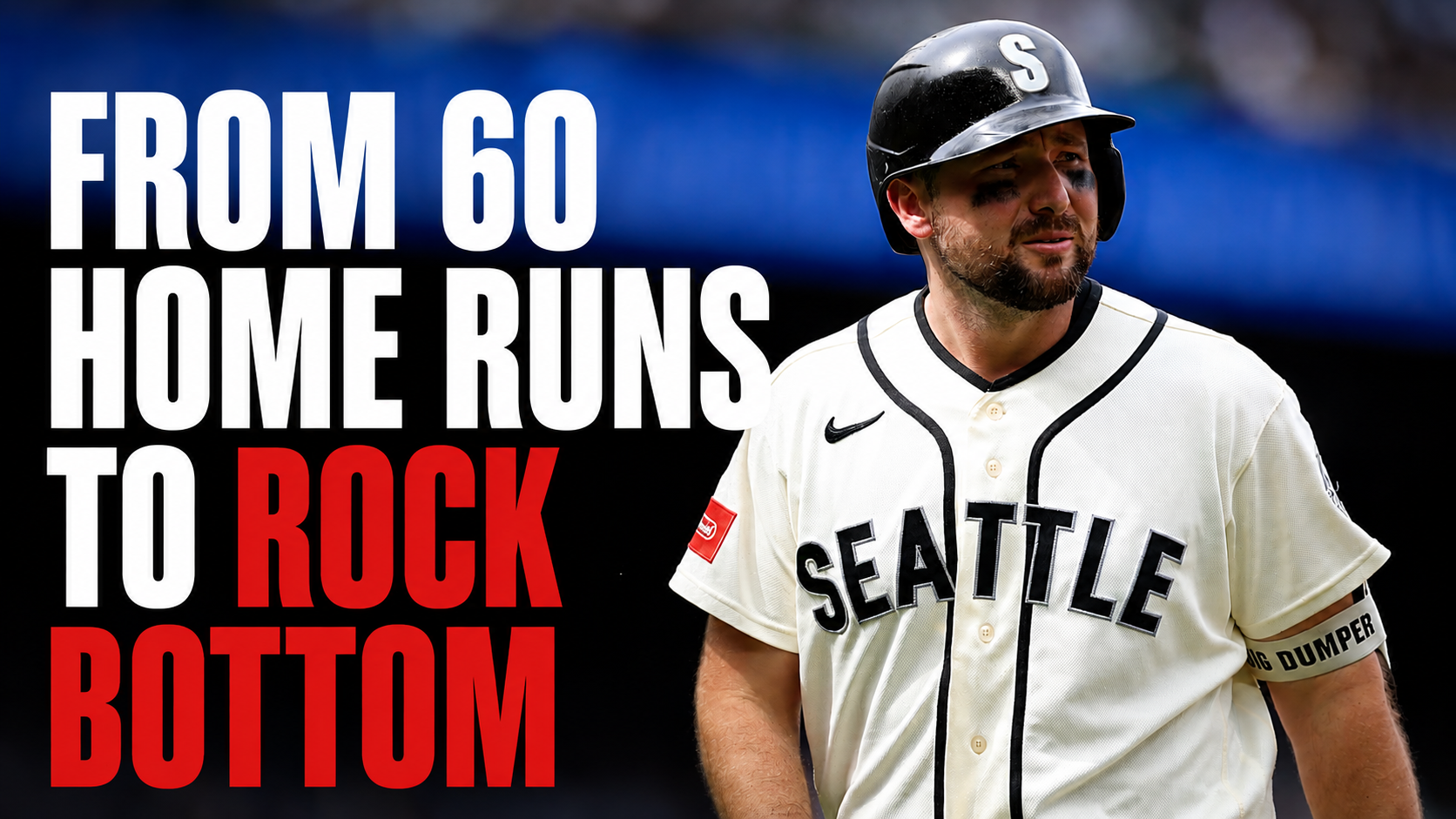
Baseball has always had a cruel relationship with greatness.
One summer, the ball looks enormous. Mistakes disappear into the seats. Fastballs feel slow. Every swing carries the possibility of history.
Then, sometimes without warning, the sport takes everything back.
For Cal Raleigh, the distance between those two realities has been only one year.
In 2025, Raleigh authored one of the greatest offensive seasons ever produced by a catcher. He blasted 60 home runs, drove in 125 runs and posted a .948 OPS, breaking the single-season home run record for a primary catcher and finishing second in American League MVP voting.
He wasn’t simply Seattle’s best power hitter.
For six months, he was one of the most feared hitters on the planet.
Now?
Raleigh is hitting .159 with 12 home runs and an OPS around .560 deep into the 2026 season. Among qualified hitters, his production has fallen to the bottom of Major League Baseball.
It is difficult to call what has happened a slump anymore.
This has become something considerably more remarkable:
One of the most dramatic year-to-year offensive collapses of the modern baseball era.
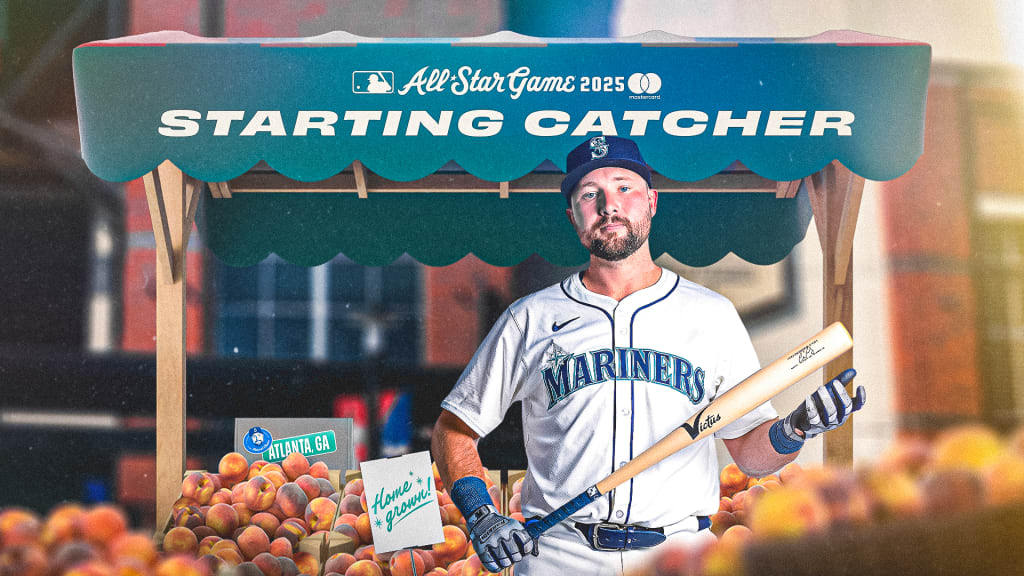
From an MVP Race to Baseball’s Bottom
To understand the magnitude of Raleigh’s 2026 season, you first have to remember just how extraordinary 2025 was.
Sixty home runs.
Not 30.
Not 40.
Not even 50.
Sixty.
Raleigh became the first primary catcher in MLB history to reach that number. His 60 homers were also the most ever by a switch-hitter, and his combination of power, defense and durability produced a 7.3-WAR season and pushed him into an MVP race with Aaron Judge.
There was always going to be regression.
Nobody reasonably expected Raleigh to hit 60 home runs every season.
Regression, however, looks like 40 home runs instead of 60. Maybe 30. Maybe an OPS falling from .948 into the low .800s.
This isn’t regression.
This is almost unrecognizable.
Raleigh’s OPS has fallen nearly 400 points from last season. MLB’s analysis earlier this summer found that among hitters with at least 200 plate appearances in both seasons, nobody had experienced a larger decline in offensive production.
If his home run pace holds, the raw power decline could become historic as well. Raleigh is tracking toward a decline of more than 40 home runs from one season to the next, a drop with few parallels in nearly a century of baseball.
That’s what makes this season so difficult to comprehend.
Raleigh didn’t slowly decline.
He fell off a cliff.
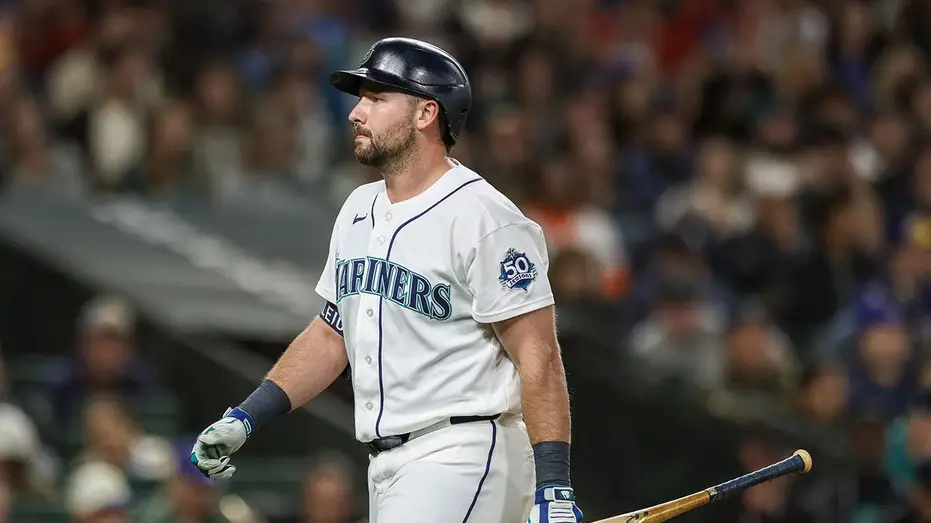
Then Came 43 Plate Appearances Without a Hit
There was a moment earlier this season when Raleigh’s struggles went from concerning to almost surreal.
Beginning in late April, Raleigh went 43 consecutive plate appearances without recording a hit.
For two weeks, one of baseball’s most dangerous power hitters couldn’t find one.
He entered May and went eight games before collecting his first hit of the month. At one point, Raleigh had gone 36 consecutive official at-bats without one, putting him within striking distance of some of the longest hitless stretches of the modern era.
The 43 consecutive hitless plate appearances approached Justin Ruggiano’s 51-plate-appearance single-season drought from 2013, one of the longest such stretches of the 21st century.
Eventually Raleigh tried something appropriately ridiculous for a ridiculous slump.
He showered while still wearing his full uniform.
Then he finally started hitting again.
It was funny.
The larger problem wasn’t.
Because the drought ended.
The slump didn’t.
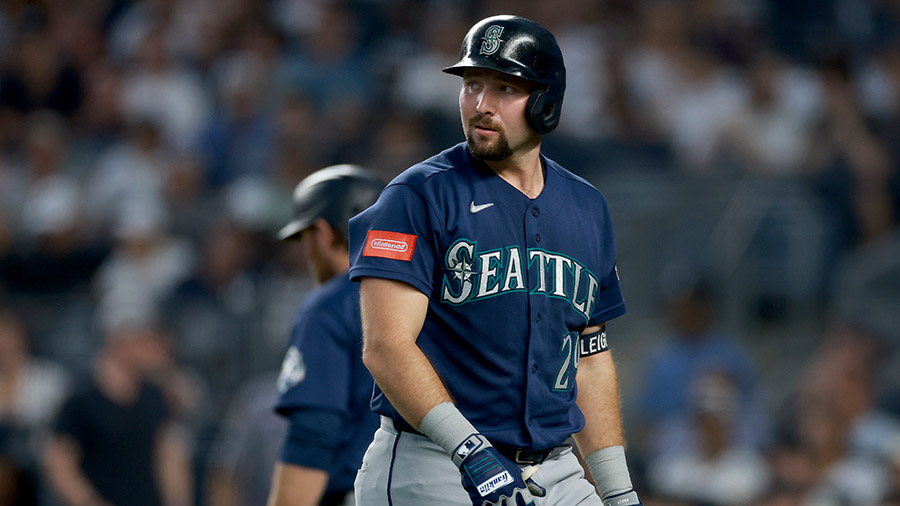
The Fastball Has Become His Enemy
Perhaps the most alarming part of Raleigh’s collapse is what has happened against velocity.
MLB’s Statcast analysis found Raleigh was hitting just .069/.156/.172 against pitches 95 mph or faster earlier this season.
That is almost impossible to reconcile with the hitter we watched a year ago.
Raleigh’s bat speed hadn’t simply disappeared. Instead, analysts noticed his contact point had changed.
He was allowing pitches to travel deeper.
That matters enormously for a hitter whose power is built around pulling the baseball.
In 2025, Raleigh was exceptionally good at meeting pitches out in front, particularly when hitting right-handed. That allowed him to turn hittable fastballs into towering fly balls.
In 2026, those same pitches have increasingly resulted in late swings, popups, fouls and misses.
The margins in Major League Baseball are microscopic.
A hitter doesn’t need to suddenly become weaker.
His swing doesn’t need to completely break.
Sometimes he just needs to be a fraction of a second late.
And suddenly 60 home runs feels like something that happened to another person.
There Is No Easy Explanation
That’s what makes Raleigh’s season so fascinating.
There isn’t one obvious culprit.
Yes, he has dealt with an oblique injury.
Yes, there could be lingering mechanical issues.
Yes, pitchers adjusted after spending an entire offseason studying the weaknesses of a man who hit 60 home runs.
But Raleigh’s struggles began early, and the statistical decline has appeared virtually everywhere.
His hard-hit rate fell dramatically. His production against velocity collapsed. His OPS cratered. His power disappeared for long stretches.
Every explanation seems to answer one question while creating another.
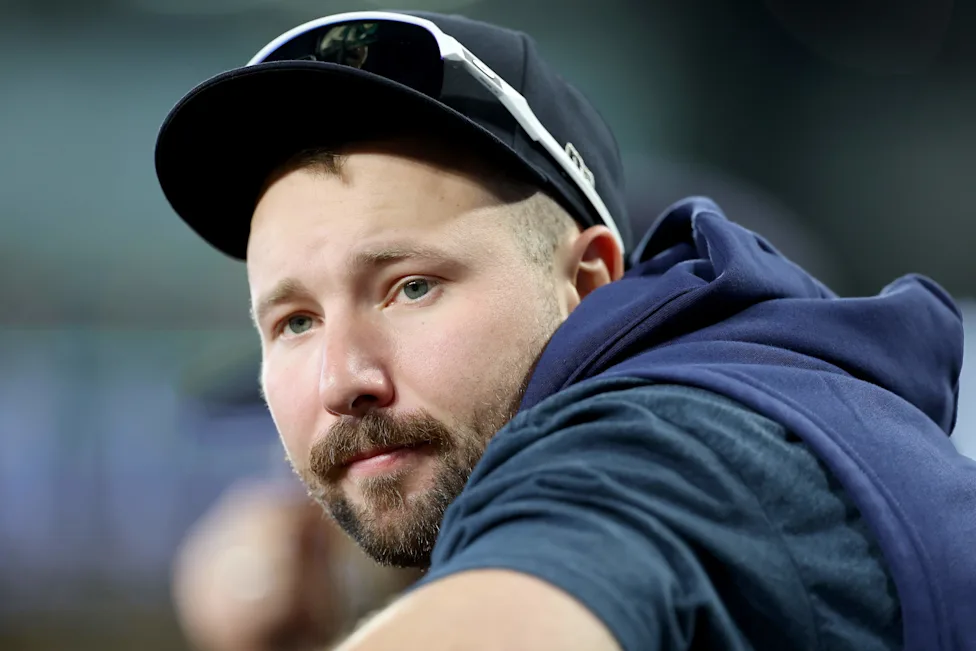
And eventually even Raleigh stopped trying to make it sound complicated.
After Seattle’s loss to the Yankees this week, Raleigh offered perhaps the most devastating scouting report imaginable.
“I’m awful.”
There wasn’t much spin.
There couldn’t be.
Seattle Is Collapsing With Him
If Raleigh played for a rebuilding team, his struggles would be an interesting baseball mystery.
For Seattle, they have become something much more painful.
The Mariners entered 2026 expecting to contend.
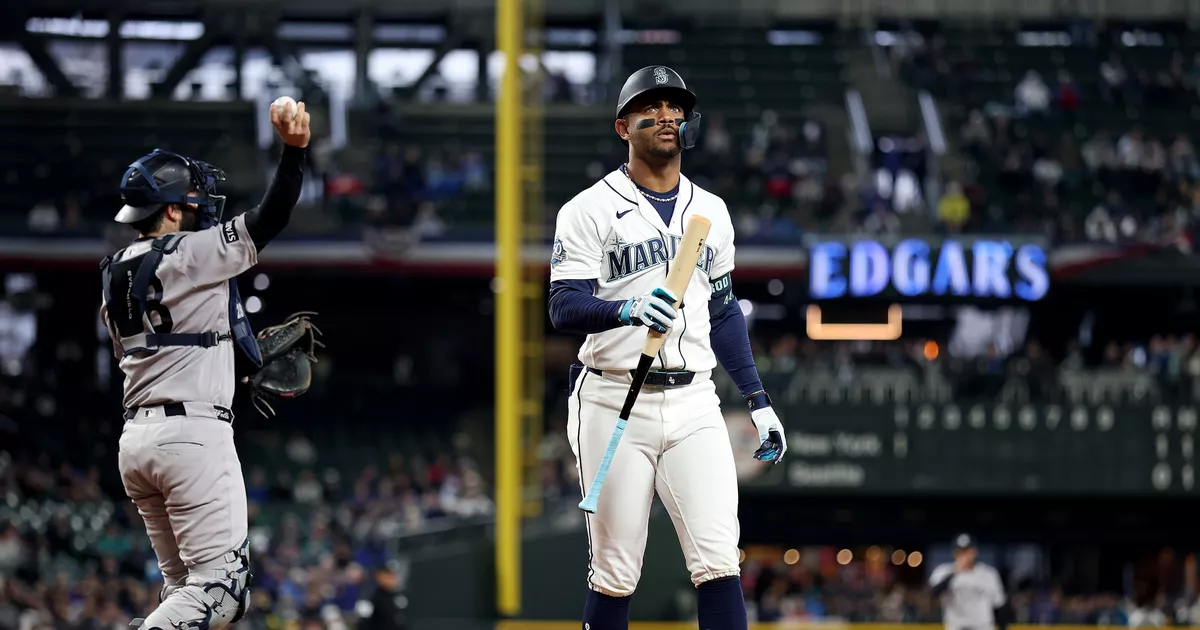
Instead, following Wednesday’s loss in New York, Seattle had dropped 15 of 20 games, including five straight, as its offense continued to disappear.
And it’s difficult to separate Seattle’s collapse from Raleigh’s.
That’s the burden that accompanies becoming a franchise player.
When Raleigh hit 60 home runs, he became one of the faces of the Mariners.
When the Mariners needed a run, everyone waited for No. 29.
When they needed a big swing, Raleigh delivered it.
Now Seattle keeps waiting.
And waiting.
And waiting.
The home runs that once seemed inevitable have become rare events.
Baseball Has Seen Slumps. This Is Different.
Every superstar struggles.
Aaron Judge has gone through miserable stretches.
Mike Trout has.
Albert Pujols did.
Barry Bonds did.
Ken Griffey Jr. did.
Baseball is designed to humble hitters eventually.
But Raleigh’s story is unusual because of the extremes involved.
This isn’t simply an All-Star having a bad month.
It is a player going from 60 home runs and a .948 OPS to 12 home runs and an OPS in the mid-.500s one season later.
That is what puts Raleigh’s season into historical territory.
The comparison isn’t necessarily about identifying the longest hitless streak ever or the lowest batting average ever. Other players have produced worse individual seasons.
It’s about the distance traveled.
Raleigh went from the absolute summit of offensive baseball to its basement almost overnight.
One year ago, pitchers were wondering how to keep the ball in the stadium against him.
Now Raleigh is searching for answers about how to consistently square one up.
There may not be another recent example that better demonstrates how quickly baseball can turn.
The Most Important Chapter Hasn’t Been Written Yet
There is another side to this story.
Raleigh is 29 years old.
His 2025 season happened.
Those 60 home runs weren’t theoretical. Neither were the 125 RBIs or the MVP-caliber production.
Somewhere inside the hitter currently fighting through the worst season of his career is the player who terrorized American League pitching for six months.
That’s why the next several months could ultimately define this story more than the slump itself.
Maybe Raleigh makes an adjustment.
Maybe his timing returns.
Maybe 2026 becomes a bizarre statistical outlier between several excellent seasons.
Or maybe baseball has exposed something that Raleigh and the Mariners will spend the offseason desperately trying to repair.
Nobody knows yet.
And that’s what makes this one of the most compelling individual stories in the sport.
Because baseball usually gives its stars a gradual warning.
The bat slows.
The power fades.
The numbers decline.
Cal Raleigh received no such transition.
He went from 60 home runs to searching for hits.
From an MVP candidate to one of baseball’s least productive everyday hitters.
From making history for all the right reasons to flirting with it for all the wrong ones.
A year ago, Cal Raleigh looked like he had conquered baseball.
In 2026, baseball has reminded him and everyone watching of the game’s oldest lesson:
Nobody conquers it for long.