

College athletics is changing at a pace that would have been almost impossible to imagine a decade ago.
Players are being paid. Stadiums are being renamed. Corporate logos are arriving on uniforms. Conferences are searching every corner of the sport for new revenue.
Some of that change is necessary.
But the Big 12’s new partnership with Monster Energy feels less like smart modernization and more like a warning about what can happen when the pursuit of another dollar begins to overpower everything that made college sports valuable in the first place.
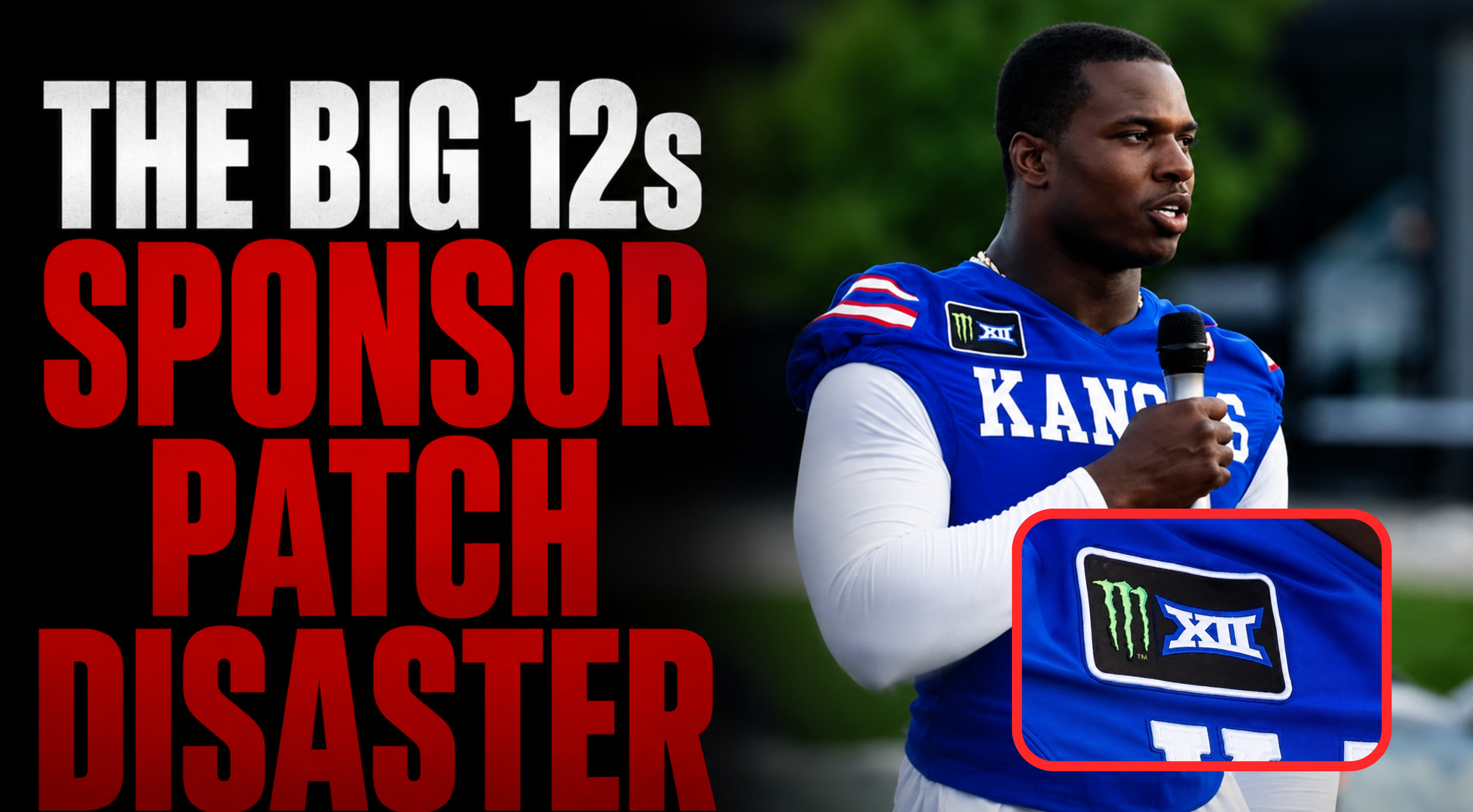
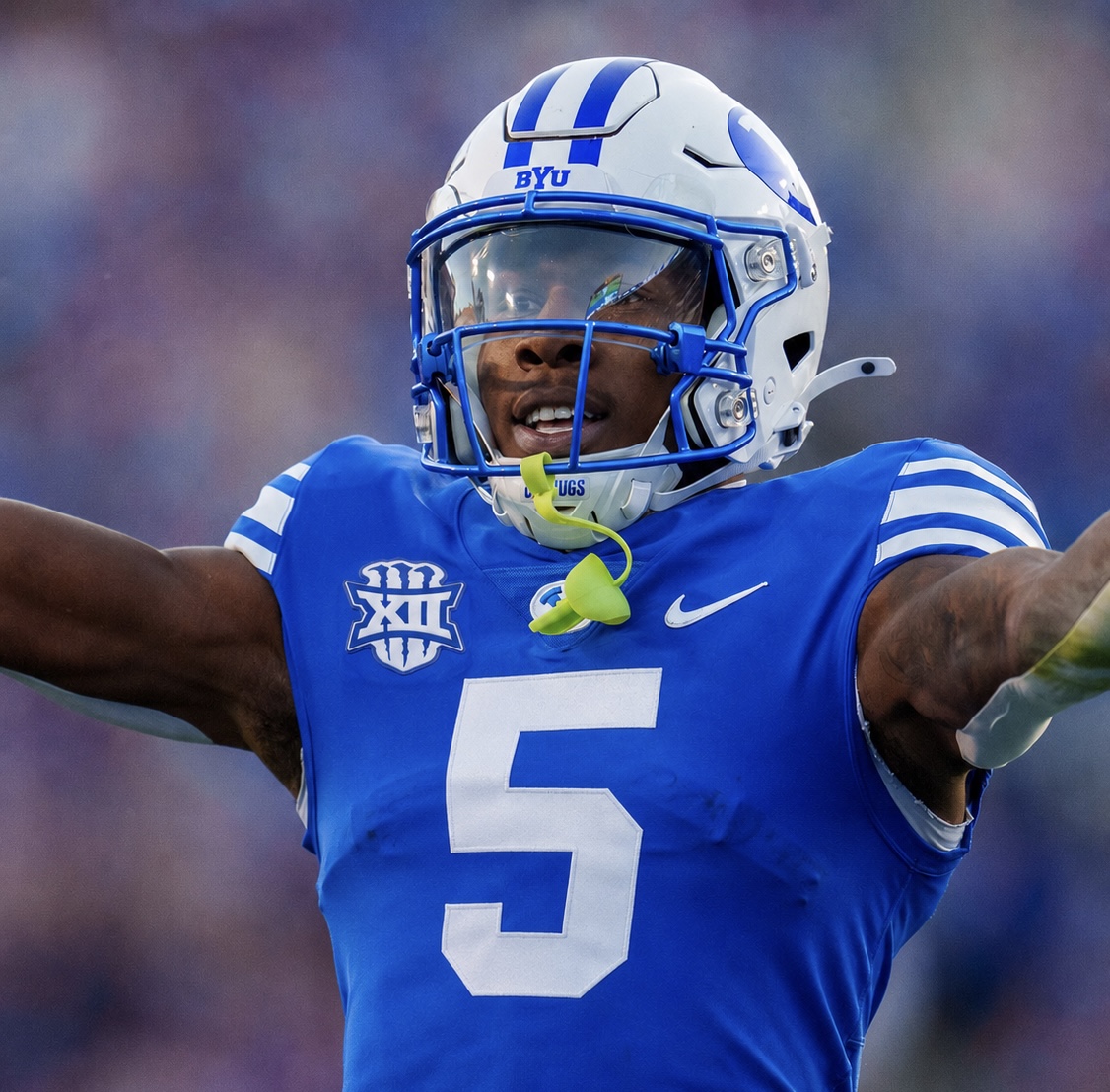
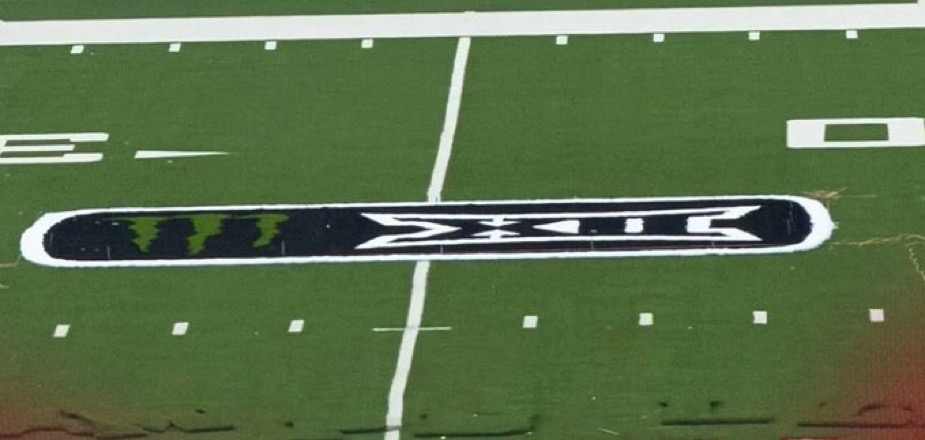
The Big 12 announced a multiyear agreement with Monster Energy in July that makes the company the entitlement partner of the conference’s football and men’s and women’s basketball regular seasons. The partnership puts a co-branded Monster Energy/Big 12 logo on football and basketball jerseys, football fields and basketball courts across the conference. The league’s regular seasons are also being marketed as “Monster Energy Big 12 Football” and “Monster Energy Big 12 Basketball.”
The reported price?
About $20 million annually, with each Big 12 member expected to receive roughly $1 million per year.
And that’s where this starts becoming difficult to defend.
$1 Million to Put Monster Everywhere
One million dollars is obviously not insignificant.
But context matters.
These aren’t small-market professional teams desperately trying to sell a little extra advertising inventory. These are some of the most recognizable brands in college athletics: Kansas, Colorado, Utah, BYU, Arizona, Arizona State, Texas Tech, Oklahoma State and others.
And the Big 12 didn’t simply sell a banner inside an arena.
It sold some of the most visible real estate in college sports.
Monster’s branding will be attached to football and basketball uniforms throughout the conference. It will appear on football fields and basketball courts. The company’s name is incorporated into the branding of the regular season themselves.
For all of that, the schools are getting roughly $1 million apiece annually.
There is already legitimate debate within the sports business industry over whether the Big 12 dramatically undervalued those assets. Front Office Sports reported that one industry source described the agreement as “objectively a terrible deal,” while another suggested individual Big 12-caliber schools could command multiple millions annually for their own jersey-patch inventory.
That criticism becomes harder to ignore when you actually see what the schools are giving up.
The Patches Look Awful
There is another problem that doesn’t appear on a balance sheet.
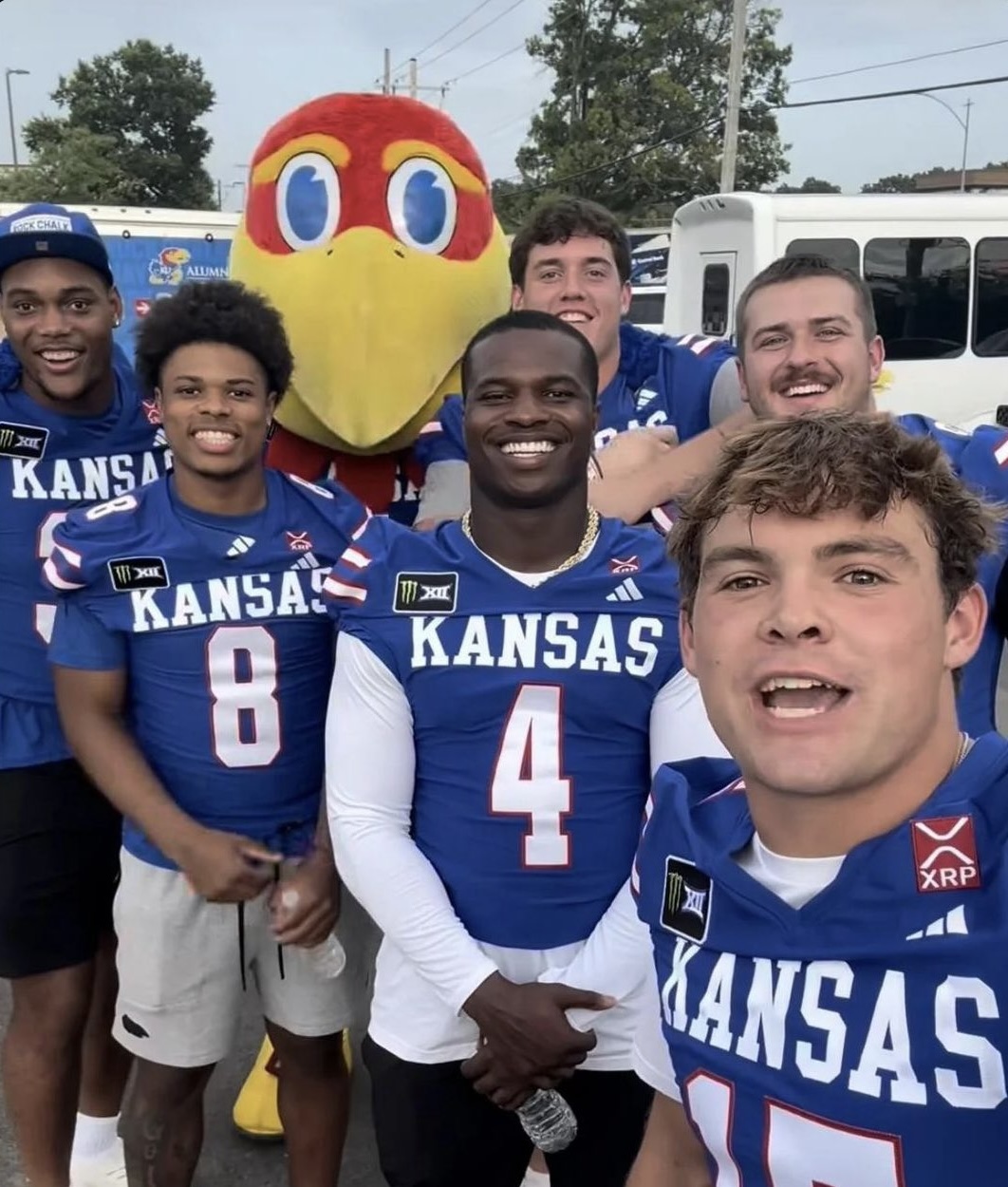
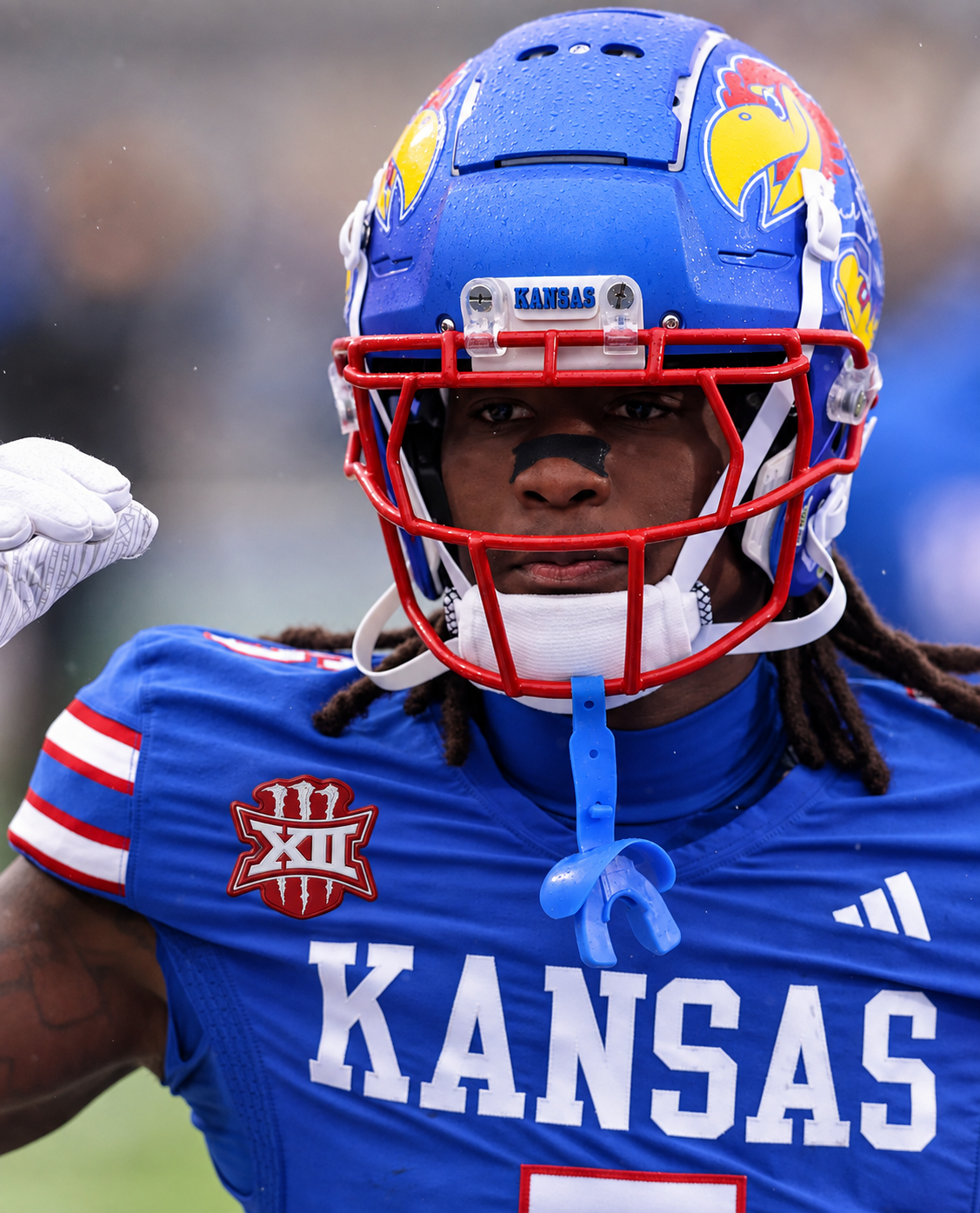
The patches simply don’t look good.
College football uniforms are different from professional uniforms because so much of their appeal comes from tradition and simplicity.
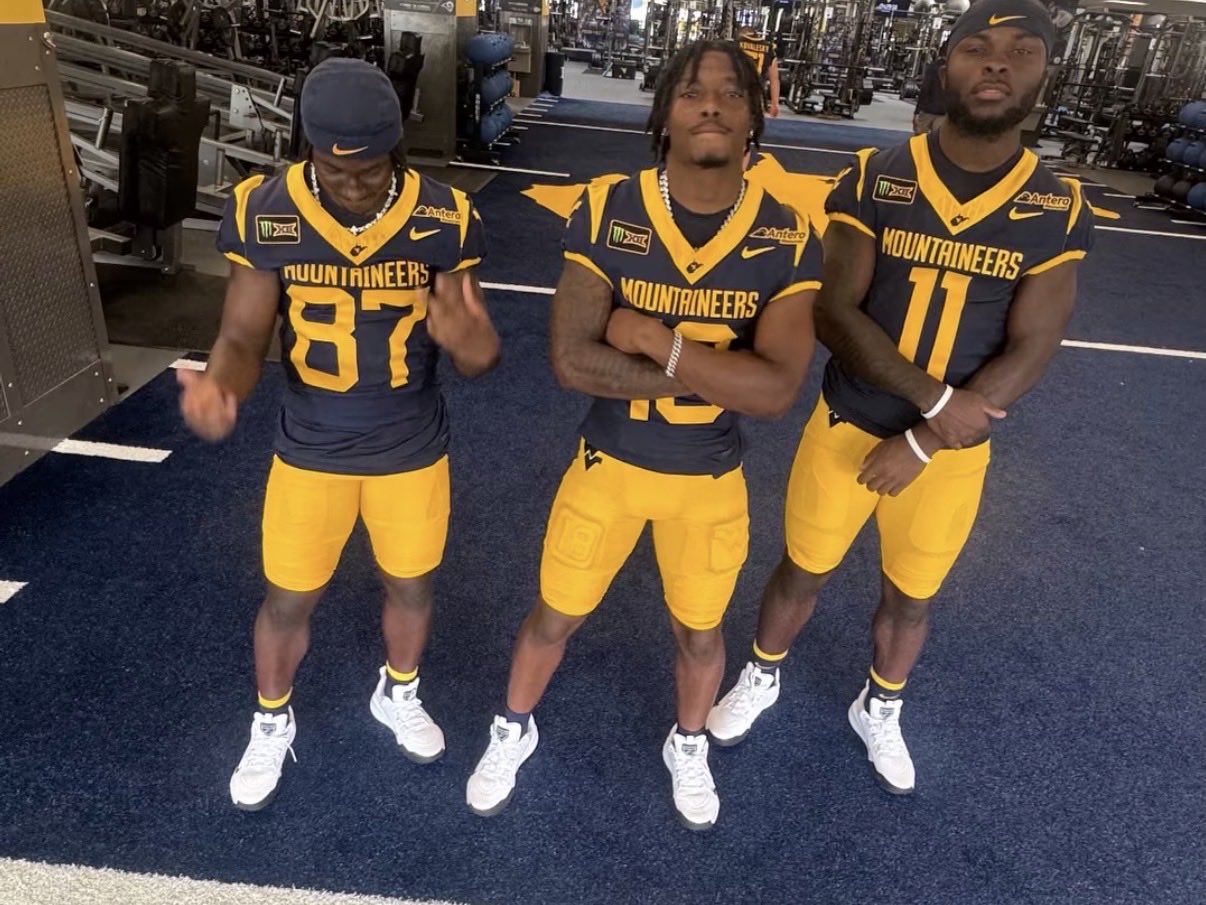
The interlocking WV on a West Virginia uniform means something. So does the Powercat at Kansas State, the double-T at Texas Tech, the Utah drum-and-feather identity, the Jayhawk at Kansas or the OSU brand in Stillwater.
The conference logo traditionally sits quietly alongside those identities.
Now imagine a giant corporate claw mark shoved into that equation.
That’s essentially what the Big 12 has created.
The Monster Energy claw logo is one of the most recognizable corporate marks in sports marketing, but recognizable doesn’t necessarily mean compatible. Combining it with the Big 12 logo creates a patch that looks less like an official conference mark and more like something you’d expect to see plastered across a motocross bike.
That might work perfectly for Monster.
It doesn’t necessarily work for a 100-year-old college football uniform.
And the reaction has hardly been universally positive. The aesthetics and relatively modest payout have both generated criticism since the agreement was announced.
Then There Are the Basketball Courts
If the jersey patches were the only issue, perhaps fans would eventually stop noticing them.
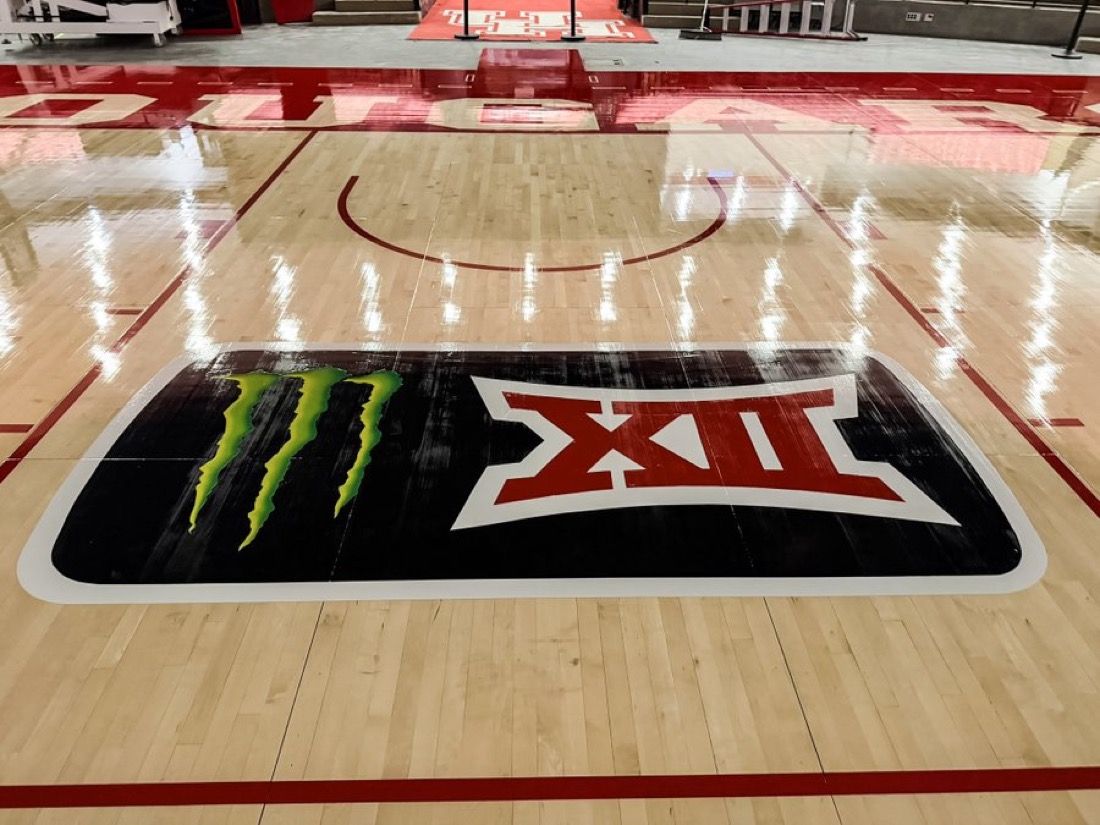
The basketball courts are considerably harder to ignore.
The Monster/Big 12 logo is being incorporated into playing surfaces across the league, meaning some of the most recognizable floors in college basketball now double as advertisements for an energy drink company. Houston’s Fertitta Center, for example, has already added the new logo as part of the agreement.
That’s where this partnership crosses an important aesthetic line.
College basketball courts are part of a school’s visual identity.
The colors matter. The center-court logo matters. The conference markings matter. When fans turn on a game, they should immediately feel like they’re watching Kansas basketball, Arizona basketball, Houston basketball or Baylor basketball.
They shouldn’t feel like they’re watching the Monster Energy Invitational.
Corporate sponsorship in college sports isn’t going away, and pretending otherwise would be unrealistic. Athletic departments need new revenue as the economics of college athletics rapidly change.
But there is a difference between monetizing an asset and overwhelming it.
The best sponsorships almost disappear into the product.
This one screams at you.
Was $1 Million Really Worth It?
That’s ultimately the question Big 12 fans should be asking.
If you’re going to dramatically alter the appearance of uniforms, fields and courts across an entire Power Four conference, the financial return should be enormous.
Instead, each school is expected to receive around $1 million annually.
And there could be another cost.
Industry executives have raised concerns that selling conference-wide inventory could affect the value of sponsorship assets controlled by individual schools and their multimedia-rights partners. Playfly CEO Craig Sloan told Front Office Sports there is effectively no scenario in which a deal like this has zero impact on individual schools’ asset rights.
To be fair, the economics are slightly more complicated than simply dividing $20 million by 16.
Monster is covering conversion costs associated with installing the branding, and the company has committed additional marketing resources to promote the Big 12 domestically and internationally. The agreement also does not prevent schools from selling separate commercial jersey patches, although Monster receives exclusivity in the energy-drink category.
Those are legitimate benefits.
But they don’t eliminate the central question.
Did the Big 12 sell too much visibility for too little money?
Right now, it certainly looks possible.
We Tried Something Different
The frustrating part is that corporate sponsorship itself isn’t necessarily the problem.
The execution is.
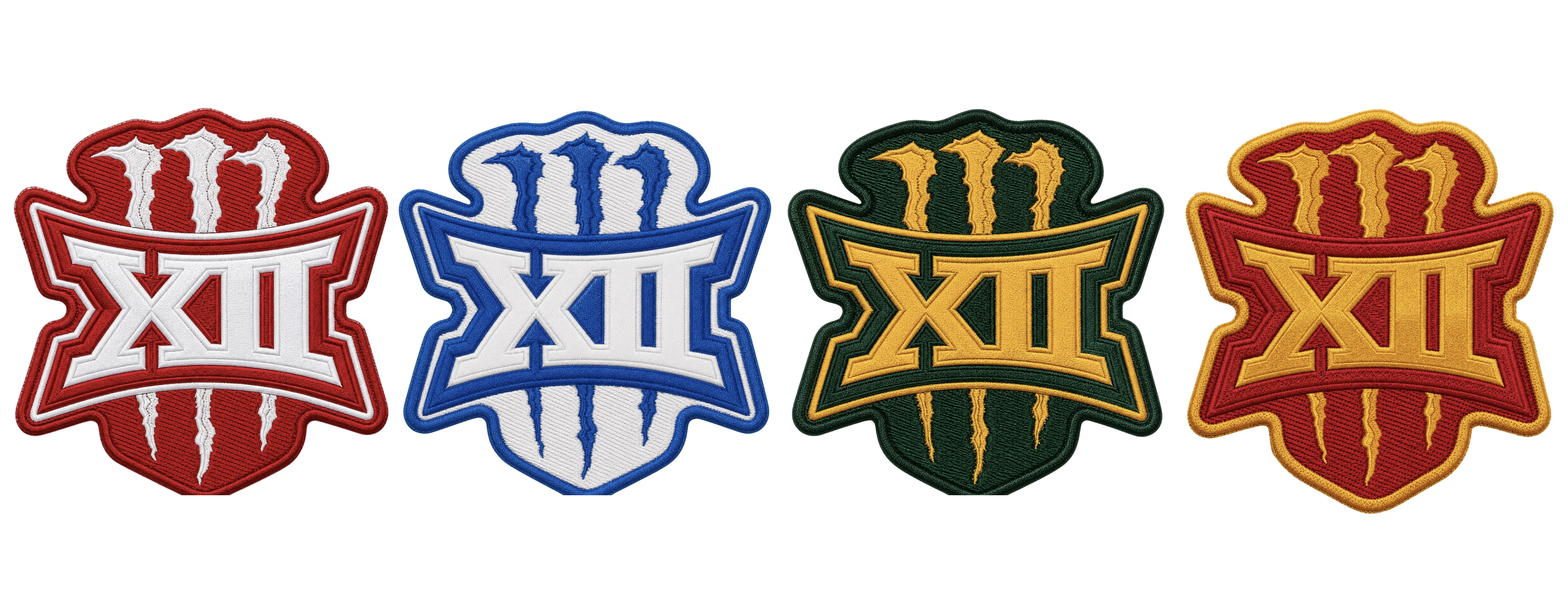
We created several alternative concepts showing how Monster Energy could have been incorporated into Big 12 branding without making the conference logo look like two completely different brands were forced together.
The difference is dramatic.
Instead of simply attaching Monster’s familiar claw mark to the existing Big 12 logo, our concepts treat the sponsor and conference as a single visual identity. The proportions are cleaner. The school colors can remain prominent. Most importantly, the logo looks like something that actually belongs on a college football uniform.
That’s the lesson here.
If corporate logos are going to become a permanent part of college athletics and everything suggests they will, conferences and schools need to care about how those partnerships are presented.
Fans understand that college sports is a business.
They don’t want it to look like a billboard.
The Big 12 Had an Opportunity
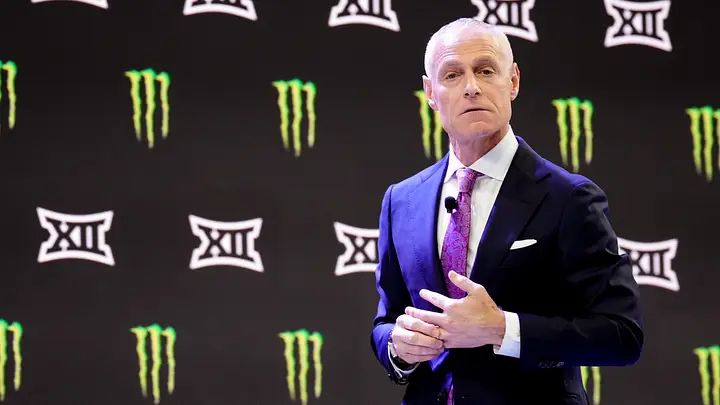
Commissioner Brett Yormark has repeatedly pushed the Big 12 toward aggressive commercialization, and there is a legitimate argument that the conference needs to think differently to compete financially with the SEC and Big Ten.
In that respect, pursuing a conference-wide sponsorship wasn’t necessarily a bad idea.
The Big 12 may actually have been ahead of the rest of college athletics.
But being first doesn’t automatically mean getting it right.
The Monster agreement could eventually be remembered as the beginning of a massive new sponsorship market across college sports.
It could also be remembered as the moment conferences discovered that fans have a limit to how much commercialization they’re willing to accept, particularly when the financial return doesn’t seem commensurate with what is being surrendered.
For roughly $1 million per school annually, Big 12 programs are putting Monster Energy on jerseys, fields and basketball courts while attaching the company’s name to their football and basketball regular seasons.
That’s an extraordinary amount of visibility.
And when a few alternative logo concepts created outside the conference can make the official patch look dramatically cleaner, the Big 12 has another problem beyond the economics.
If you’re going to sell the jersey, at least make the patch look good.
If the Big 12 and/or Monster Energy wants to reach out to us, they can contact us at partners@ttmediaco.net