

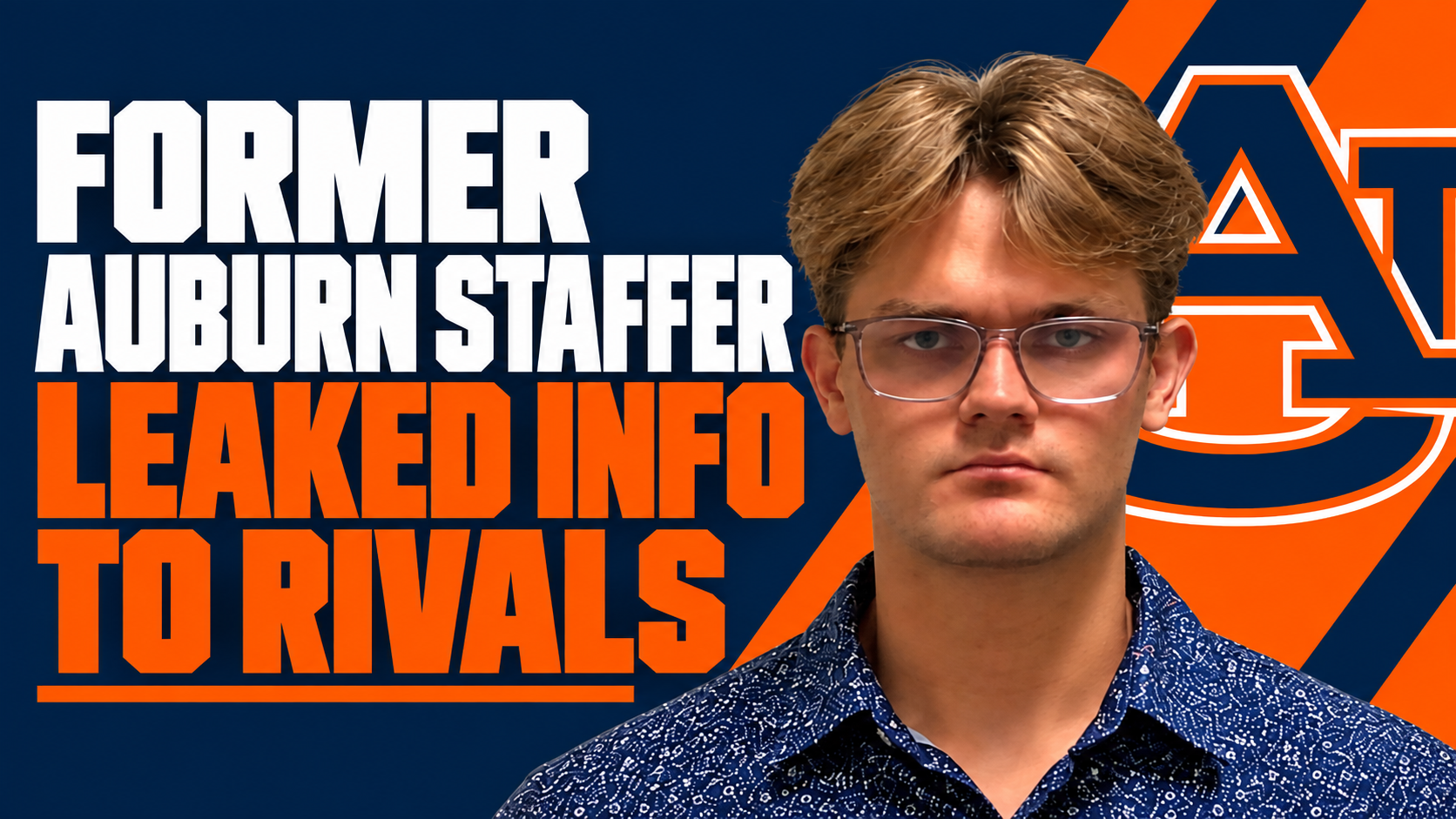
In an era when college football programs guard recruiting boards, personnel evaluations and prospect databases with increasing secrecy, Auburn is dealing with an extraordinary alleged breach from inside its own football operation.
Former Auburn football personnel staffer David Rudolph Jenrath, 24, was arrested Monday and charged with theft of trade secrets and computer tampering after authorities say he took confidential information belonging to Auburn Athletics and distributed it to competing programs.
Jenrath, a Franklin, Tennessee, native, turned himself in to Auburn police on Sept. 28 after warrants were issued for his arrest. He was booked into the Lee County Jail on a $15,000 bond. (Football Scoop)
But the allegations outlined by police and subsequent reporting go well beyond a former employee simply leaving Auburn with documents.
According to CBS Sports, Jenrath allegedly sent Auburn recruiting information to as many as 11 other schools, using a pseudonymous email account identified as “Don Julio.” The emails reportedly contained 10 documents detailing personnel information involving high school prospects in the 2027, 2028 and 2029 recruiting classes. (CBS Sports)
The documents reportedly included Auburn coaches’ evaluations of prospects and information identifying recruits the Tigers were and were not targeting.
CBS Sports reported that the emails did not include Auburn game-plan information. A source also told CBS Sports that Auburn coach Alex Golesh’s home address appeared in the subject line of at least one email. (CBS Sports)
Those details transform the case from an unusual personnel dispute into one of the more striking internal-information cases college football has seen in recent memory.
How Auburn reportedly discovered the leak
Perhaps the most remarkable part of the story is how the alleged scheme unraveled.
Auburn police said the investigation began after sensitive information belonging to a business in the 300 block of South Donahue Drive where Auburn Athletics is located had allegedly been taken and distributed to competitors.
According to police, at least one competitor that received the information alerted Auburn and returned the material. (Football Scoop)
Investigators ultimately identified Jenrath as a suspect and obtained warrants for his arrest.
Court records cited by WSFA allege that Jenrath took “confidential proprietary information consisting of Auburn University Athletics information” without authorization.
The computer-tampering allegation goes even further. Court documents accuse Jenrath of accessing or taking computer data “with the intent to harass Auburn University Athletics” by disclosing its trade secrets to opponents. (https://www.waff.com)
The charges are allegations, and Jenrath has not been convicted.
Jenrath worked inside Auburn’s personnel operation
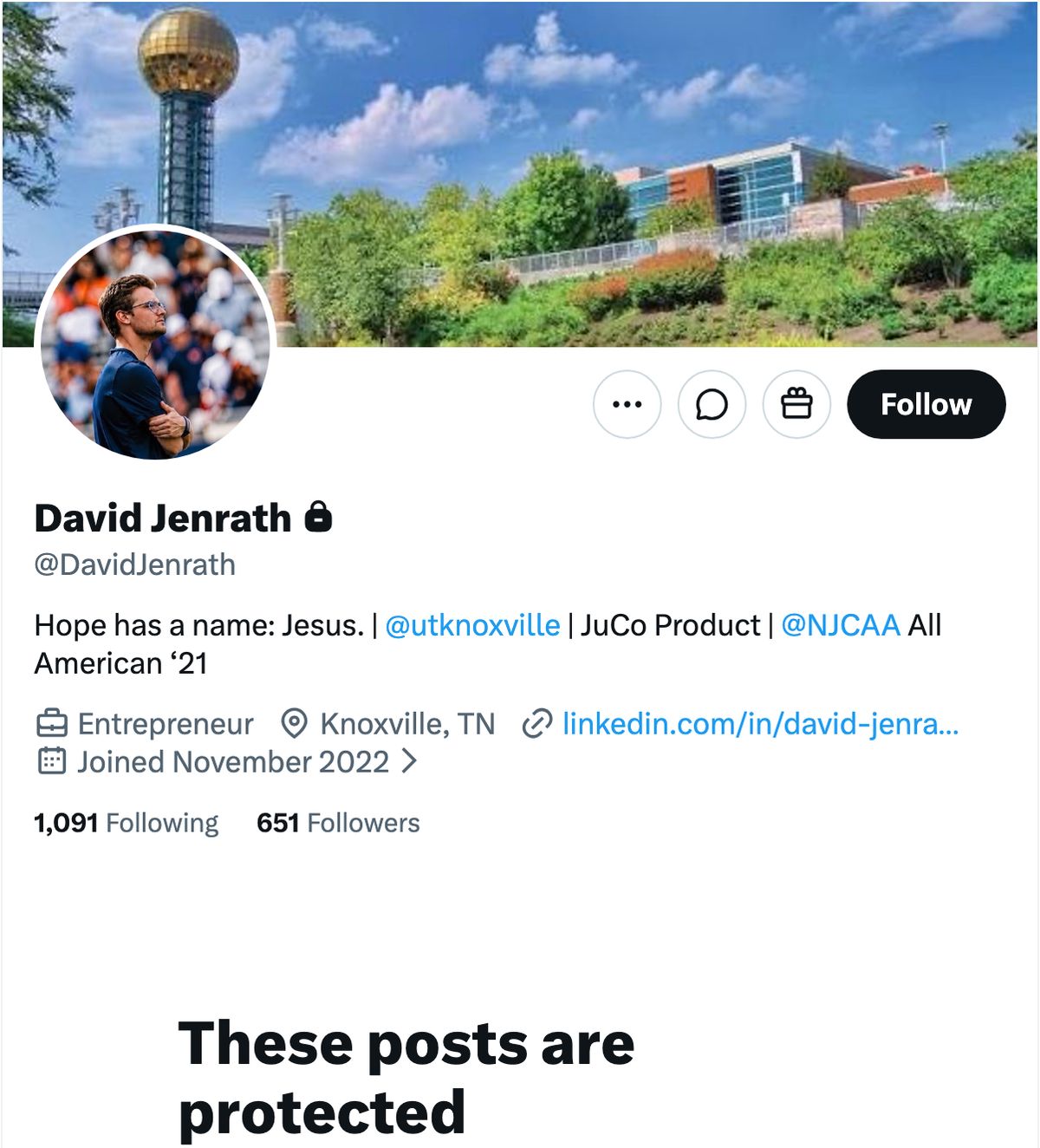
Jenrath’s previously available LinkedIn profile identified him as a Player Personnel Scouting Assistant at Auburn, beginning in January 2026.
According to FootballScoop, his responsibilities included evaluating high school and transfer-portal prospects, producing scouting reports and recruiting summaries, helping with opponent scouting and maintaining recruiting databases. His work focused in part on running backs and special teams. (Football Scoop)
Those responsibilities would have placed him around precisely the type of information programs spend enormous amounts of time and money compiling.
CBS Sports reported, citing sources, that Jenrath was retained when Golesh took over Auburn’s program in January but was fired during the spring. His LinkedIn profile had listed his Auburn tenure through June. (CBS Sports)
That distinction could become important as more details emerge about when the documents were obtained, when they were allegedly distributed and what access Jenrath maintained during his time with the program.
Why recruiting information matters
To the outside world, a list of recruiting evaluations might not sound like a conventional “trade secret.”
Inside modern college football, it can be enormously valuable.
Major programs maintain extensive internal databases containing evaluations, rankings, background information and recruiting strategies for hundreds sometimes thousands of prospective players.
Knowing which quarterbacks Auburn considers SEC-caliber, which defensive backs its coaches believe are overrated or which under-the-radar prospects have become priorities could provide another recruiting staff with insight into Auburn’s evaluation process.
Just as importantly, knowing who Auburn isn’t pursuing can reveal how the Tigers view a prospect compared with the public recruiting industry.
That information has become even more sensitive as the sport moves deeper into the transfer-portal, NIL and revenue-sharing era. Personnel departments now resemble professional front offices, and proprietary information can influence decisions involving millions of dollars and the construction of an entire roster.
The Jenrath case could therefore resonate beyond Auburn.
Programs routinely employ large groups of analysts, scouts, graduate assistants, student workers and personnel staffers who may have access to internal databases. The allegations at Auburn underscore the challenge schools face in controlling that information once dozens of employees can potentially access it.
An unusual Tennessee connection
The timing of Jenrath’s arrest adds another unusual layer.
Jenrath’s social-media profile identifies him as a student studying sports analytics at the University of Tennessee, according to multiple reports.
And this Saturday, Auburn travels to Knoxville to play Tennessee at Neyland Stadium. (Football Scoop)
There is currently no public evidence that Tennessee received or used Auburn’s information, and authorities have not publicly identified the rival programs that allegedly received the documents.
That distinction is important.
The proximity of Jenrath’s current studies to Auburn’s upcoming opponent makes for an extraordinary coincidence, but the publicly available evidence does not establish Tennessee’s involvement in the alleged distribution.
FootballScoop also noted another connection between the programs: Golesh previously served as Tennessee’s offensive coordinator before becoming a head coach and ultimately taking over at Auburn. (Football Scoop)
Questions remain
Auburn has offered little publicly about the investigation.
An Auburn spokesperson declined comment to WSFA, and the university has not publicly identified all of the programs that may have received information or detailed the full extent of the material investigators believe was distributed. (https://www.waff.com)
Among the unanswered questions are when the alleged transmissions occurred, which schools received them, whether anyone attempted to use the information and whether additional individuals were aware of the alleged disclosures.
The most significant known detail may be the simplest one: one of Auburn’s competitors apparently wanted no part of it.
Rather than use the material, police say a recipient brought it to Auburn.
What followed was an investigation lasting at least two months, according to CBS Sports, and eventually two felony charges against a former member of the Tigers’ personnel department. (CBS Sports)
At a time when college football programs operate more like multimillion-dollar professional organizations than traditional athletic departments, the case offers a glimpse into just how valuable and closely protected recruiting intelligence has become.
Auburn spent years assembling evaluations of the players it believes could shape its future.
Authorities now allege someone from inside the building tried to give part of that blueprint away.