

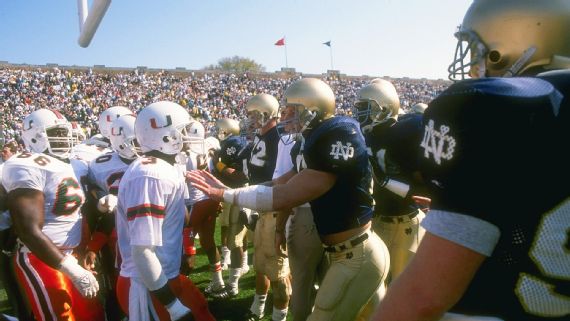
38 years ago, Lou Holtz and the Notre Dame Fighting Irish welcomed the nation's top-ranked team into South Bend and delivered one of the most iconic victories in college football history.
On Saturday night, history has an opportunity to repeat itself.
For the first time since 2016, the Miami Hurricanes return to Notre Dame Stadium, bringing an undefeated 8-0 record and the nation's No. 1 ranking into one of college football's most historic venues.
Awaiting them is a Notre Dame team fighting for its postseason survival.
Despite sitting fourth in the Associated Press poll with a 7-1 record, the Fighting Irish were placed 11th in the inaugural College Football Playoff rankings. With no conference championship game to provide another opportunity to impress the selection committee, Notre Dame's remaining margin for error is virtually nonexistent.
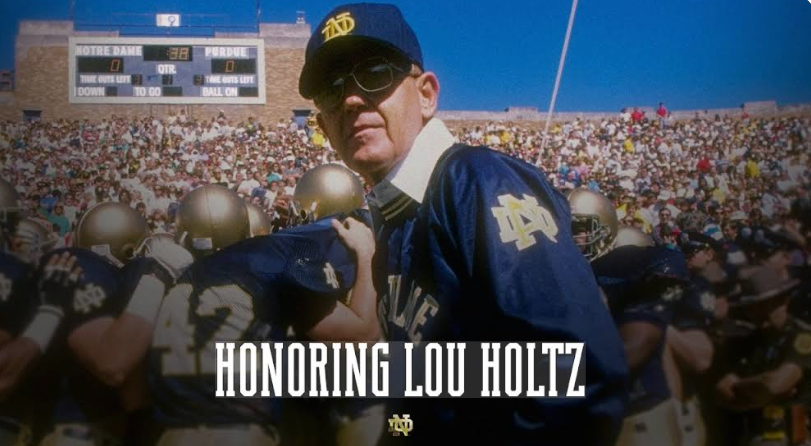
How One humiliation began a heated Rivalry
Before there was "Catholics vs. Convicts," before Pat Terrell's legendary two-point conversion breakup and before Notre Dame's undefeated national championship season in 1988, there was November 30, 1985. A date that would forever change the relationship between Notre Dame and Miami.
The fourth-ranked Hurricanes entered the Orange Bowl with national championship aspirations, while Notre Dame was preparing to close one of the most disappointing chapters in its storied history.
Head coach Gerry Faust had already announced his resignation following five turbulent seasons in South Bend. His final game offered an opportunity to leave the program with a victory against one of college football's premier teams.
Instead, it became one of the most humiliating defeats in Notre Dame history.
Led by quarterback Vinny Testaverde, Miami dismantled the Fighting Irish 58-7, handing Notre Dame its worst defeat in 41 years. Testaverde shredded the Irish secondary for 356 passing yards and two touchdowns, while the Hurricanes built a commanding 27-7 halftime advantage.
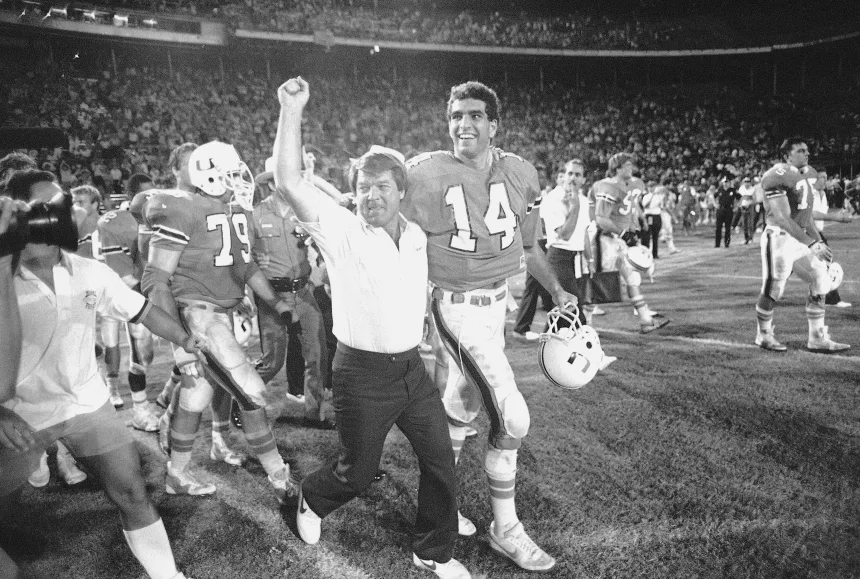
But it wasn't simply the 51-point margin of defeat that ignited the controversy. It was how Miami achieved it.
Despite holding a commanding lead, the Hurricanes continued throwing the football deep into the second half. Miami added a touchdown following a blocked punt late in the fourth quarter and even ran a reverse with just over a minute remaining.
The decisions infuriated Notre Dame supporters and drew criticism from former Irish head coach Ara Parseghian, who accused Miami of unnecessarily running up the score. Johnson defended his team's approach, arguing that the Hurricanes had substituted reserves and continued operating their normal offense.
To Miami, the victory reinforced its growing reputation as one of the most talented and unapologetic programs in college football. To Notre Dame, the result represented something far more personal: a public embarrassment at the hands of a program whose confidence and swagger increasingly clashed with the Irish's traditional identity.
The 58-7 defeat became more than another loss in the record books. It became a source of resentment that would intensify with each subsequent meeting, laying the foundation for the hostility that eventually defined the rivalry.
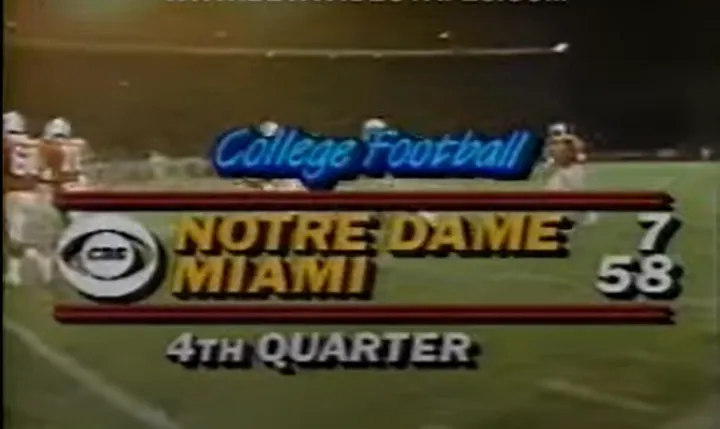
For Miami, it was another emphatic demonstration that the Hurricanes belonged among college football's elite. For Notre Dame, it was an embarrassment that demanded a response. That response would eventually arrive in the form of Lou Holtz.
Taking over the program in 1986, Holtz inherited a team that had finished 5-6 and struggled to compete against the country's most talented programs. He immediately began rebuilding Notre Dame's roster, emphasizing recruiting, speed and physicality to close the gap between the Fighting Irish and Miami.
But the road to redemption was far from immediate.
In 1987, the Hurricanes once again embarrassed Notre Dame, shutting out Holtz's squad 24-0 in the Orange Bowl on their way to an undefeated national championship. By that point, Miami had outscored Notre Dame 133-20 across their four meetings from 1983 through 1987.
The Hurricanes had become everything the Irish were desperately trying to reclaim: a national powerhouse capable of overwhelming opponents through superior athleticism and relentless execution.
As the two programs prepared for their highly anticipated 1988 showdown, the hostility between Notre Dame and Miami extended far beyond the football field. The Hurricanes had developed a reputation for their outspoken personalities, aggressive style of play and willingness to embrace the role of college football's villains. That reputation intensified during the spring of 1988, when two Miami football players, defensive tackle Darius Frazier and cornerback Michael Johnson, were arrested in separate incidents and subsequently dismissed from the program.
The arrests helped inspire one of the most infamous slogans in college football history.

Notre Dame students Joe Fredrick and Pat Walsh were responsible for popularizing the phrase "Catholics vs. Convicts," which appeared on unauthorized T-shirts sold around campus ahead of the October 15 matchup. According to Fredrick's recollection, the idea originated while he was watching ESPN's SportsCenter during summer vacation. After hearing a report about Miami players being arrested, his brother Chuck suggested that the upcoming matchup would be Catholics against convicts. Fredrick brought the idea to Walsh, who had experience producing novelty T-shirts for Notre Dame students. The shirts quickly became popular, transforming what began as a student-created slogan into a nationally recognized symbol of the rivalry.
Then came October 15, 1988.
With Miami riding a 36-game regular-season winning streak and Notre Dame ranked fourth nationally, the two programs met in South Bend for a showdown that would become known as "Catholics vs. Convicts."
The tension that had been building since the 1985 massacre finally reached its breaking point. A pregame confrontation in the stadium tunnel set the tone for a fiercely contested matchup that featured dramatic momentum swings, controversial officiating decisions and a finish that remains among the most memorable in college football history.
Leading 31-30 in the final minute, Notre Dame needed one defensive stop to secure the victory.
When Miami quarterback Steve Walsh attempted a two-point conversion, defensive back Pat Terrell broke up the pass, preserving the Irish victory and ending the Hurricanes' remarkable regular-season winning streak.
Notre Dame would go on to finish 12-0 and capture the national championship in the Fiesta Bowl against West Virginia.
Three years after suffering a 51-point humiliation in Miami, the Fighting Irish had finally reclaimed their place atop college football.
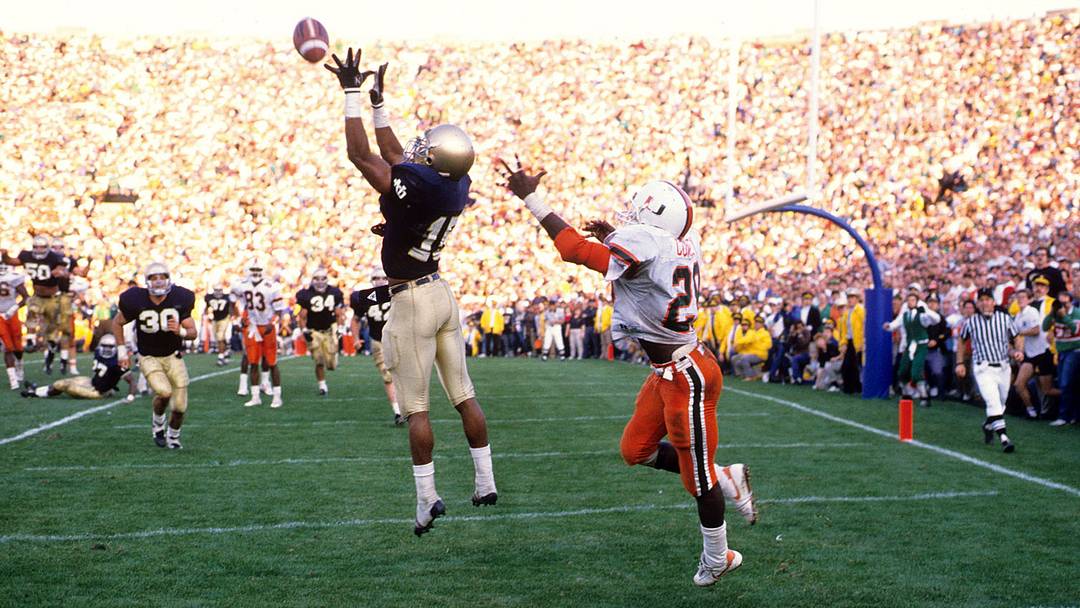
The rivalry continued to produce unforgettable moments.
In 1989, Miami responded with a 27-10 victory over top-ranked Notre Dame, ending the Irish's 23-game winning streak and eventually capturing another national championship.
The following year, Notre Dame earned another measure of revenge, defeating the second-ranked Hurricanes 29-20 in South Bend.
Although the annual series ended after 1990, the rivalry never completely disappeared.
The programs renewed hostilities in the 2010 Sun Bowl, with Notre Dame securing a 33-17 victory, before splitting their next two meetings in 2012 and 2016.
In 2017, Miami delivered another emphatic statement, dismantling the third-ranked Fighting Irish 41-8 at Hard Rock Stadium.
The Hurricanes once again got the better of Notre Dame in the 2025 season opener, winning 27-24 in a matchup that eventually played a significant role in the Irish's College Football Playoff exclusion.
Now, nearly four decades after the 1985 massacre, the rivalry returns to South Bend with another national championship potentially hanging in the balance.
THE LITMUS TEST
After suffering its first defeat of the season against BYU, Notre Dame responded with a convincing 35-13 victory over Navy. Quarterback CJ Carr threw for 210 yards and two touchdowns, while running back Nolan James Jr. rushed for 107 yards and two scores.
The victory improved Notre Dame's record to 7-1 and helped restore momentum heading into its most difficult remaining matchup. Throughout the season, Carr has established himself as one of the nation's most efficient quarterbacks.The sophomore has thrown for 18 touchdowns against just one interception, demonstrating remarkable accuracy and decision-making while operating Mike Denbrock's offense.
Notre Dame's offensive line has been equally impressive.The Fighting Irish have surrendered just two sacks through eight games, leading the nation in pass protection.
That production has allowed Carr to operate comfortably in the pocket while creating opportunities for receivers Jordan Faison and Micah Gilbert.
However, Saturday presents a significantly different challenge.
Miami possesses an athletic defensive front capable of disrupting opposing rushing attacks and generating pressure without consistently relying on additional defenders. For Notre Dame, establishing its running game will be critical.
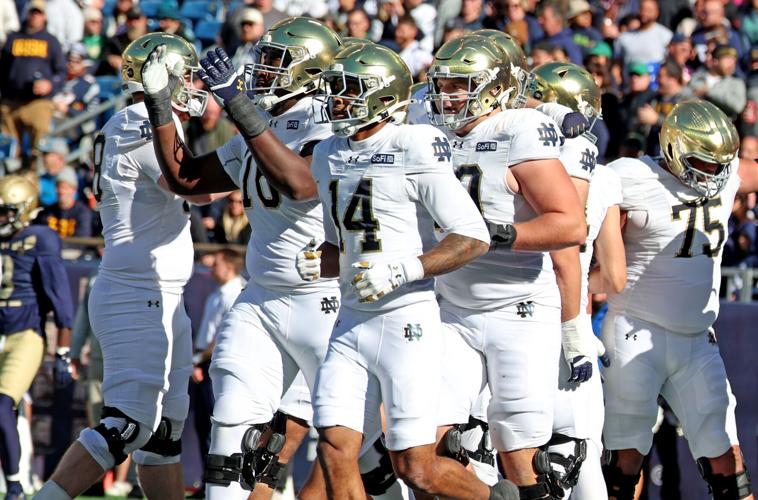
James, Jonas Walton and Aneyas Williams provide the Fighting Irish with multiple options out of the backfield, allowing Denbrock to vary his rushing concepts and keep Miami's defense guessing.
An effective ground game would also help Notre Dame control possession and limit opportunities for Miami's explosive offense. But the biggest question remains whether Carr can deliver against an elite opponent. Despite his impressive production, Carr has struggled against nationally ranked competition compared with his performances against unranked teams.
Saturday offers an opportunity to change that narrative.
Against the nation's top-ranked team, Notre Dame will need its quarterback to deliver the most complete performance of his young career.
The Category 5 hurricane
For Miami, the 2026 season has represented a continuation of the program's resurgence under head coach Mario Cristobal. After reaching the national championship game last season, the Hurricanes have returned with an undefeated record and one of the most explosive passing offenses in the country.
At the center of that success is quarterback Darian Mensah.
The Duke transfer has emerged as a legitimate Heisman Trophy contender, throwing for 2,425 yards and 25 touchdowns through eight games. Perhaps even more impressive has been his efficiency. Mensah leads the country with an 80.7% completion percentage and a 202.7 passer efficiency rating, demonstrating an exceptional ability to consistently deliver accurate throws while avoiding costly mistakes.
He has thrown just one interception all season.
Against North Carolina last weekend, Mensah completed another impressive performance, throwing for 274 yards and three touchdowns in a narrow 38-35 victory.
However, the Hurricanes enter Saturday without their most dangerous offensive weapon.
Sophomore wide receiver Malachi Toney suffered an ankle injury during practice and underwent surgery, ruling him out of the Notre Dame matchup. Toney had been enjoying one of the most productive receiving seasons in college football, recording 73 receptions for 1,027 yards and 13 touchdowns. His absence represents a significant loss for Miami, particularly against a Notre Dame secondary that has been among the nation's most effective.
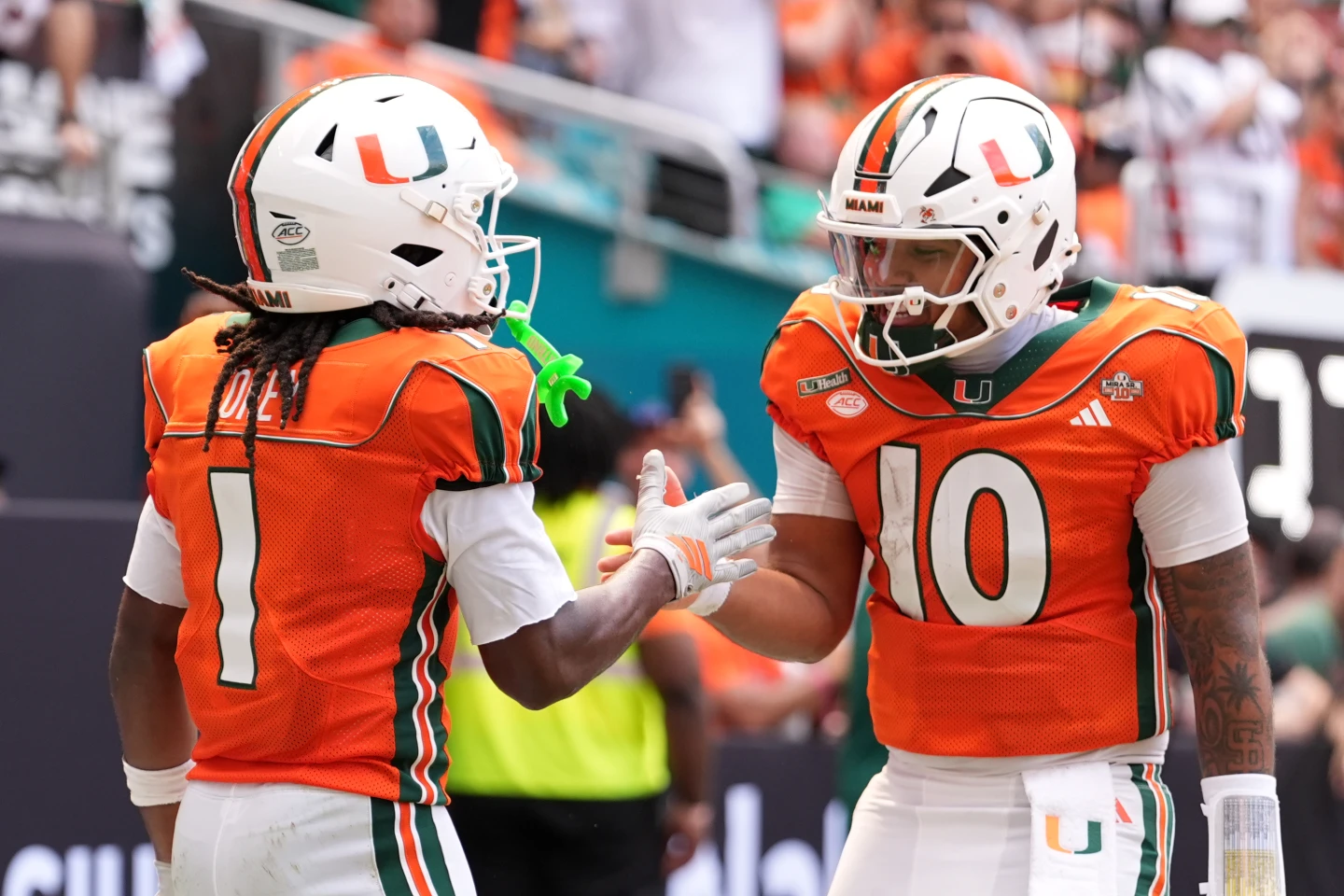
The responsibility now shifts toward receivers Cooper Barkate and other members of Miami's supporting cast. Barkate has established himself as a reliable option, while tight end Elija Lofton provides Mensah with another target in the passing game. Miami also possesses a dangerous rushing combination in Mark Fletcher Jr. and Javian Mallory.
The duo provides the Hurricanes with physicality and explosiveness on the ground, preventing opposing defenses from focusing exclusively on Mensah. For Miami, the challenge will be maintaining its offensive efficiency without the receiver who has accounted for such a significant portion of its production. For Notre Dame, the opportunity is clear: force Mensah to rely on unfamiliar combinations and prevent Miami from generating explosive plays through the air.
GOLDEN DOMER DEFENSE
If Notre Dame is going to defeat the nation's No. 1 team, its defense will likely need to produce its most impressive performance of the season.
Unfortunately for Marcus Freeman, the Fighting Irish enter Saturday with their defensive personnel severely depleted.
Notre Dame has five important defensive contributors dealing with injuries, including three players already ruled out and two defensive linemen whose availability remains uncertain. The Irish will be without linebacker Drayk Bowen, cornerback DJ McKinney and safety Brauntae Johnson, while defensive tackles Francis Brewu and Jason Onye are listed as questionable. The timing could hardly be worse.
Notre Dame enters Saturday leading the nation in total defense, surrendering approximately 236 yards per game. However, the Irish now face the possibility of taking on one of college football's most explosive offenses without several players who helped establish that defensive dominance.
The most significant loss comes at linebacker.
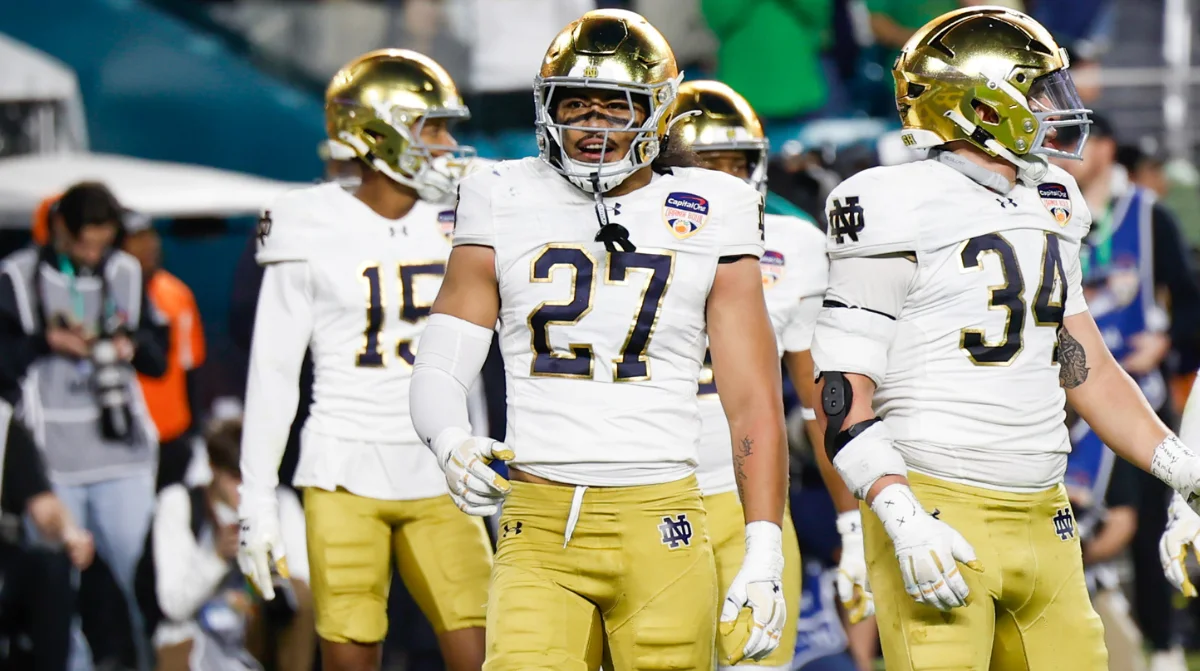
Bowen, Notre Dame's senior captain and leading tackler with 45 stops, suffered a right ankle injury during the team's 35-13 victory over Navy. His absence creates a problem that extends far beyond replacing his production. As Notre Dame's defensive signal-caller, Bowen has been responsible for relaying defensive adjustments, organizing the front seven and ensuring players understand their assignments before the snap.
Against Miami quarterback Darian Mensah, who has demonstrated an exceptional ability to identify defensive weaknesses, losing that leadership could prove particularly costly. The responsibility will now shift toward Kyngstonn Viliamu-Asa, who is expected to return after dealing with a thumb injury, along with Jaiden Ausberry and Madden Faraimo.
While Viliamu-Asa's return provides a significant boost, replacing Bowen's experience and communication will require a collective effort.
The problems do not end at linebacker.
Notre Dame's secondary will also be operating without two important starters.
McKinney, a fifth-year cornerback who transferred from Colorado, remains sidelined with a right ankle injury suffered against BYU. Freeman previously indicated that McKinney would miss an extended period, leaving the Irish without one of their experienced defensive backs.
Safety Brauntae Johnson has also been ruled out with a left foot injury that has kept him sidelined since the season opener against Wisconsin. The absence of both players places additional pressure on Notre Dame's remaining defensive backs, particularly Jayden Sanders, Christian Gray, Adon Shuler and Leonard Moore.
Moore's return from concussion-related issues provides a much-needed boost, but the Irish will need their secondary to communicate effectively against a Miami offense capable of stretching the field both vertically and horizontally.
Even with Hurricanes star receiver Malachi Toney sidelined, Mensah remains one of the nation's most efficient quarterbacks and possesses enough weapons to exploit breakdowns in coverage.
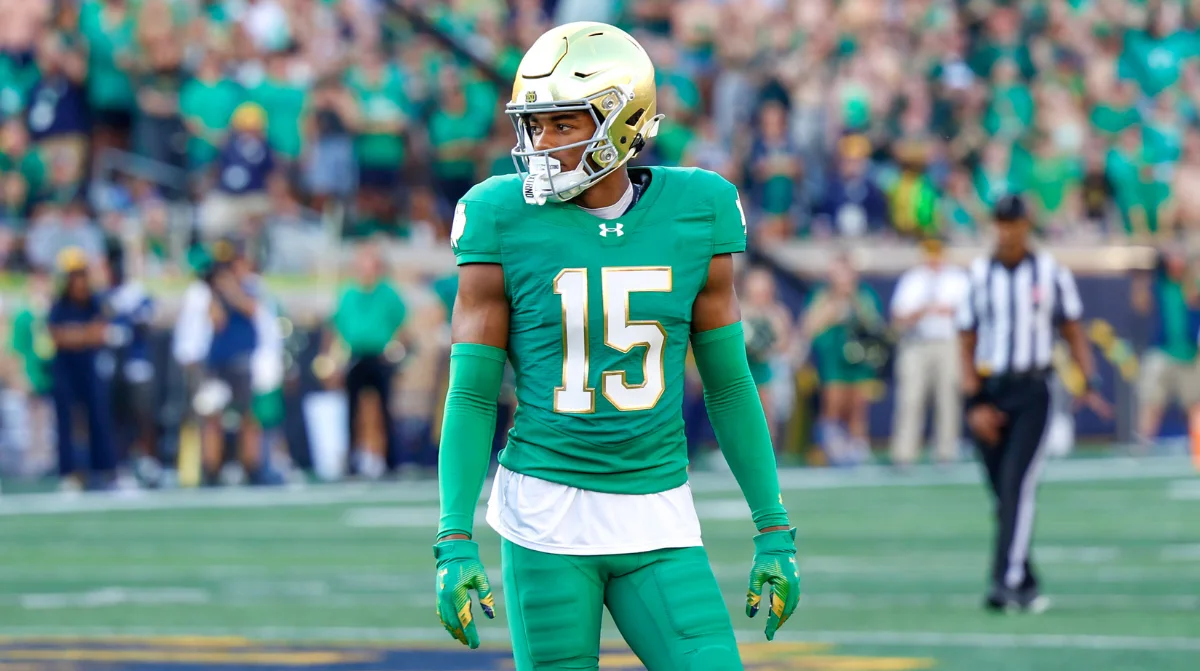
Perhaps the most concerning uncertainty, however, surrounds Notre Dame's defensive line. Defensive tackles Francis Brewu and Jason Onye both suffered knee injuries against Navy and have been listed as questionable for Saturday. Brewu has contributed 16 tackles, three tackles for loss and two sacks this season, providing the Irish with an important interior presence.
Onye, meanwhile, has battled injuries throughout the year and appeared in just three games. His latest setback threatens to further weaken Notre Dame's defensive line rotation. Should both players be unavailable, the Fighting Irish would be forced to rely even more heavily on their remaining defensive tackles, including Tionne Gray and Armel Mukam.
That could become particularly problematic against Miami's rushing attack. The Hurricanes are averaging more than 200 rushing yards per game, with Mark Fletcher Jr. and Javian Mallory providing a physical complement to Mensah's passing ability.
Without a healthy interior defensive line, Notre Dame could struggle to maintain its usual level of physicality against the run, particularly as the game progresses. The concern is not simply whether the Irish can replace five contributors on the depth chart. It is whether they can maintain the same defensive standard against the most talented offense they have faced this season.
Injuries at linebacker, cornerback, safety and defensive tackle create vulnerabilities at all three levels of the defense. Those weaknesses could force Notre Dame to alter its defensive approach, particularly if Miami establishes an early rushing attack.
Freeman and defensive coordinator Chris Ash will need to balance generating pressure on Mensah with protecting an already depleted secondary.
Aggressive blitz packages could leave inexperienced defenders isolated in coverage, while dropping additional players into coverage could provide Miami's offensive line with opportunities to control the line of scrimmage.
Notre Dame has built its defensive identity around discipline, physicality and the ability to prevent explosive plays. Saturday will test whether that identity can survive without several of the players responsible for establishing it. With the College Football Playoff potentially hanging in the balance, the Irish cannot afford to let their injury situation become an excuse.
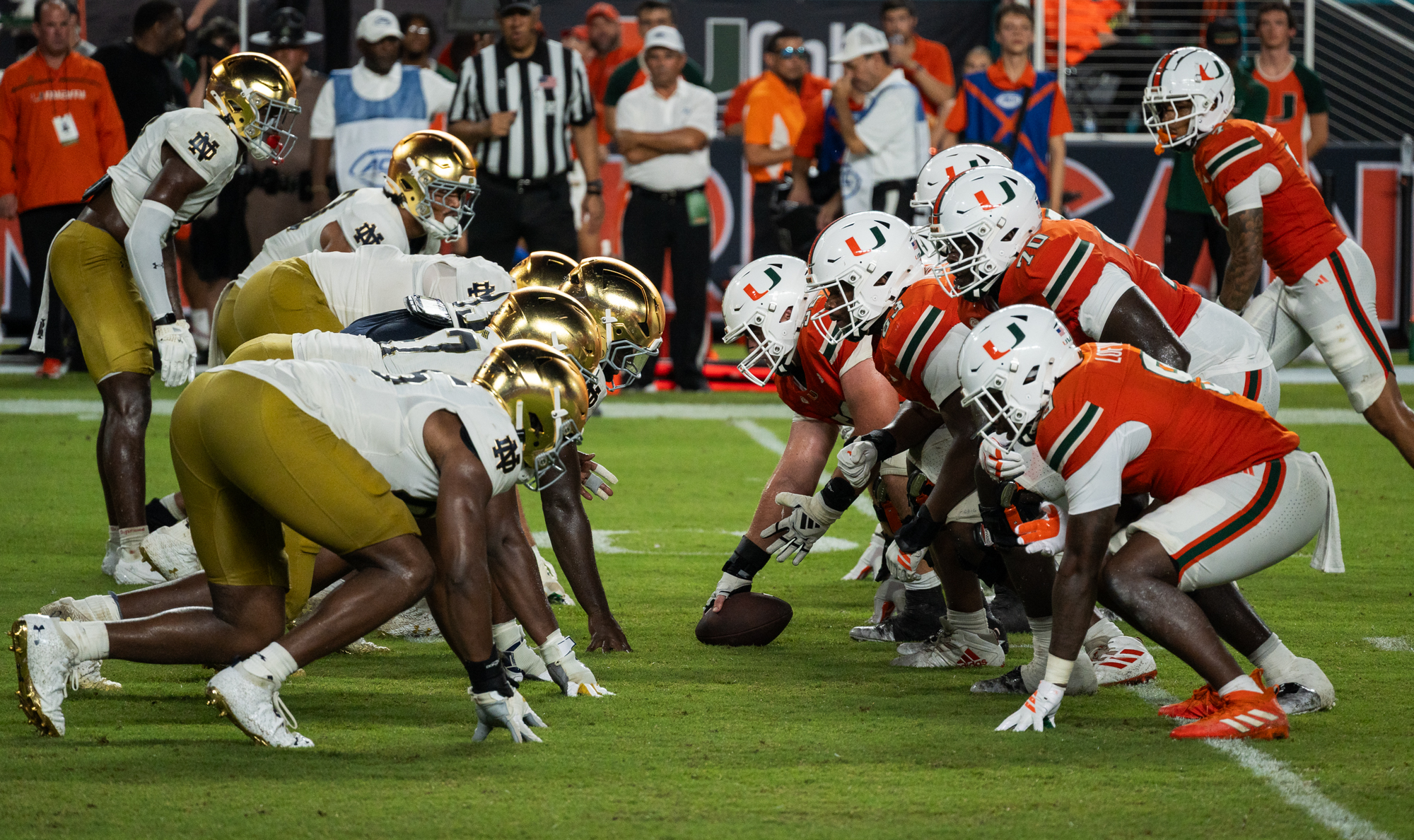
Win or Die.
For Notre Dame, the stakes could hardly be greater.
Despite entering Saturday with a 7-1 record and the No. 4 ranking in the Associated Press poll, the Fighting Irish received a considerably less favorable evaluation from the College Football Playoff selection committee.
Notre Dame debuted at No. 11 in the inaugural CFP rankings, leaving the program occupying one of the final available positions in the projected 12-team field. The Irish have already suffered a defeat against BYU, and their remaining schedule provides limited opportunities to secure another signature victory.
Following Miami, Notre Dame closes its regular season against Boston College, SMU and Syracuse. Although those matchups remain important, none currently offers the same opportunity to dramatically strengthen Notre Dame's postseason résumé.
The situation is further complicated by the program's independent status.
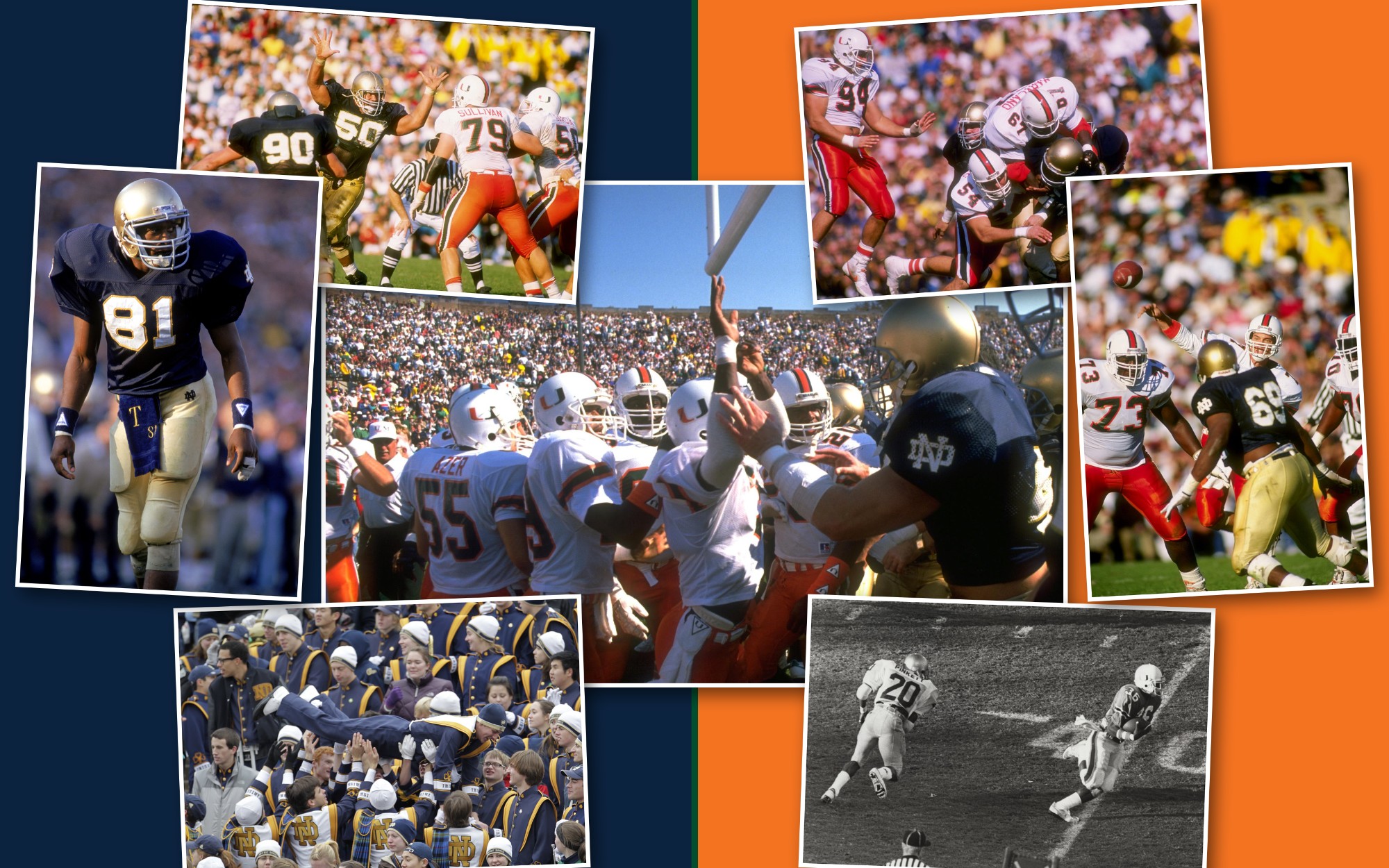
Saturday's meeting between Notre Dame and Miami has the potential to accomplish both. The Hurricanes arrive in South Bend undefeated, ranked No. 1 in the country and determined to continue their pursuit of a national championship.
Notre Dame enters with its postseason future in jeopardy, searching for the signature victory that could transform its season. For Miami, a victory would further solidify its position atop the national rankings and provide another major accomplishment in the program's resurgence.
For Notre Dame, a victory would represent something much greater.
It would avenge last season's defeat, strengthen the program's College Football Playoff résumé and deliver one of the most memorable victories of the Marcus Freeman era. It would also provide a fitting tribute to the man who helped define the rivalry nearly four decades ago. In 1985, the Hurricanes humiliated Notre Dame 58-7, helping ignite one of the most bitter feuds in college football history.
Three years later, Lou Holtz's Fighting Irish responded with a victory that would define a national championship season. Now, with the legendary coach's memory being honored and the same opponent returning to Notre Dame Stadium, the parallels are impossible to ignore.
38 years later, the names have changed, the landscape of college football has evolved and the postseason format looks dramatically different.
But the stakes remain familiar.
Now, 38 years later, Miami once again enters Notre Dame Stadium undefeated and ranked No. 1 in the country. The Fighting Irish once again find themselves searching for a victory that could define their season. And this time, they will do so while honoring the man who made the rivalry immortal.
For Marcus Freeman, CJ Carr and the rest of the Fighting Irish, the challenge is clear. Overcome the injuries. Avenge last year's defeat. Silence the doubts surrounding their postseason résumé. And deliver a performance worthy of the legacy they are celebrating. A victory would not erase the disappointment of 2025, nor would it guarantee Notre Dame a place in the College Football Playoff. But it would provide the Irish with something they have desperately needed since walking off the field in Miami last August.
Redemption.
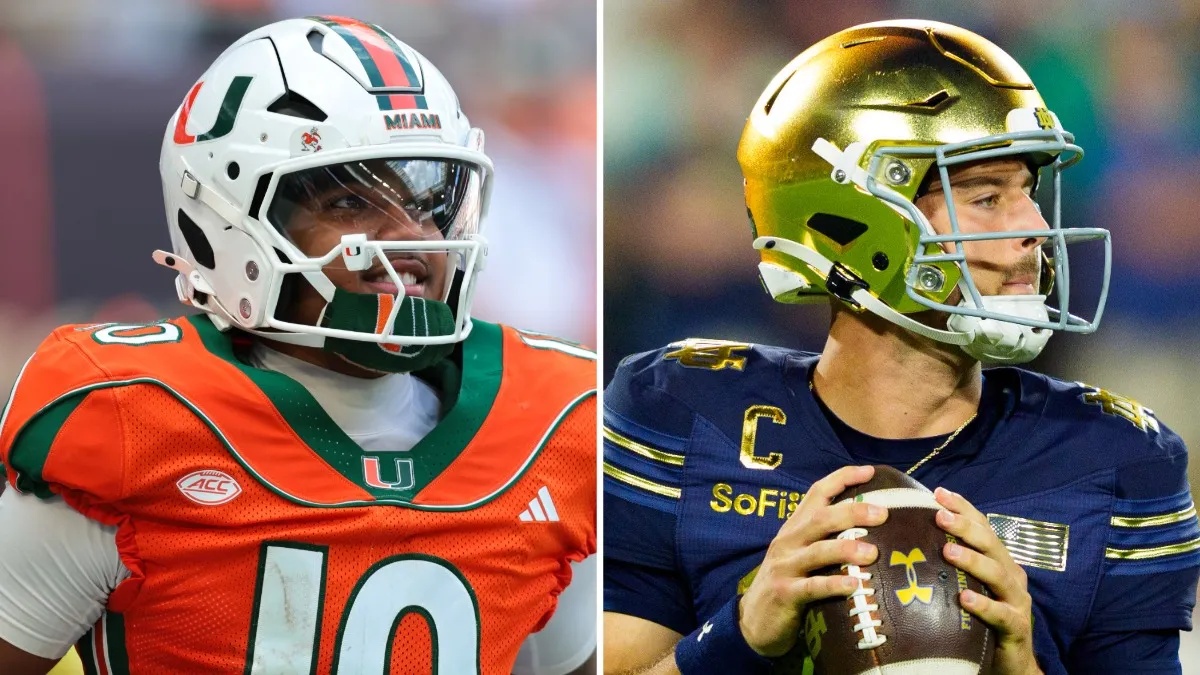
A loss, however, could bring another season of national championship aspirations to a premature end, leaving Notre Dame to spend yet another offseason wondering what might have been.
After everything that has happened over the past year, the stakes could hardly be greater.
The heartbreak in Miami. The playoff exclusion. The loss in Provo. The mounting injuries. The passing of a legend.
All of it has led to this moment.
One game. One night. One opportunity to change the narrative.
In 1988, Lou Holtz and the Fighting Irish shocked the world.
On Saturday night, with his legacy hanging over Notre Dame Stadium, Marcus Freeman and his team have the opportunity to write their own chapter in the rivalry's storied history.
38 years later, the opponent is the same. The stakes are just as enormous.
And for Notre Dame, the message could not be clearer.
Win, or watch another season slip away.